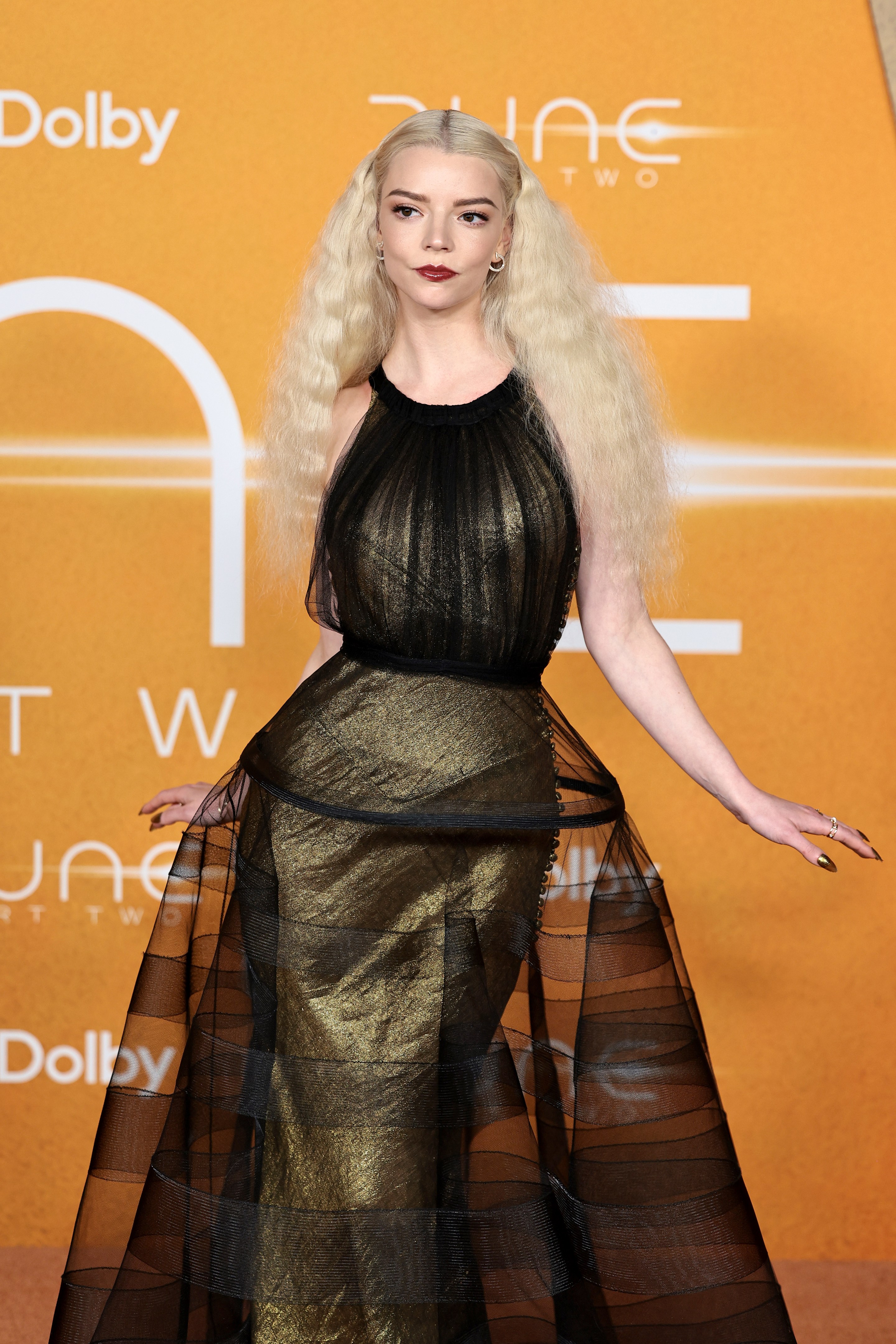
The horror imagery in Dune: Part Three has a deliberate reference. Costume designer Jacqueline West said Sissy Spacek compared a concept drawing of a blood-covered Alia to Carrie (1976), and the result was Anya Taylor-Joy wearing far more of it.
“So Carrie automatically became a reference,” West said. “I put more and more and more blood all over Anya Taylor-Joy!”
For Taylor-Joy, playing Alia Atreides meant understanding someone whose devotion to her brother, Paul, leaves little room for anyone else.
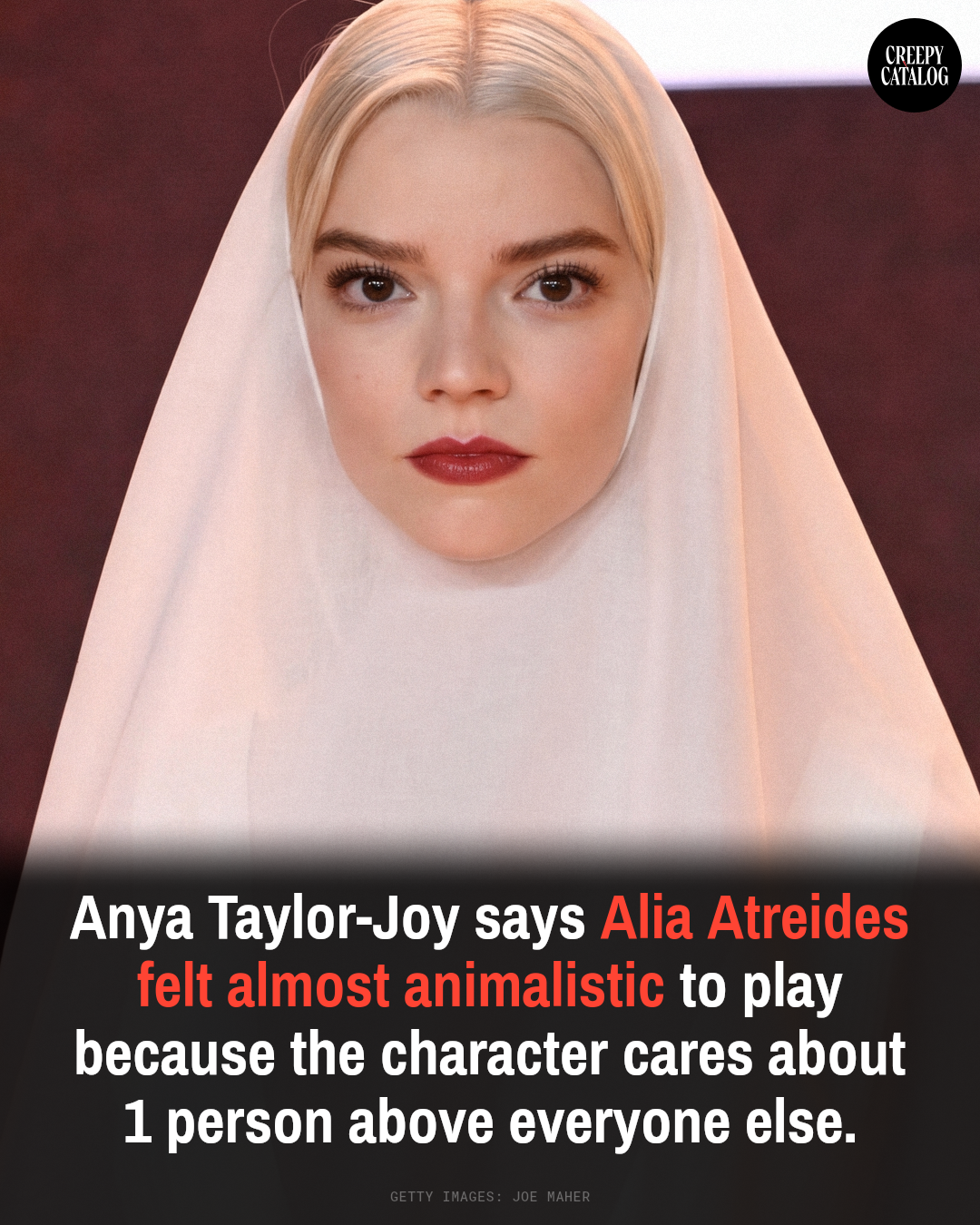
In a cast interview published November 4, she described a conversation with director Denis Villeneuve: “At the end of the movie, Denis and I talked, and I was like, ‘Whoa, I’m the bad guy. That’s crazy.’ But I really understood where she was coming from.”
She explained the appeal: “What a gift of a character to play somebody that has one connection to one person, and nobody else matters at all.” That focus made Alia feel “almost animalistic,” and Taylor-Joy called her “my most feral creation.”
She’d identified that connection in an earlier interview, describing Alia as someone carrying generations of knowledge and voices inside her head. Her brother is her emotional anchor: “And the one thing that she really feels most strongly about is her love and devotion to her brother, because that is the only person who’s ever made her feel like she makes sense.”
Taylor-Joy briefly appeared as the still-unborn Alia in a vision in Dune: Part Two (2024). The sequel gives her a larger role, with Timothée Chalamet returning as Paul.
At a July 8 IMAX fan event, Chalamet called her “actually terrifying and amazing.” Taylor-Joy later replied, “If I scare Timmy, then we’re off to a good start.”
Taylor-Joy’s “bad guy” remark describes her own reading of Alia. Dune: Part Three adapts Frank Herbert’s Dune Messiah and is scheduled to open in U.S. theaters on December 18, 2026.