Dominique Dunne, who played Dana Freeling, the oldest daughter in “Poltergeist,” would have turned 67 on November 23, 2026. She died at 22 after her former boyfriend, John Thomas Sweeney, strangled her outside her West Hollywood home.
“Poltergeist” opened on June 4, 1982. It was her first feature film, following television work that included “Lou Grant” and “Breaking Away.” By that fall, she was working on the science-fiction miniseries “V.”
Dunne had left Sweeney after earlier violence. Her father, Dominick Dunne, later described a September assault that left marks on her neck. Those injuries were still visible when she filmed “Hill Street Blues,” playing a young mother who’d been abused. The episode aired after her death and was dedicated to her.
On October 30, Dunne was rehearsing with actor David Packer when Sweeney arrived at the house. Packer was inside when he heard screams and a thud. Sweeney strangled Dunne outside.
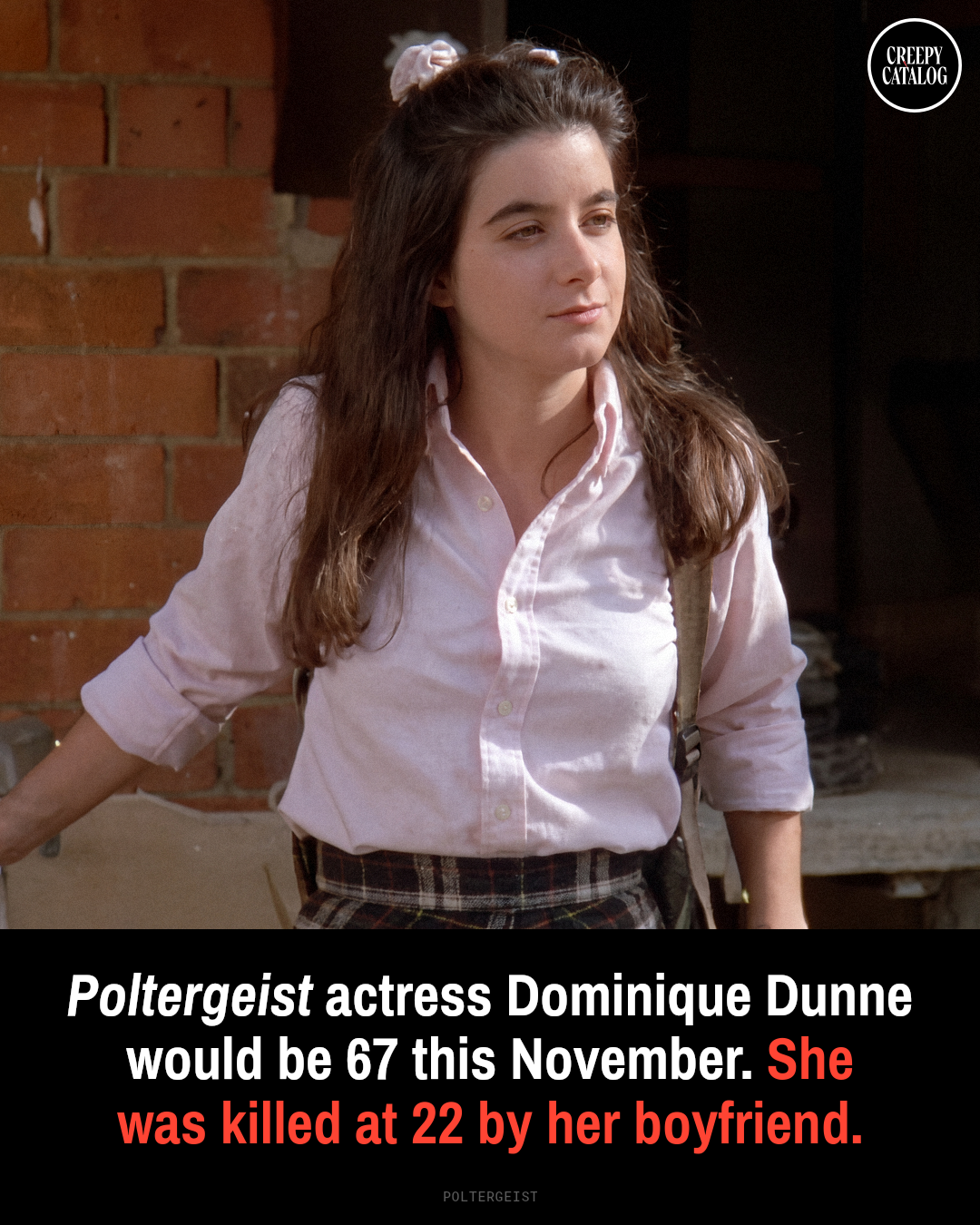
She never regained consciousness and died on November 4, 1982, 19 days before her 23rd birthday. At her mother’s request, her heart and kidneys were donated for transplants.
At Sweeney’s 1983 murder trial, jurors never heard a former girlfriend’s testimony describing repeated beatings and hospitalizations. Judge Burton S. Katz excluded it as prejudicial. He also excluded accounts of Dunne’s fear of Sweeney as hearsay and removed first-degree murder from consideration.
The jury acquitted Sweeney of second-degree murder and convicted him of voluntary manslaughter, along with misdemeanor assault for the September attack. At sentencing, Katz said, “I am convinced this was murder.” He imposed the maximum available sentence: six years for manslaughter and another six months for assault.
Sweeney spent three years, seven months and 27 days in custody. In a December 1986 interview after his release, he acknowledged, “I did not do all that much time considering the crime.”
Dunne’s family went on to advocate for victims. Her mother, Ellen, helped establish the organization later known as Justice for Homicide Victims. Her father’s account of the trial, published in March 1984, began his second career as a crime writer. He titled it “Justice: A Father’s Account of the Trial of His Daughter’s Killer.”