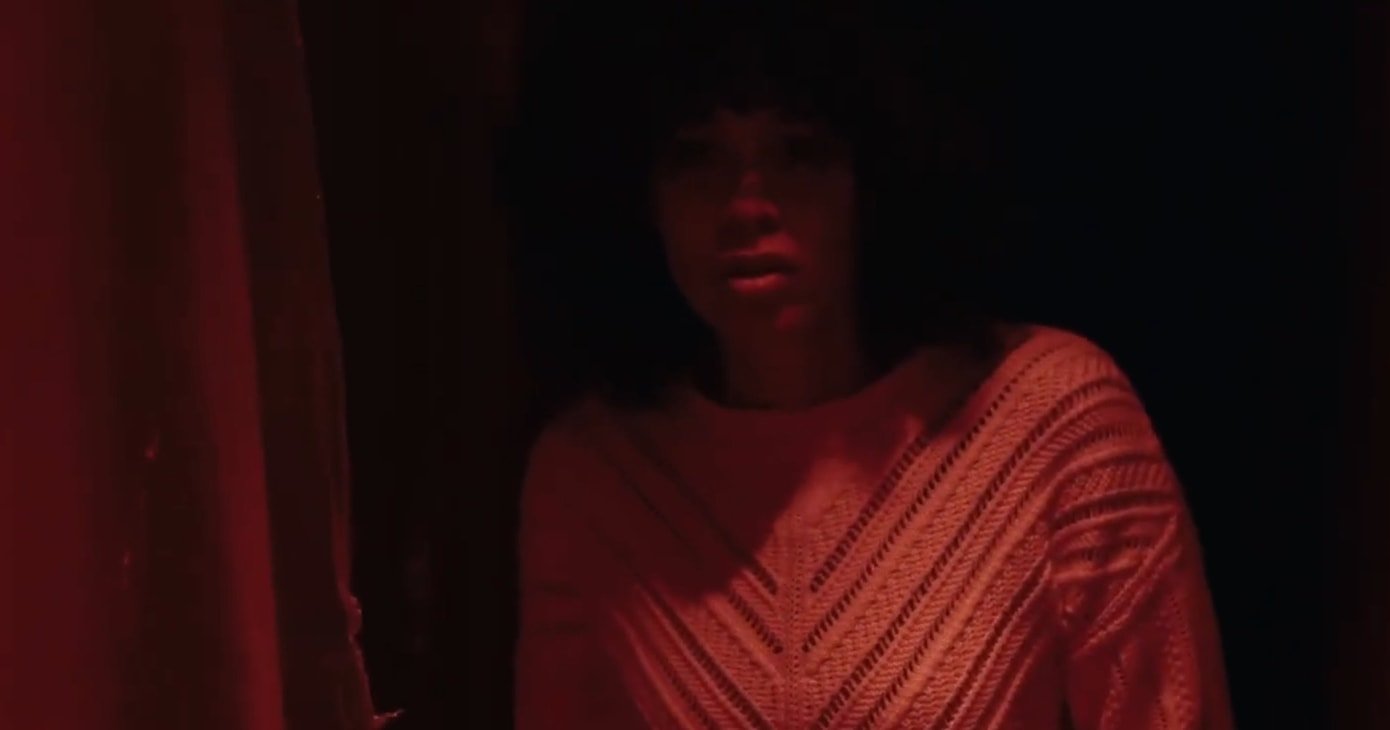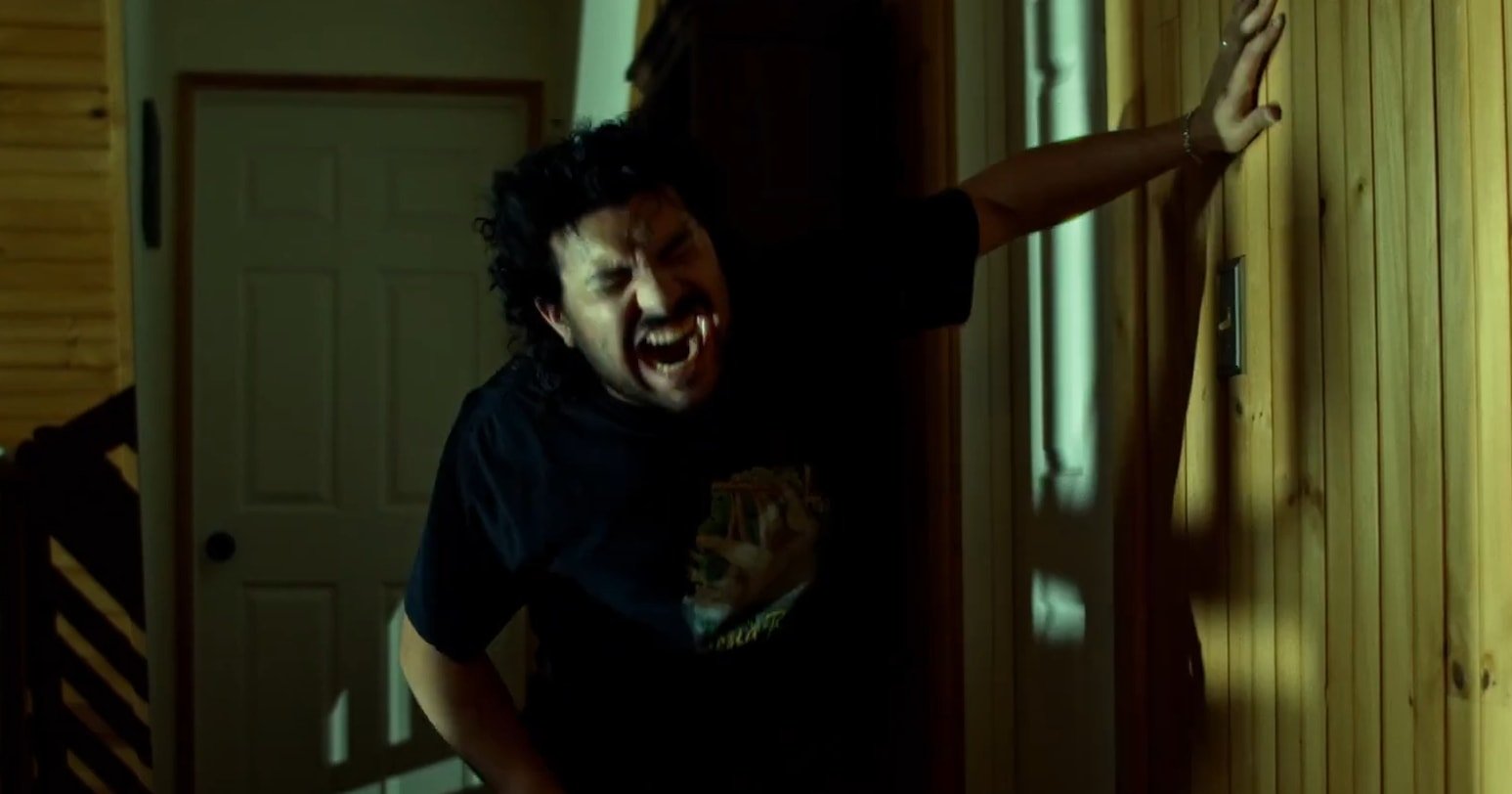
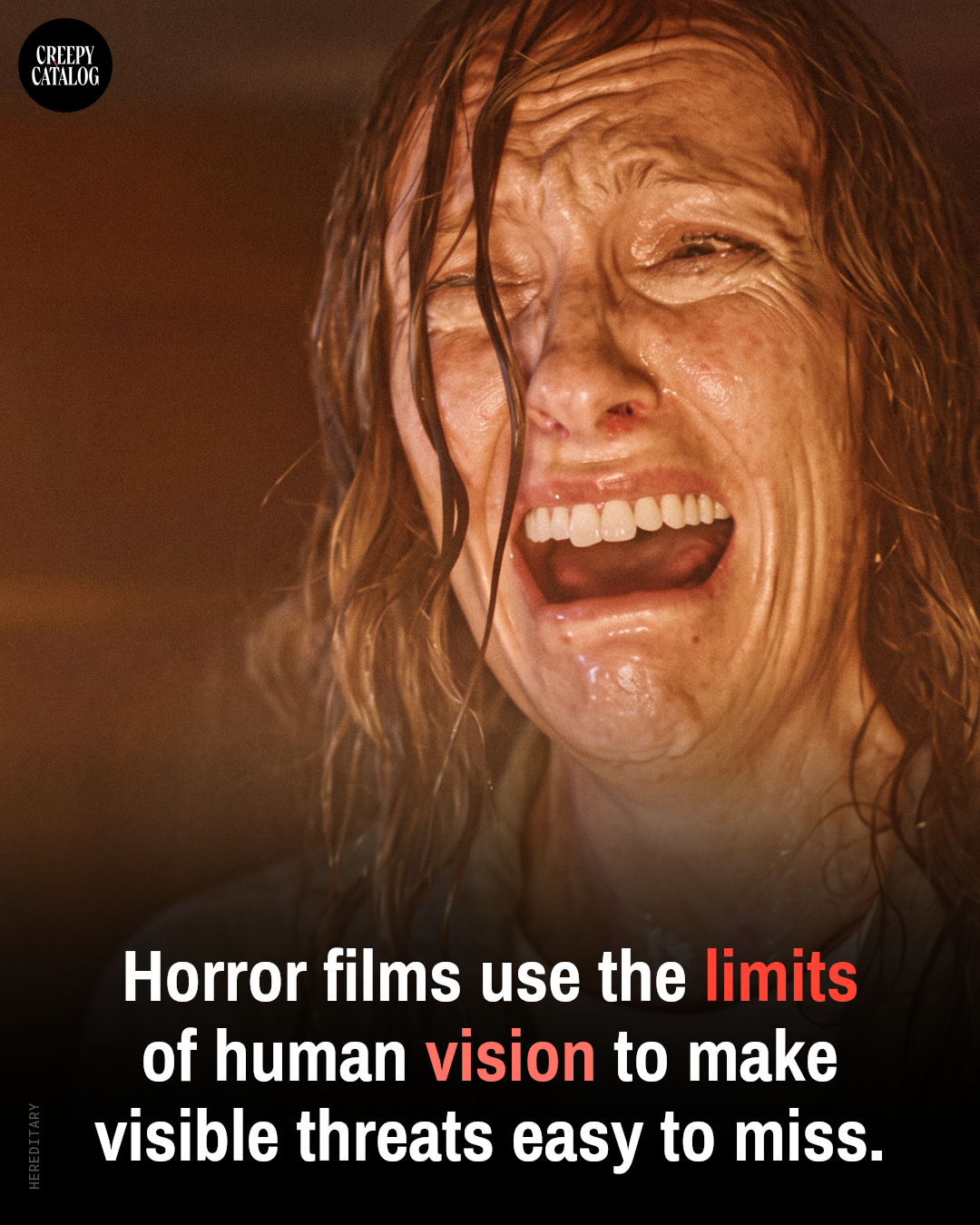
In 2018’s “Hereditary,” Peter wakes up disoriented and walks through his dim house while the audience around you starts gasping at something you can’t find on screen. Then the camera pulls back and you see her: Annie, his possessed mother, crouched on the ceiling. Watch it again and she was there the whole time, following him through the house in the shadows.
Arryn Robbins, an assistant professor of psychology at the University of Richmond, explains that you can miss a human being in plain view because your visual system can’t process a whole scene at once. You pull detailed information only from wherever your attention is pointed, and anything outside that spotlight can go unnoticed no matter how strange it is.
Psychologists call that inattentional blindness. It’s the same effect behind the invisible gorilla experiment, where about half the people counting basketball passes never noticed a person in a gorilla suit walk through the middle of the game. Horror uses it constantly, from the ghost boy in “Insidious” to the figures lurking in the background of Netflix’s “The Haunting of Hill House.”
A related trick, change blindness, is failing to notice something changing right in front of you. In “The Conjuring 2,” the possessed girl Janet morphs into an old man during her interview with Ed Warren while the camera stays on Ed and leaves her slightly blurred in the background.
Directors also steer your focus on purpose. In “The Conjuring,” a girl sits up staring upward in terror, and the cut reveals the ghost Bathsheba crouched on top of the wardrobe.
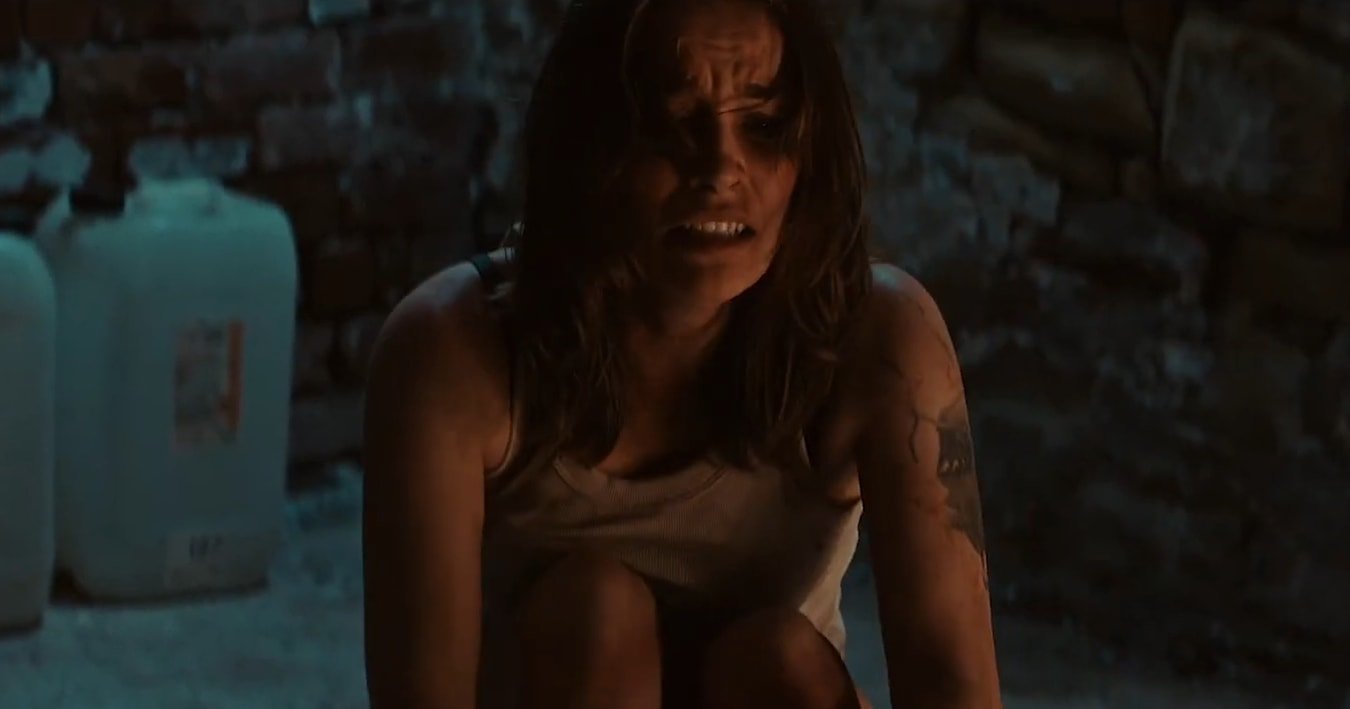
Your eyes follow a character’s gaze automatically, an effect called gaze cueing, and editing just mimics it. “It Follows” does the opposite, opening on a wide shot of a panicked girl with no cut to guide you, forcing you to scan corner to corner for a danger that may not even be there yet.
The design runs deeper than editing. Your fovea, the tiny pit in your retina that handles whatever you’re looking straight at, reads fine detail and color.
Your peripheral vision is built from rods tuned to motion and low light, so it answers one question fast: did something just move? When it catches movement at the edge, your eyes snap over to identify it, and that gap between detecting and naming is where the unease lives.
The same wiring makes people see faces where none exist, a bias called pareidolia. Missing a real face has always been costlier than imagining a fake one, so the brain fires even at patterns that only vaguely resemble a face.
“Midsommar” hides one in the trees as Dani is carried to the feast, and the 1963 film “The Haunting” buries one in a wall pattern. Directors decide what you see and what stays hidden, and the scare lives in the space between perception and recognition, while your brain is still deciding what it’s looking at.