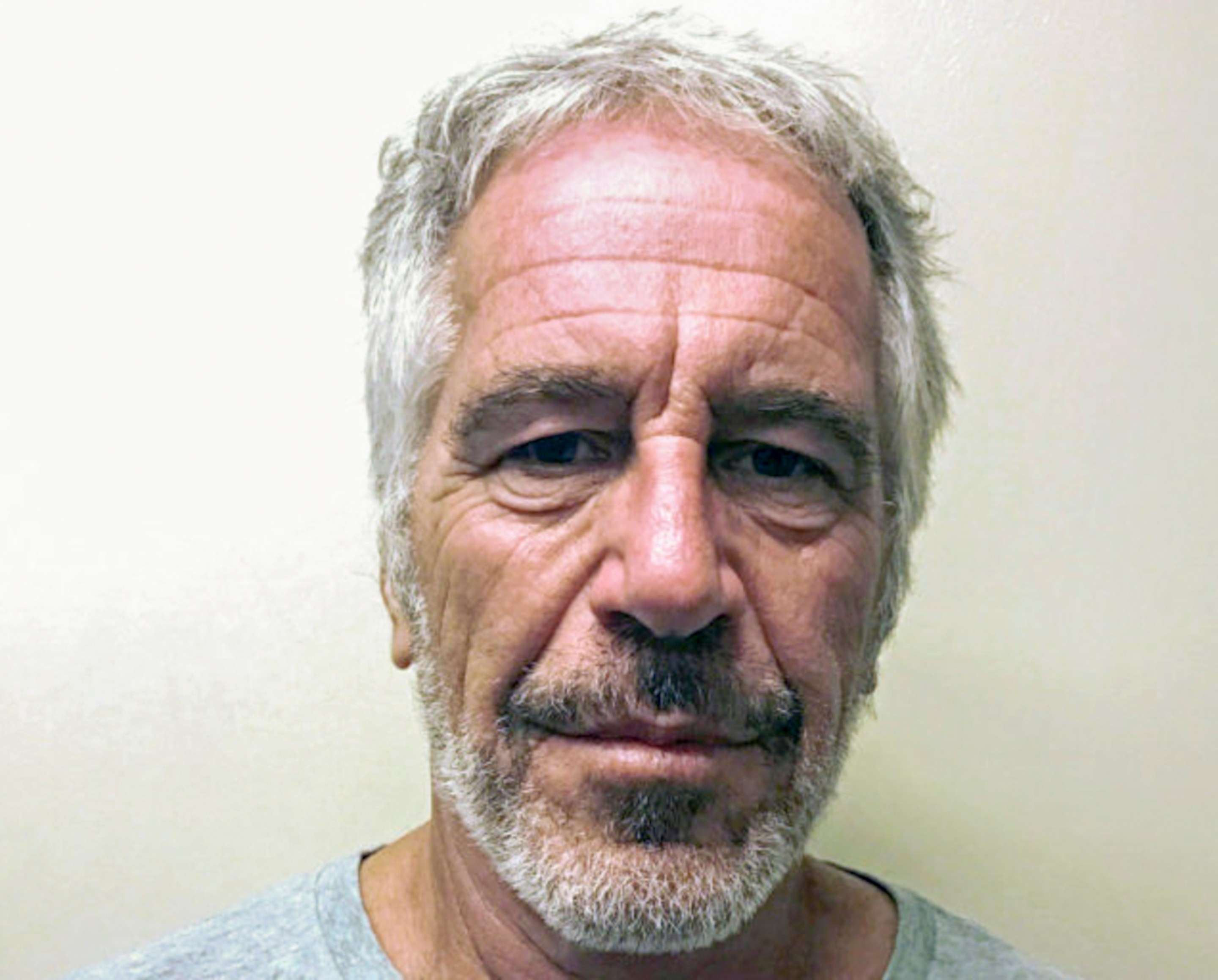
Jeffrey Epstein was found dead in his cell at Manhattan’s Metropolitan Correctional Center on August 10, 2019, and New York City’s chief medical examiner ruled the death a suicide by hanging. Michael Freeman, a specialist in forensic medicine who holds doctorates in epidemiology and forensic medicine and edits his faculty’s journal, now says the autopsy photos tell a different story. He presented his analysis in London on November 16, 2026, and concluded the death was a homicide.
Freeman’s case starts with the mark on Epstein’s neck. He says it was deep, ragged and Y-shaped, not the smooth upward line a hanging loop leaves as it pulls toward a single anchor point. He says there was a second, lower mark that a hanging loop could not produce, because both loops would have risen to the same anchor.
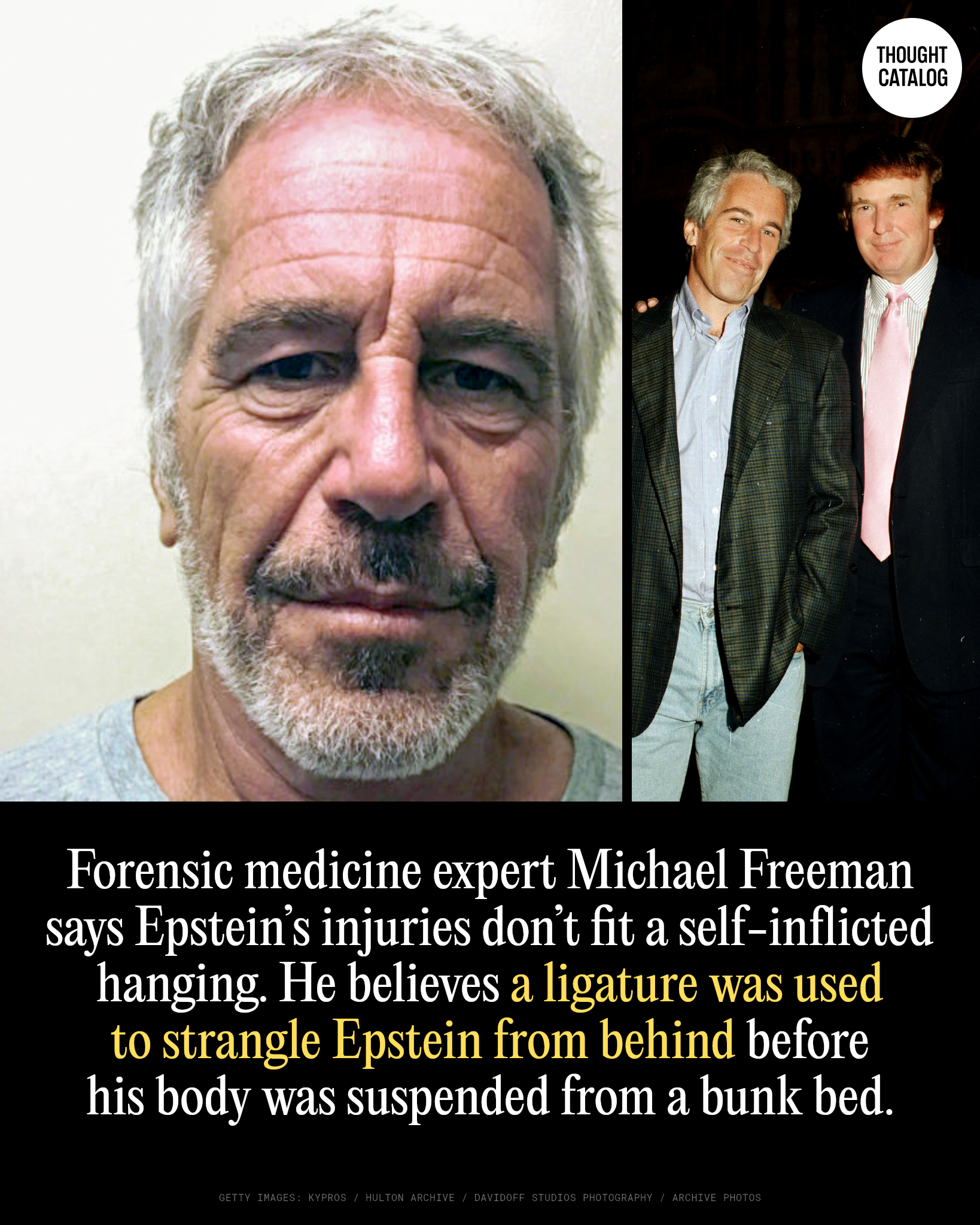
From there he points to the rest of the body. He says apparent fingernail scratches above the ligature fit someone being strangled from behind and clawing to pull the cord off. What points to an assault rather than a man alone in a cell, he said, is a deep hemorrhage in the left shoulder along with injuries consistent with a blow to the face.
In Freeman’s reconstruction, Epstein was strangled from behind with a ligature. The body was then suspended from the bunk bed using that same ligature. Freeman built 3D models from the autopsy photos and a guard’s later account that the body hung about an inch off the floor. On Newsnight he laid out his reasoning by elimination.
“Well, what I’m saying as a certainty is he didn’t get all of those injuries from self-inflicted hanging,” he said. “He didn’t die from old age in his cell, and he didn’t die from an accident. So the only option that we have is that he died as a result of a homicide. Or that he died by taking his own life, which is what the official reports say.”
Freeman says he has no idea who killed Epstein and that naming a suspect was no part of his work. The file came from Mark Epstein, Jeffrey’s brother, who has long maintained the death was murder and who handed Freeman the autopsy file in November 2025. Freeman says he was not paid and that the analysis was independent.
The official record still points the other way. Barbara Sampson, the medical examiner at the time, said in 2019, “The cause is hanging, the manner is suicide,” and the medical examiner’s office said this week that it stands by that determination.
Dr. Kristin Roman, who performed the autopsy and saw the body, told federal investigators it was “pristine,” with no bruises and nothing under the nails, and said, “This doesn’t look anything like a strangulation.” A 2023 Justice Department inspector general review found no evidence contradicting the FBI’s finding of an absence of criminality, and a June 2026 inquiry found jail writings and earlier attempts suggesting Epstein meant to die.
The weight of Freeman’s conclusion rests on what he could and could not see. He never examined the body, so his certainty comes from photographs and the file, his fingernail and strangulation reading is his interpretation of those images, and the work has not been peer reviewed. Challenged as a conspiracy theorist, he said, “don’t take my word for it, let everybody look at it,” and told critics to show him where he was wrong.