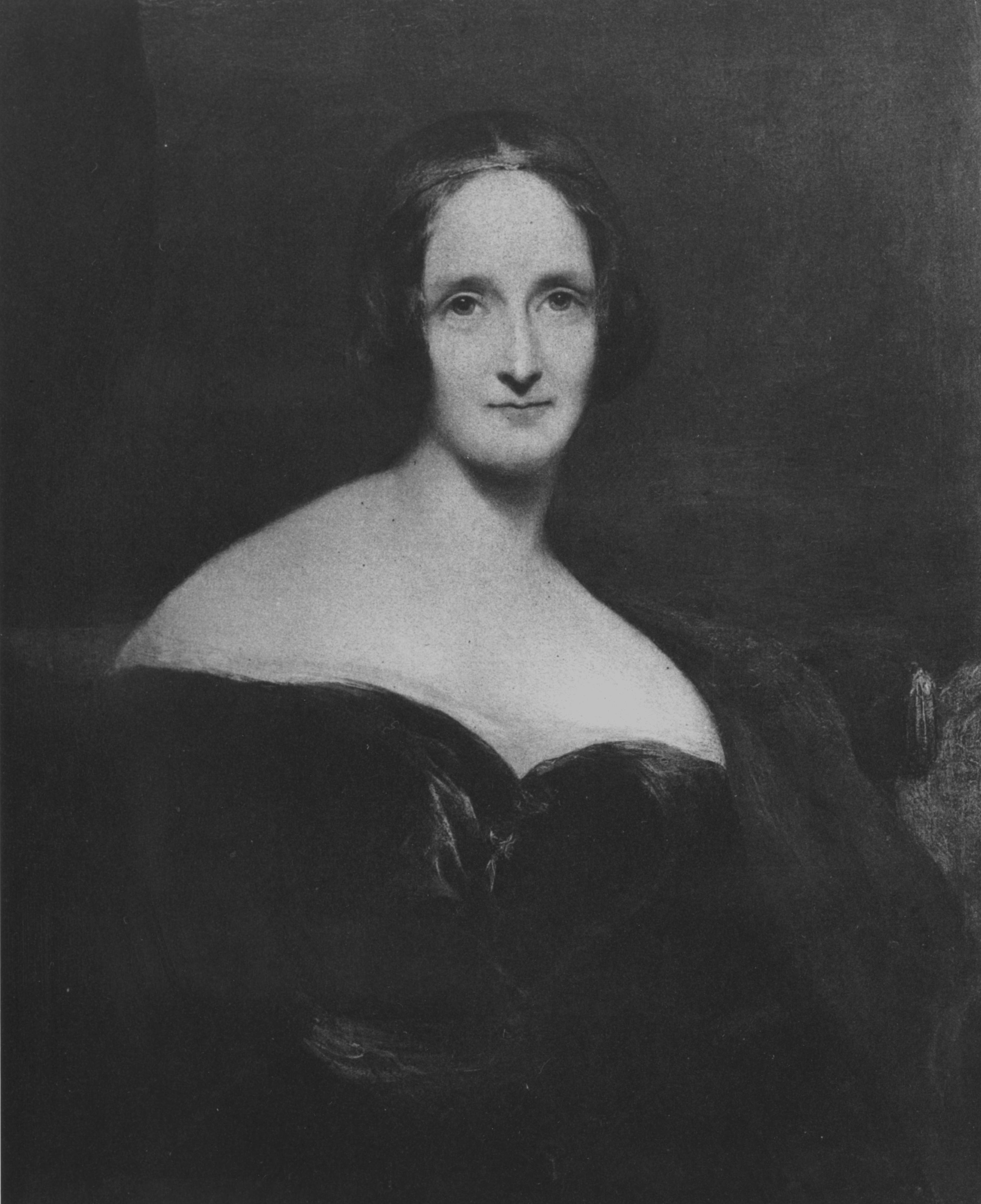
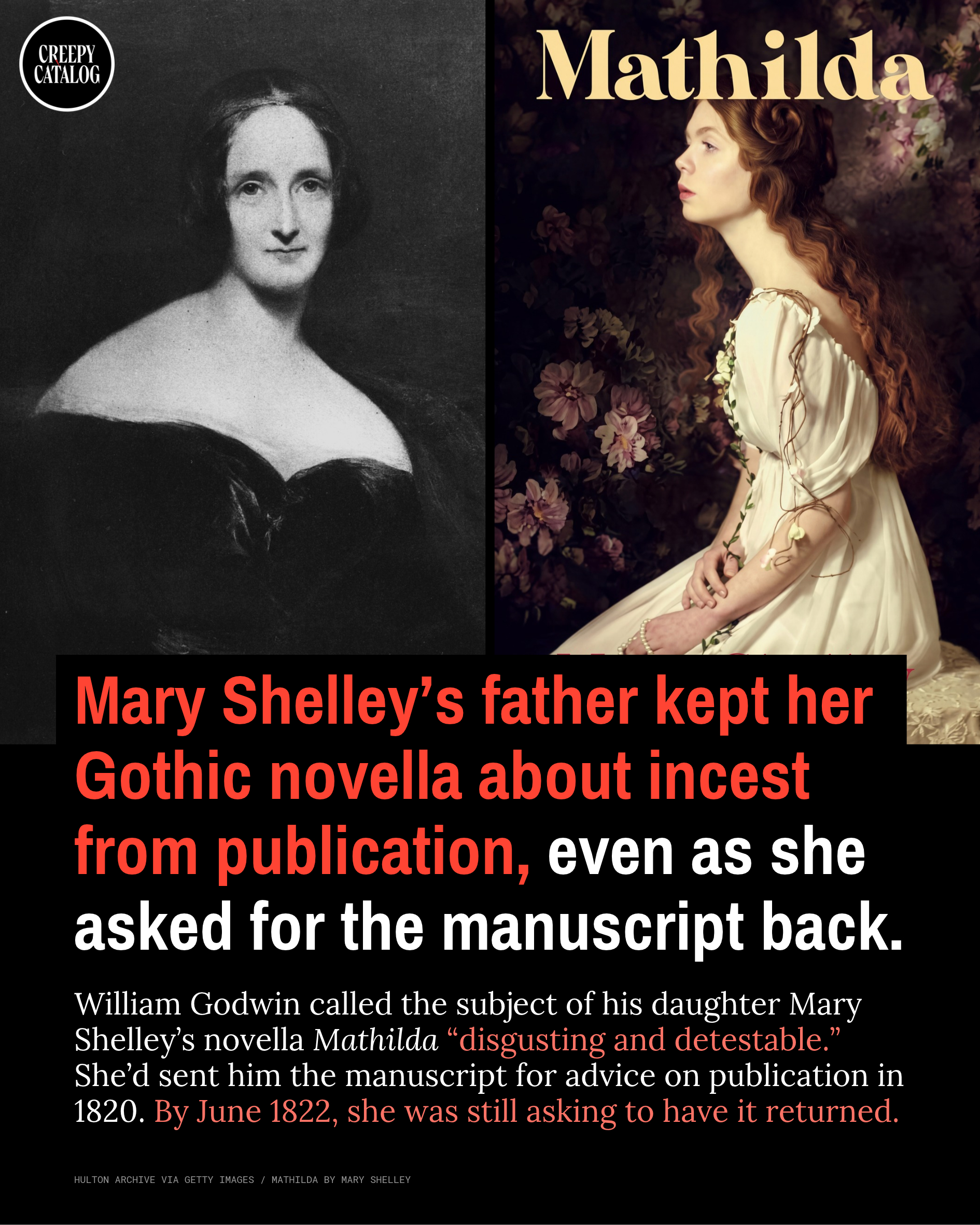
William Godwin called the subject of his daughter Mary Shelley’s novella Mathilda “disgusting and detestable.” She’d sent him the manuscript for advice on publication in 1820. By June 1822, she was still asking to have it returned.
The story follows a daughter whose father abandons her in infancy. When he returns, their reunion gives her the family life she’s longed for. After 3 happy months, he confesses his incestuous love for her, then drowns himself.
Mathilda retreats into isolation on a heath, where she meets Woodville, a poet grieving his own loss. She asks him to die with her. He refuses, and she eventually dies of illness while writing her account.
Shelley drafted the novella in August 1819, after the deaths of her daughter Clara in September 1818 and her son William in June 1819. An earlier daughter had died in 1815. She’d finished Frankenstein about 2 years before she began Mathilda.
As she copied the new story, her own father was rebuking her grief. In a letter dated September 9, 1819, Godwin described it as a fall “among the commonality and mob of your sex.”
The Gisbornes took the manuscript to England on May 2, 1820. Maria Gisborne found it “singularly interesting,” but Godwin’s judgment was mixed.
He admired parts of it while worrying that readers would be “tormented by the apprehension from moment to moment of the fall of the heroine.” Gisborne recorded his “disgusting and detestable” verdict on August 8.
There’s no record that Godwin tried to publish it. Shelley requested its return in correspondence from January 18 through June 2, 1822. On April 28, Gisborne wrote, “The learned are of the opinion that I shall never obtain possession of ‘Mathilda.’”
Percy Bysshe Shelley drowned on July 8, 1822, after those requests. Mary later connected the story with her own suffering.
On May 6, 1823, she wrote, “Matilda fortells even many small circumstances most truly.” That gives her words a prophetic quality, though the quoted letters and journal entries don’t call the manuscript cursed.
Shelley died in 1851. The full novella finally appeared in 1959, edited by Elizabeth Nitchie for the University of North Carolina Press.