Lord Ruthven, the vampire in John Polidori’s 1819 story The Vampyre, gave bloodsucking a place in high society. Modeled on Lord Byron, he helped establish the aristocratic vampire that still shapes the genre.
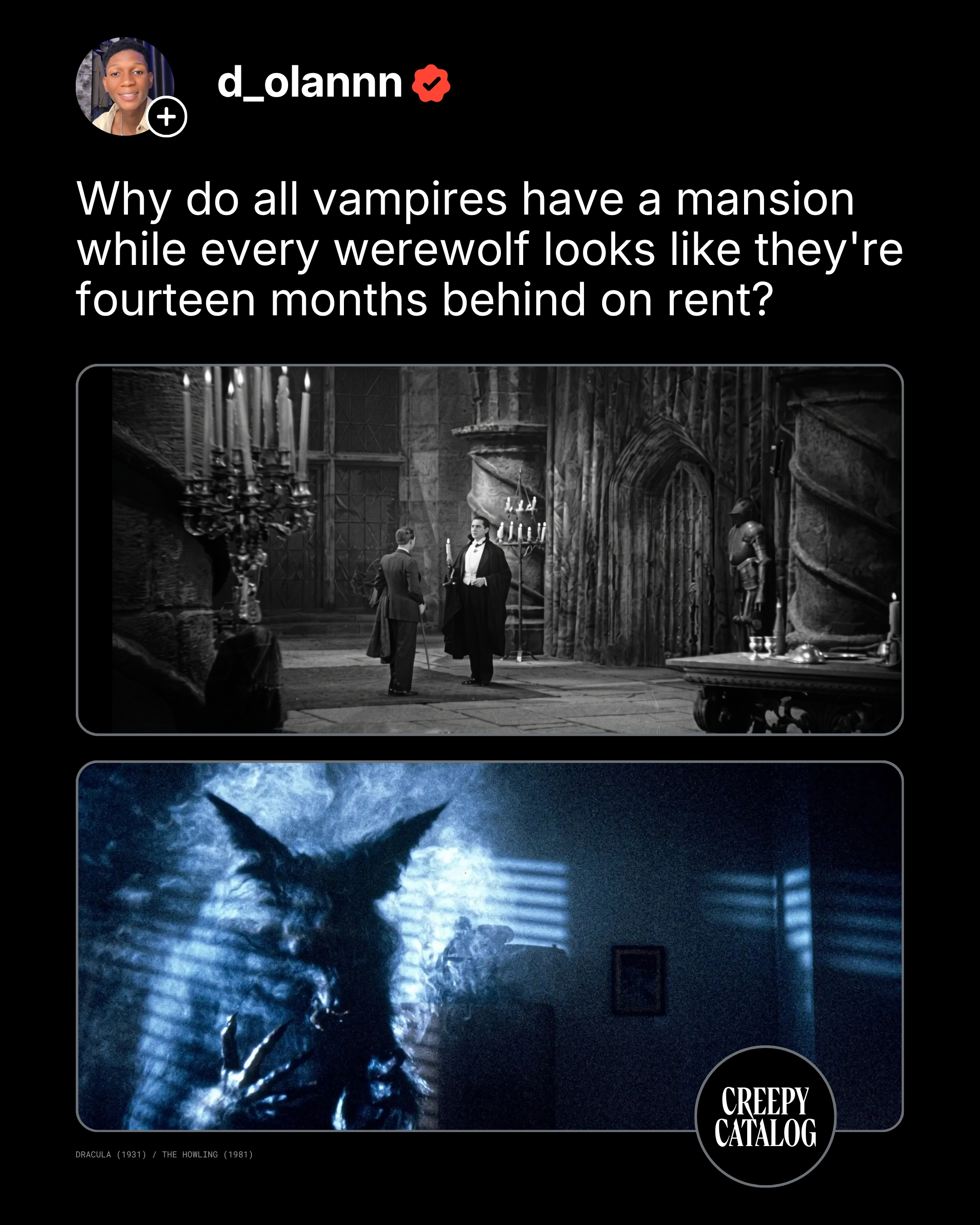
The earlier folklore had a different social setting. Balkan accounts from the 1720s, which helped introduce “vampire” into English, described dead villagers suspected of causing deaths in their communities. The castle came later: Bram Stoker’s Count Dracula receives Jonathan Harker at his own.

Literary critic Franco Moretti traced a further shift within those wealthy monsters. He described Polidori’s vampire as “still a petty feudal lord” and Stoker’s Dracula as “a rational entrepreneur who invests his gold.” Immortality gives an investor an unusually long time horizon.

Twilight made that financial advantage explicit. In 2010, Forbes estimated Carlisle Cullen’s fictional wealth at $34.1 billion, crediting much of it to long-term investments guided by Alice Cullen’s ability to see the future. His family has both time and advance knowledge of the market.
That same year, critic Noah Berlatsky described the Edward-versus-Jacob rivalry in his review of Twilight: Eclipse: their supporters “might as well call themselves Team Effete Aristocrat and Team Earthy Ethnic.”
The association between monsters and money also runs through Karl Marx’s Capital (1867). Marx wrote that “capital is dead labour, that, vampire-like, only lives by sucking living labour,” and described the pressure to extend the working day as “the were-wolf’s hunger for surplus-labour.” He used both creatures to describe exploitation.
Later fiction also gives us a werewolf struggling to get by. J.K. Rowling wrote that Remus Lupin “lived a hand-to-mouth existence, taking jobs that were far below his level of ability.”