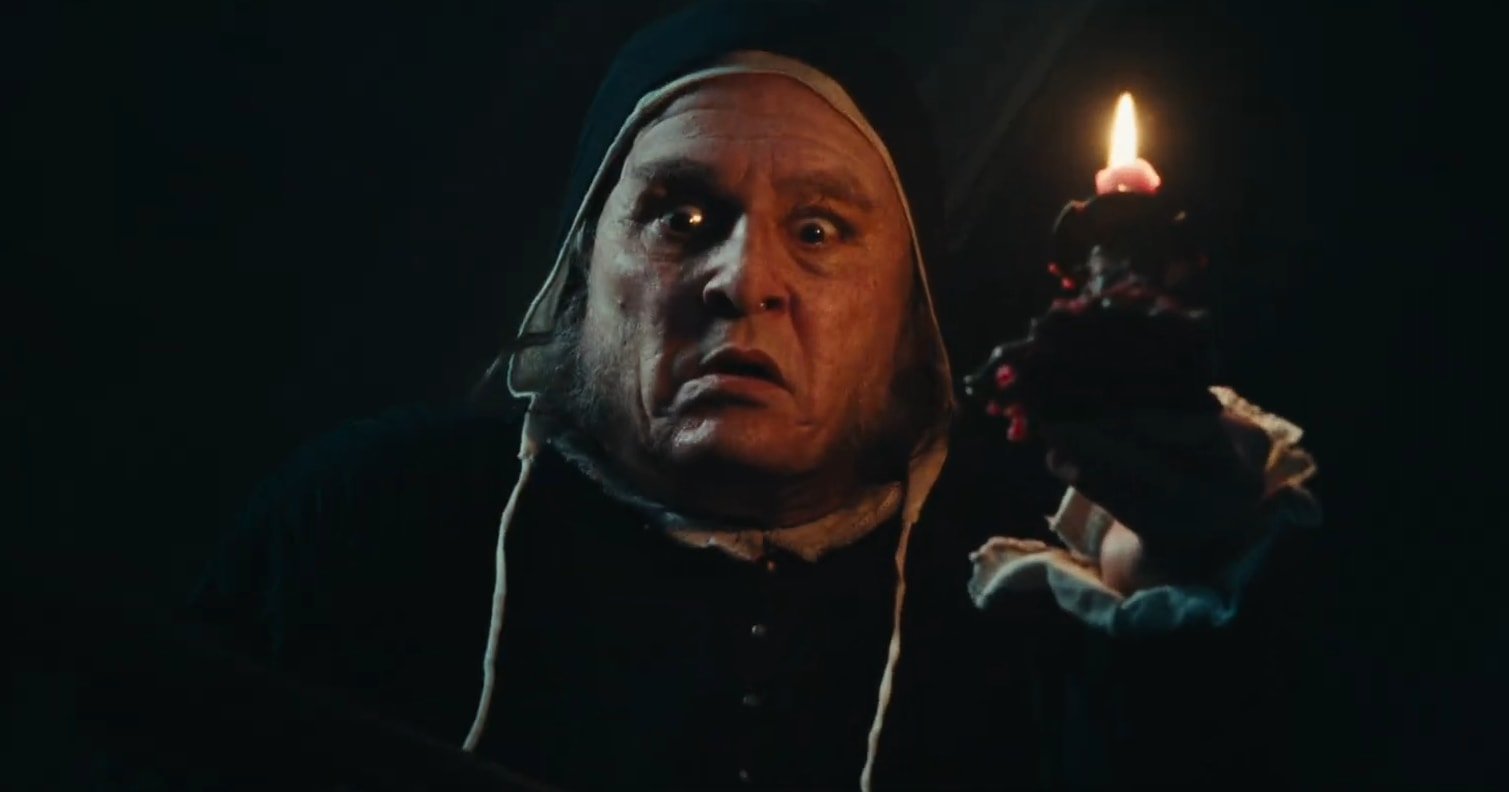
A secret society wants a missing woman dead, and its members try to pressure her into taking her own life. In The Seventh Victim (1943), that threat becomes the center of a younger sister’s search through New York, where finding someone offers little assurance of saving her.
Mary Gibson, played by Kim Hunter in her film debut, leaves boarding school after her older sister Jacqueline disappears and the tuition payments stop. In Greenwich Village, Mary learns that Jacqueline has sold her cosmetics business, La Sagesse.
She also discovers a husband her sister kept secret, Gregory Ward (Hugh Beaumont), and a psychiatrist, Dr. Louis Judd (Tom Conway), who knows something about Jacqueline’s hidden life.
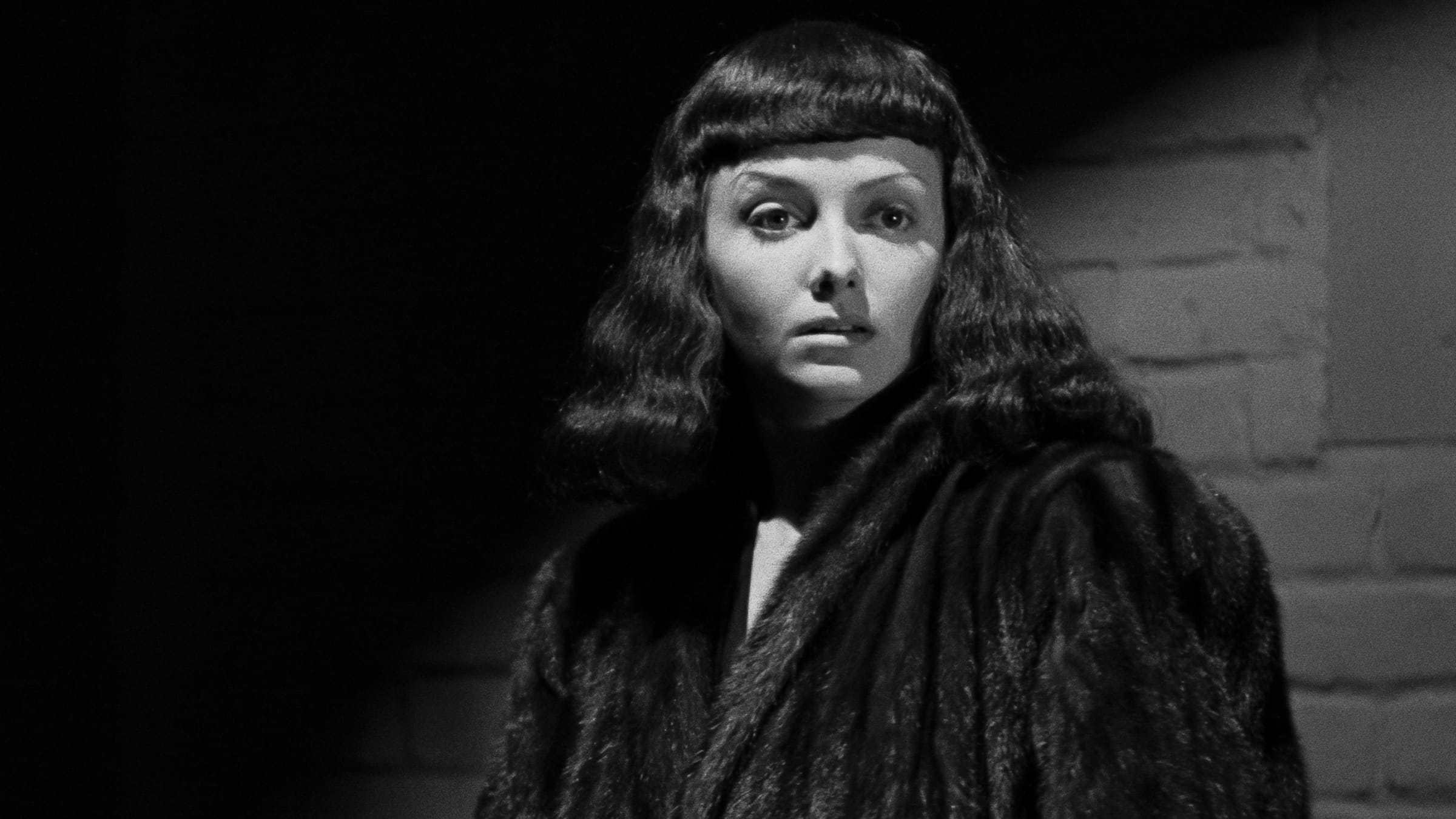
Jacqueline, played by Jean Brooks, has become involved with the Palladists, a Satanic society that demands death for anyone who exposes it. She’s confided in Judd and tried to leave.
The group’s coercion converges with her own desire to die, making the danger Mary’s investigating inseparable from her sister’s despair.
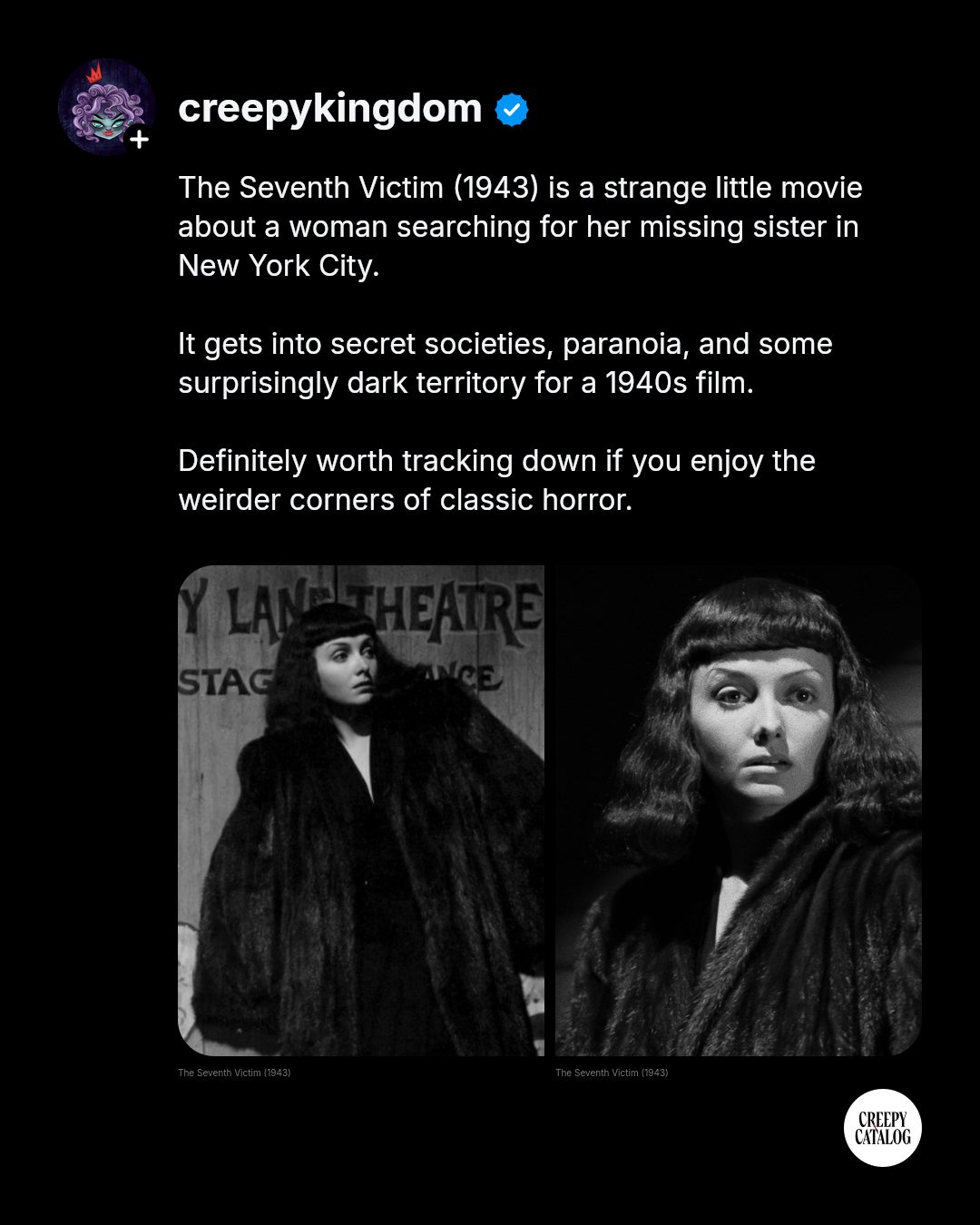
Producer Val Lewton and director Mark Robson build that dread into ordinary city life. A subway journey, a restaurant and a shower become places of danger.
Cinematographer Nicholas Musuraca’s black-and-white lighting makes the city feel full of hiding places, while gaps in the storytelling leave people’s intentions difficult to read.
This was Robson’s first feature as director and the 4th film in Lewton’s RKO horror cycle. It was shot in 24 days in May 1943.
Studio cuts removed scenes that helped explain the characters and their relationships; the surviving version runs just 71 minutes.
Its preoccupation with death begins before Mary’s search, with an opening quotation from John Donne: “I run to death, and death meets me as fast, / And all my pleasures are like yesterday.”
Later, Jacqueline’s dying neighbor Mimi expresses a desire to enjoy the life she has left, even as Jacqueline struggles to want a future.