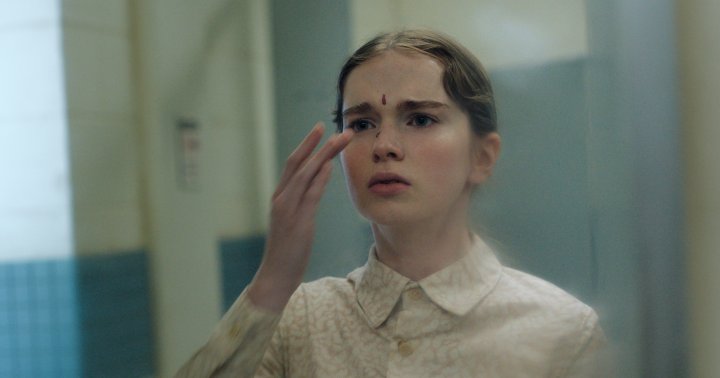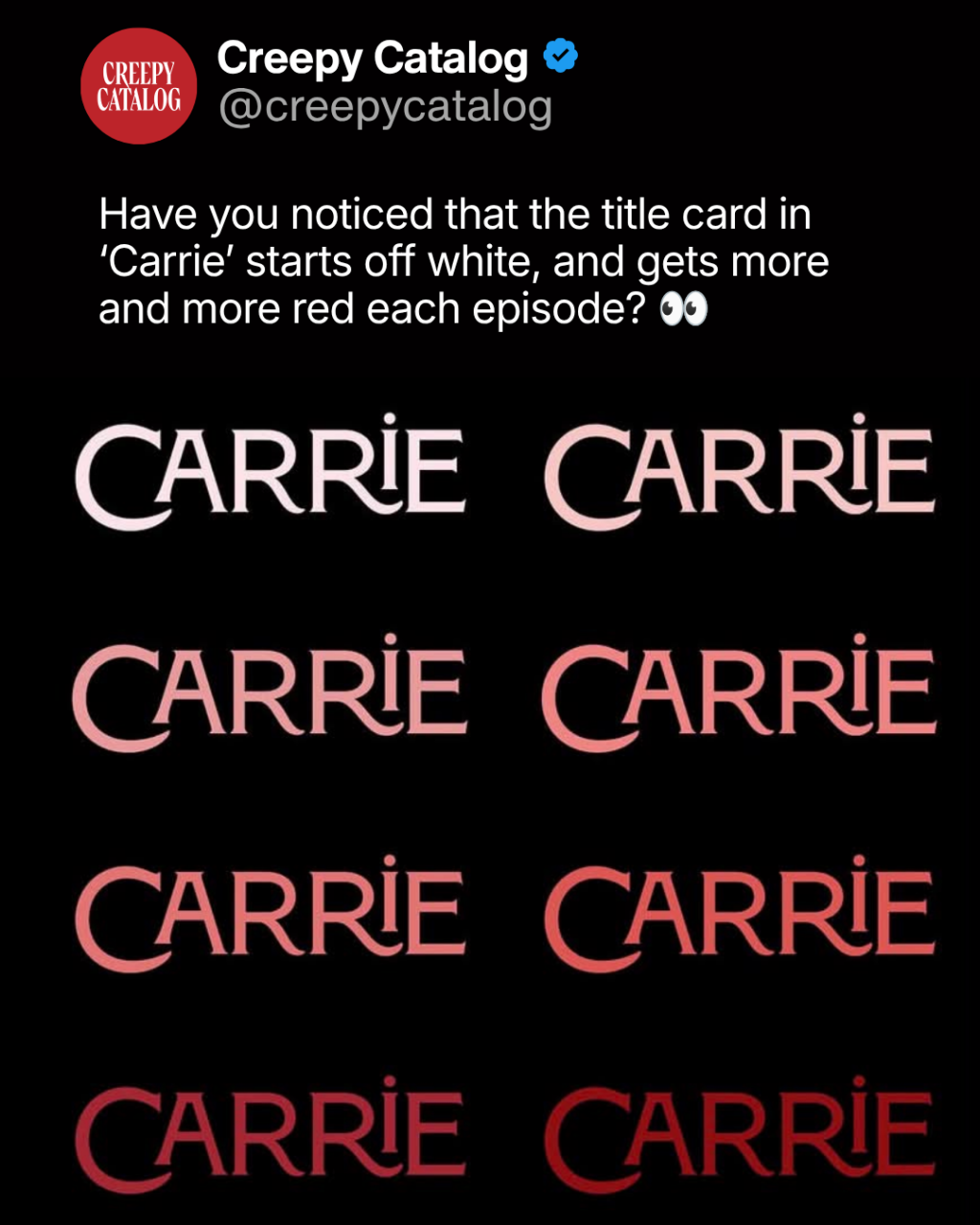
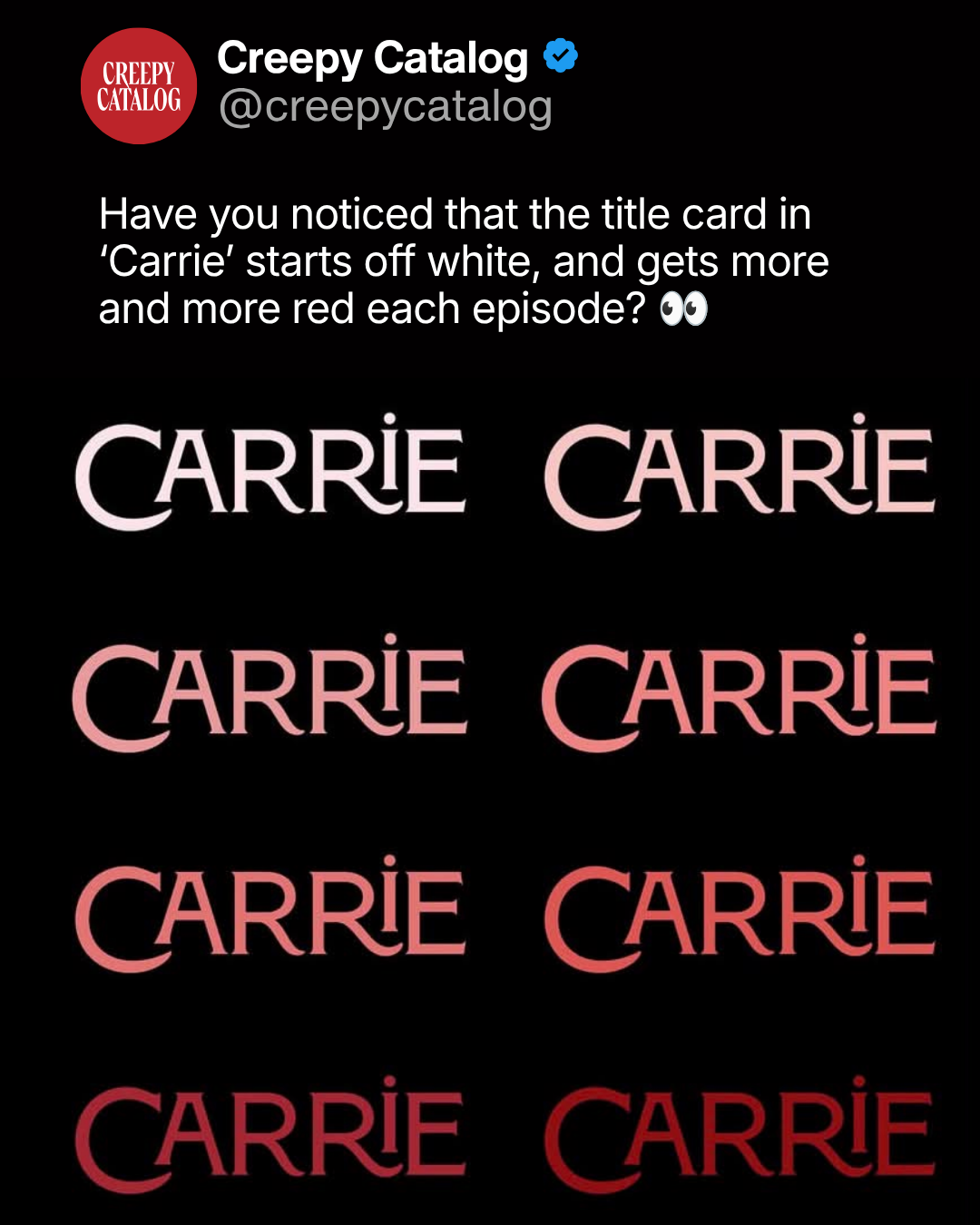
Take the title card of Mike Flanagan’s new Carrie miniseries. In the first episode, the word “Carrie” appears in plain white. With every episode that follows, it creeps a little more red. By the finale, it’s a deep, unmistakable blood red. No one points it out, and you could watch all eight episodes without consciously noticing, but your brain registers the shift anyway. It’s the story’s slow march toward the prom, told through nothing but a font color.
That’s the Flanagan signature: choices small enough to miss, deliberate enough to matter. Each episode after the pilot opens with another woman from history who shared Carrie’s supernatural “TK gene,” turning a story about one isolated girl into something closer to a lineage of women who were feared, punished, and misunderstood. He also keeps casting the same trusted collaborators, including Samantha Sloyan, who plays Margaret White and has worked with him on Hush, The Haunting of Hill House, The Midnight Club, and The Fall of the House of Usher.
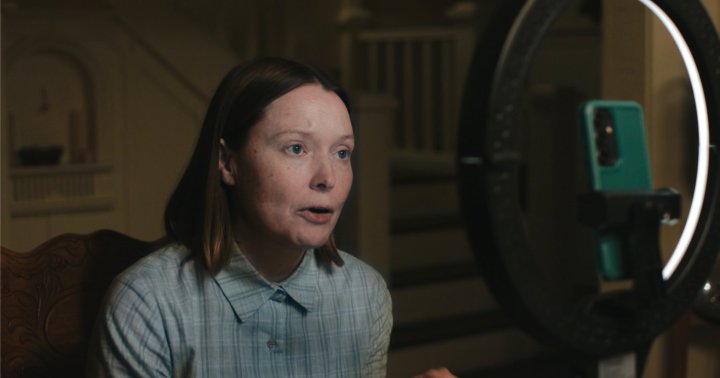
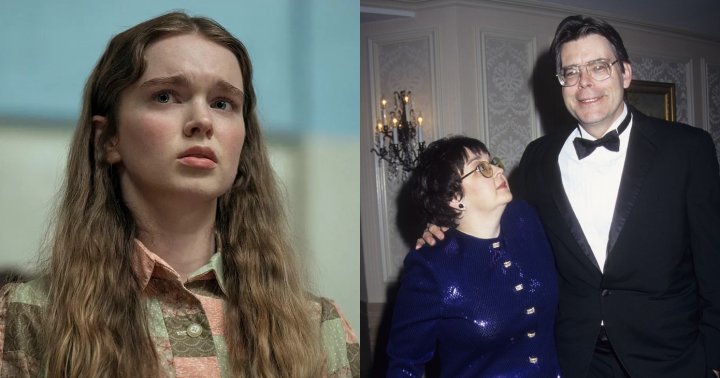
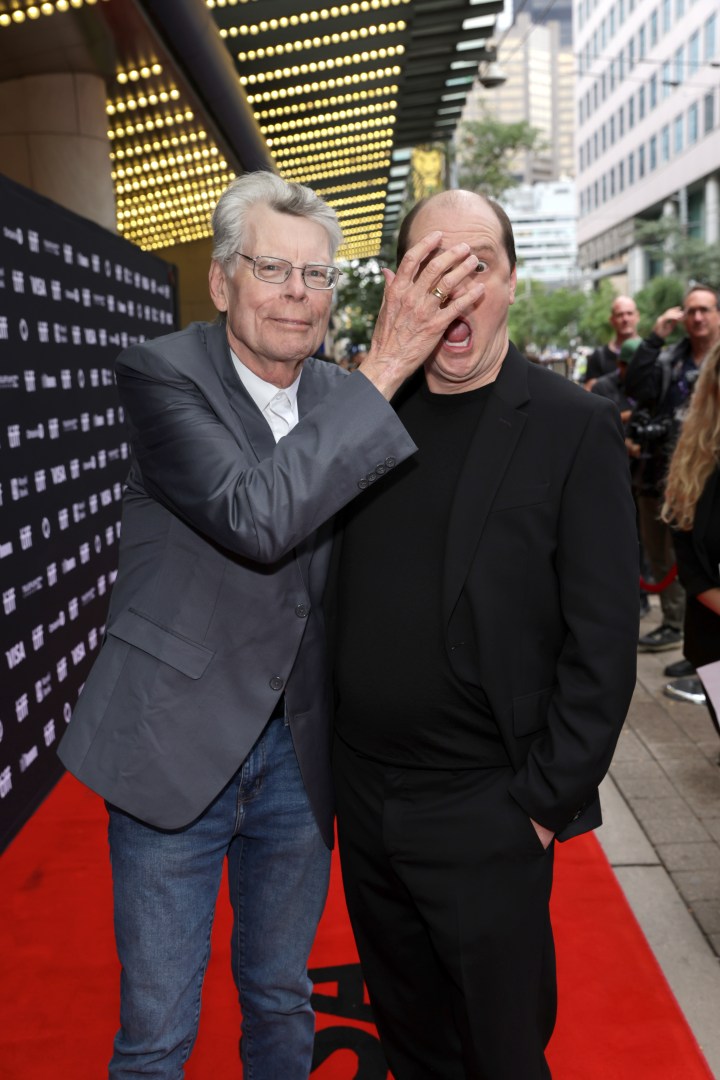
It’s the same craftsmanship that earned him Stephen King’s title of the “Quentin Tarantino of horror” and made The Life of Chuck a TIFF grand prize winner. And King, who executive produces Carrie, has publicly praised this adaptation, saying its commentary on social media is shocking and true. What’s remarkable is that Flanagan updates the story without losing the heart of it. This version is set in the present day, where the bullies have smartphones now, and he’s said he wanted to get to the prom through a completely different route.
That’s what separates a filmmaker who adapts a book from one who rebuilds it from the inside. Flanagan sees the whole story, down to the color of the title.