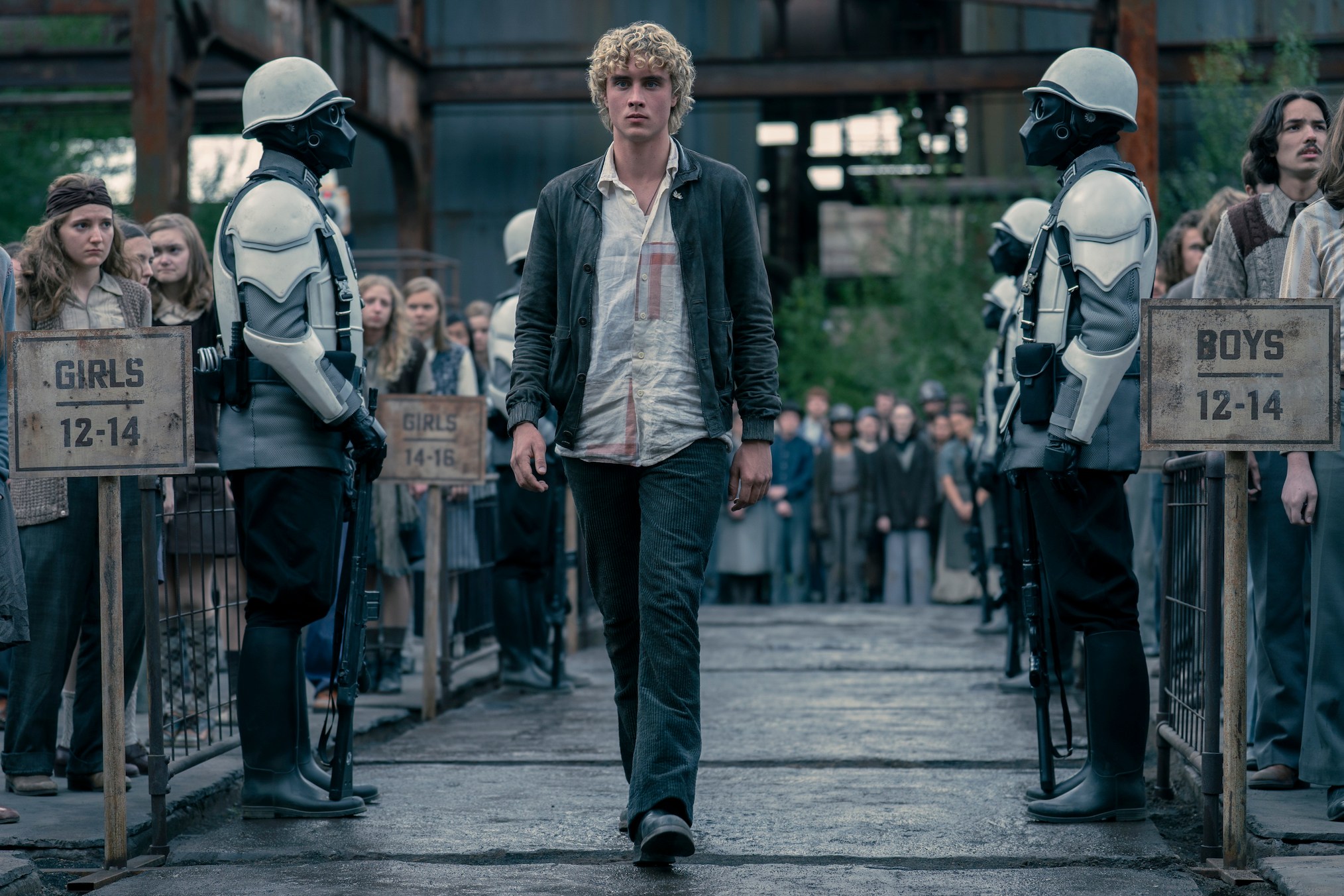
Suzanne Collins built Sunrise on the Reaping around a question that reaches beyond Panem: why do people surrender their own judgment to rulers when the governed hold the greater power?
Her starting point was philosopher David Hume’s essay “Of the First Principles of Government.” Hume argued that rulers depend on public opinion to sustain their authority, even under military or despotic governments.
Collins connects that dependence to the way people come to accept their own submission. As she put it: “And that’s where propaganda comes in.”
In her interview with editor David Levithan, Collins said these questions apply to democracies as well as dictatorships. She asks what messages people absorb each day that preserve the existing order, how submission becomes something people want, and what might protect them against it.
She’s said she’d consider the book a success if readers simply read and discussed the full Hume passage included among its epigraphs.
The novel explores that submission through Haymitch’s decisions, the possibilities for alliances and resistance inside the Hunger Games, and a nation that’s yielded power to the Capitol. The Capitol controls how events reach the public: it edits and delays broadcasts, removes resistance from the record, changes the sequence of events in recaps, and presents the Games as essential to peace. Real events and deaths become material for a story that protects its rule.
An opening epigraph from George Orwell makes the problem explicit: “All propaganda is lies, even when one is telling the truth.” A related William Blake couplet reads: “A truth that’s told with bad intent / Beats all the lies you can invent.” Both speak to the danger of using accurate information selectively, with omissions and framing that serve those in power.
The title draws on another question Collins takes from Hume: whether past experience guarantees what happens next. A sunrise every day doesn’t guarantee the next sunrise; an annual reaping doesn’t guarantee the Games must continue. Within the story, characters differ over whether a future without them is possible, and a promise to fight against another reaping runs through the novel.
When announcing the book, Collins also returned to the series’ recurring question, “Real or not real?” She said it feels more pressing to her every day.