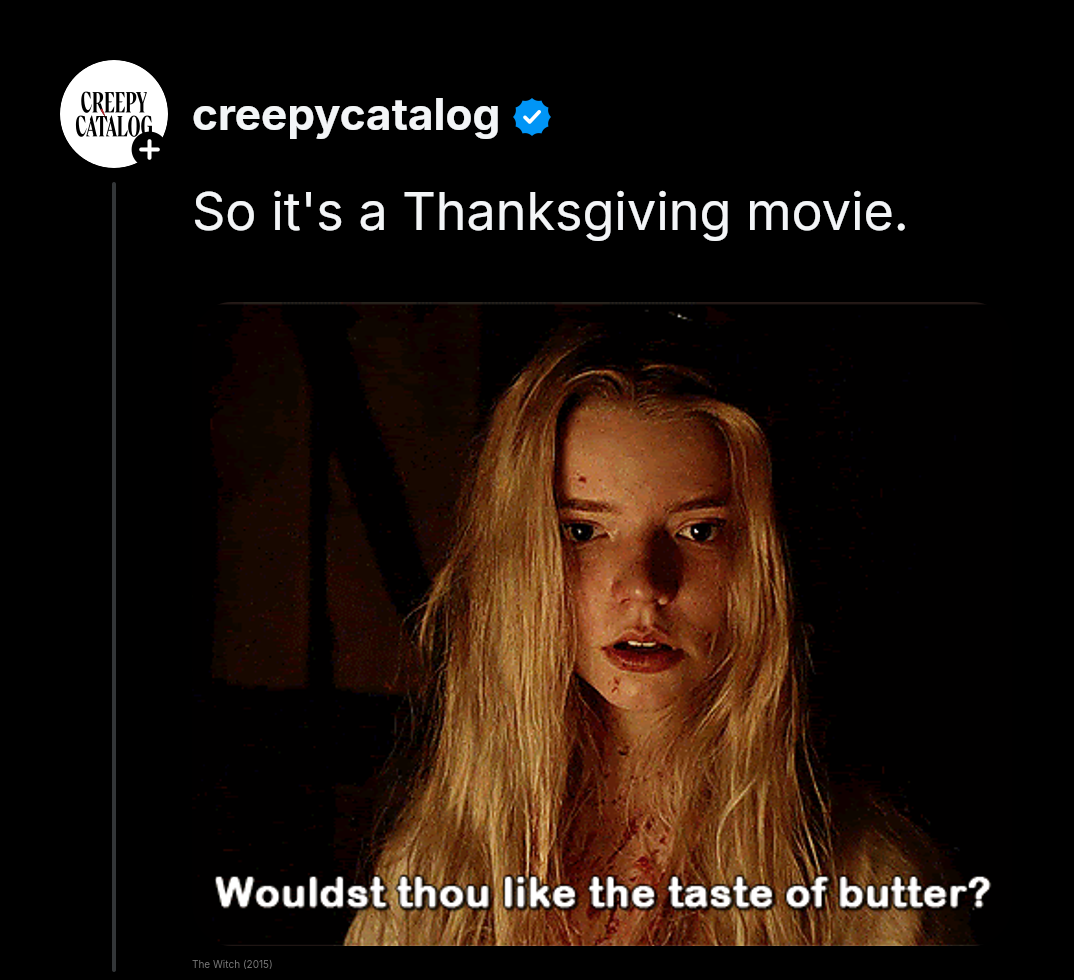
The butter Black Phillip offers Thomasin at the end of The Witch has roots in real 17th-century New England witchcraft accounts. People’s depositions and confessions described a Devil who tempted them with everyday comforts, including shoes and help with household work.
Robert Eggers has explained that this history informed the offer. He kept the butter line even after test audiences questioned it: its smallness was part of what made it faithful to those accounts.
For Thomasin, living on a struggling Puritan farm in the 1630s, butter and a pretty dress carry particular weight. Her days have been shaped by deprivation, relentless work, religious restrictions and her family’s growing suspicion of her. Food she could enjoy and clothing she could choose make pleasure tangible.
By the final scene, her family is gone. She enters the goat shed and asks Black Phillip to speak. His offer gives her a concrete luxury to agree to, and she accepts.