Saw reached theaters in October 2004, when the Abu Ghraib prison abuse photographs had put images of torture before the public. That timing helps explain why critics connect its captivity, surveillance and punishment to the years after September 11.
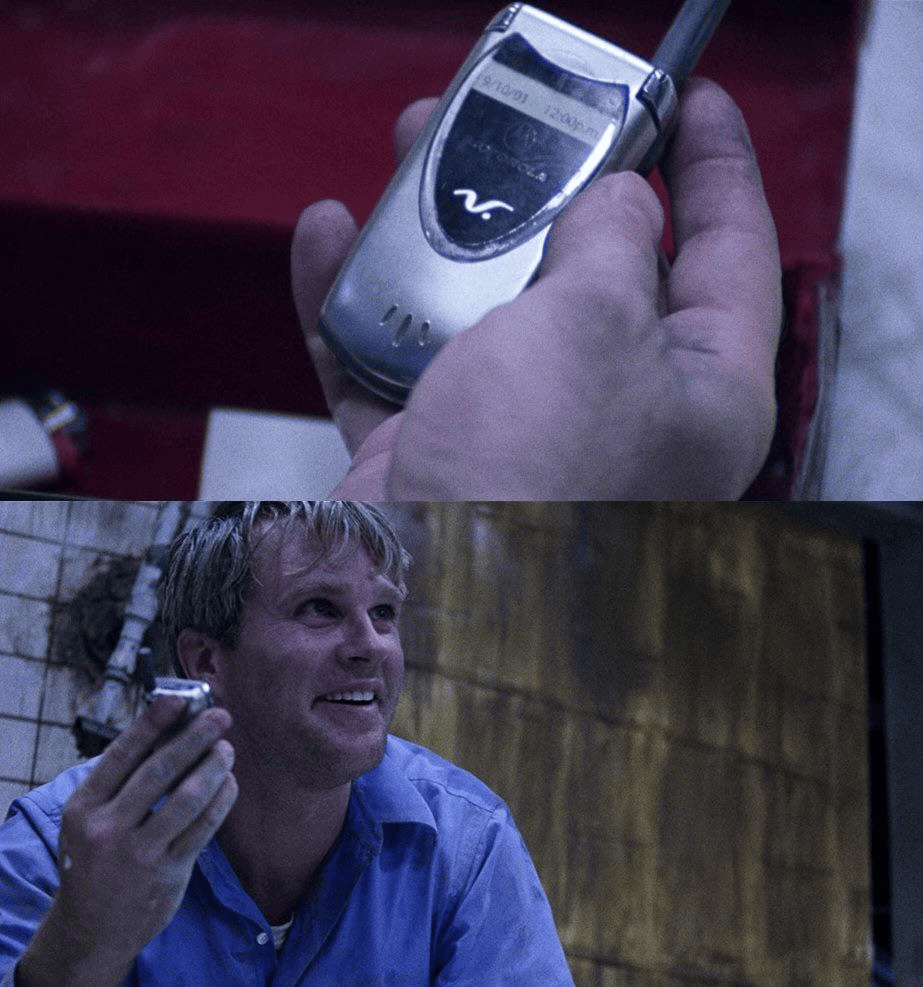
Around the 57-minute mark, Dr. Gordon finds a box with a phone, cigarettes and other items, and the phone’s screen briefly displays 9/10/01. In American date format, that’s September 10, 2001, the day before the attacks. Snopes and other sources have confirmed the screenshot is genuine.
Directed by James Wan and co-written with Leigh Whannell, the film introduces Jigsaw, John Kramer, whose victims must endure gruesome tests to survive. He judges how they’ve lived, then treats their willingness to suffer or hurt themselves as evidence that they value their lives.
For critics who read Saw through the War on Terror, that moral logic matters. Jigsaw supplies a justification for cruelty and makes the captive responsible for surviving it. His games invite questions that also surrounded torture and “enhanced interrogation”: who gets labeled deserving of abuse, who controls the choices, and how violence gets defended as necessary.
The film’s grim institutional spaces and captives being watched also fit a period shaped by terrorism fears, surveillance and detention at Guantanamo. In this reading, horror gives those anxieties a contained setting where an unseen authority sets the rules and escape carries a physical cost.
Saw and Hostel became central examples in discussions of “torture porn,” the term coined by critic David Edelstein. Critics and scholars have examined that cycle as a response to, or exploitation of, a public newly exposed to images of wartime abuse.
The political connection remains a critical interpretation. Wan and Whannell have said they conceived the original as a mystery thriller, with influences including Se7en, and didn’t set out to make a political allegory or a “torture porn” film.
Made for roughly $1–1.2 million, the original relies heavily on mystery and has relatively little on-screen gore. The sequels put greater emphasis on graphic traps.