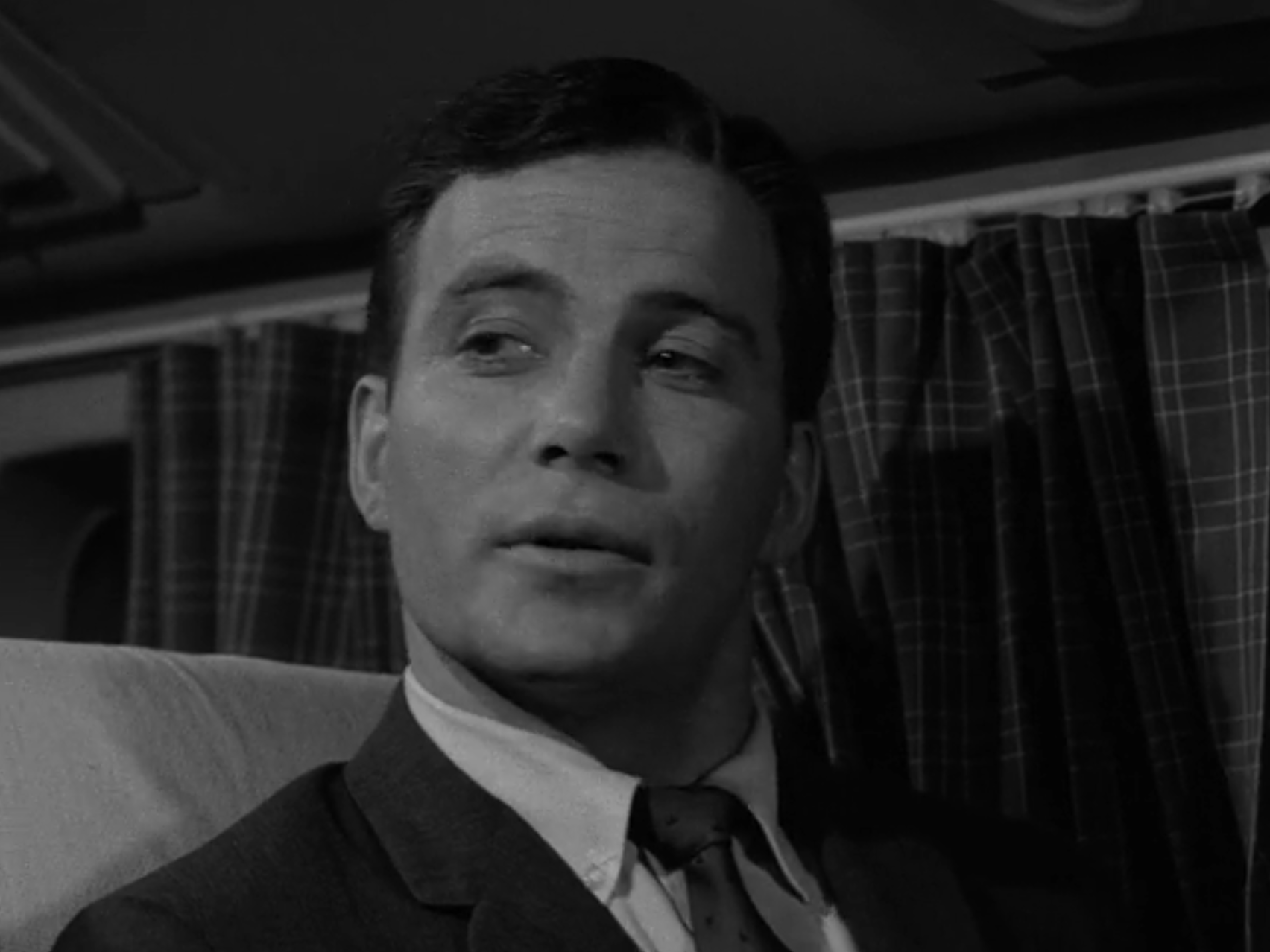
“Nightmare at 20,000 Feet” (Season 5, Episode 3 of the original Twilight Zone, aired October 11, 1963) is one of the series’ most famous and frequently parodied episodes. Written by Richard Matheson and directed by Richard Donner, it stars William Shatner as Robert “Bob” Wilson.
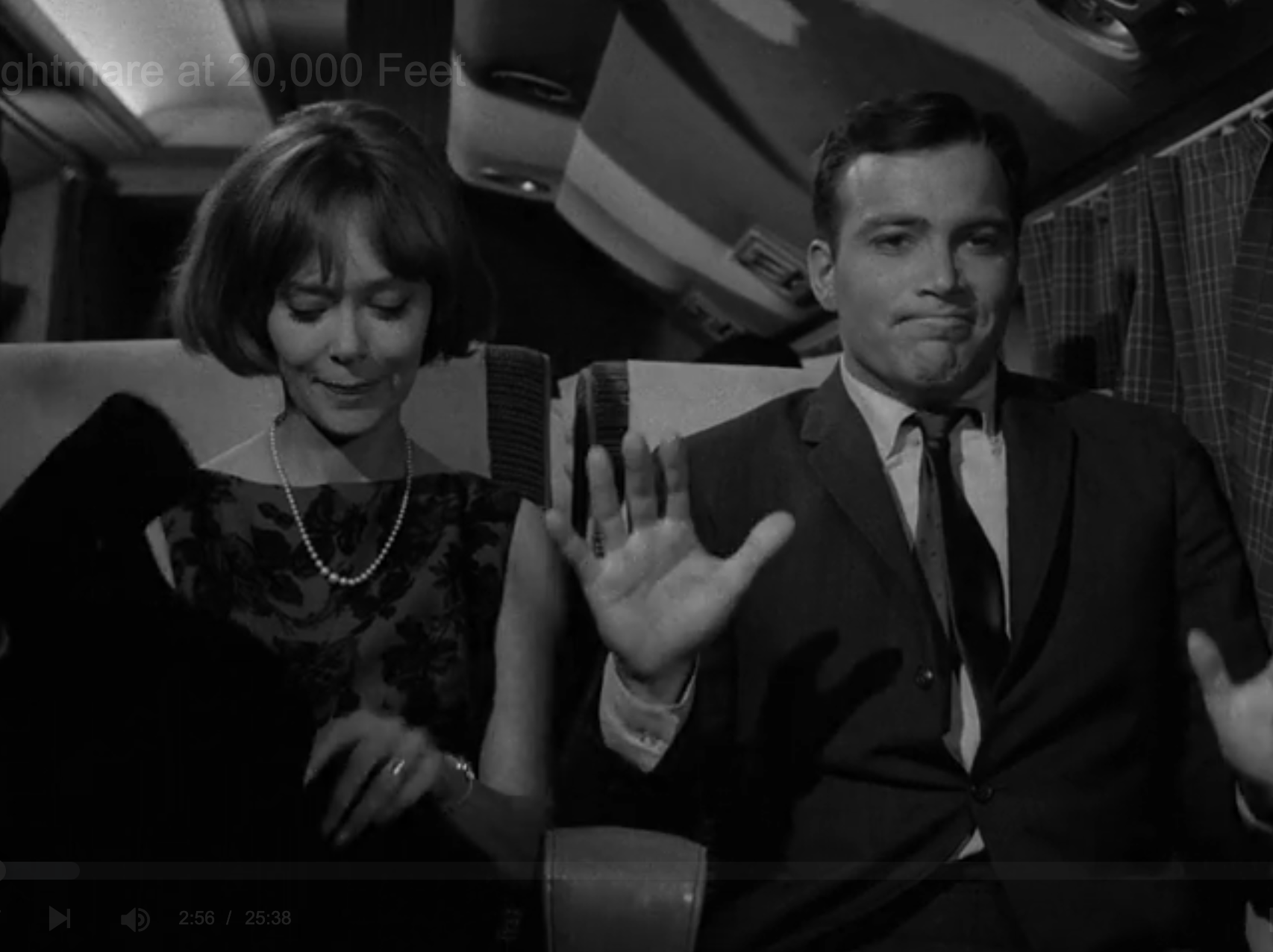
Bob Wilson is a salesman, husband, and father who has just been discharged from a sanitarium after a six-month stay. He suffered a nervous breakdown on a previous flight and is now boarding a plane again for the first time, accompanied by his supportive but anxious wife, Julia. He tries to reassure her (and himself) that he’s fine, saying he had a “teensy-weensy breakdown” but is cured.
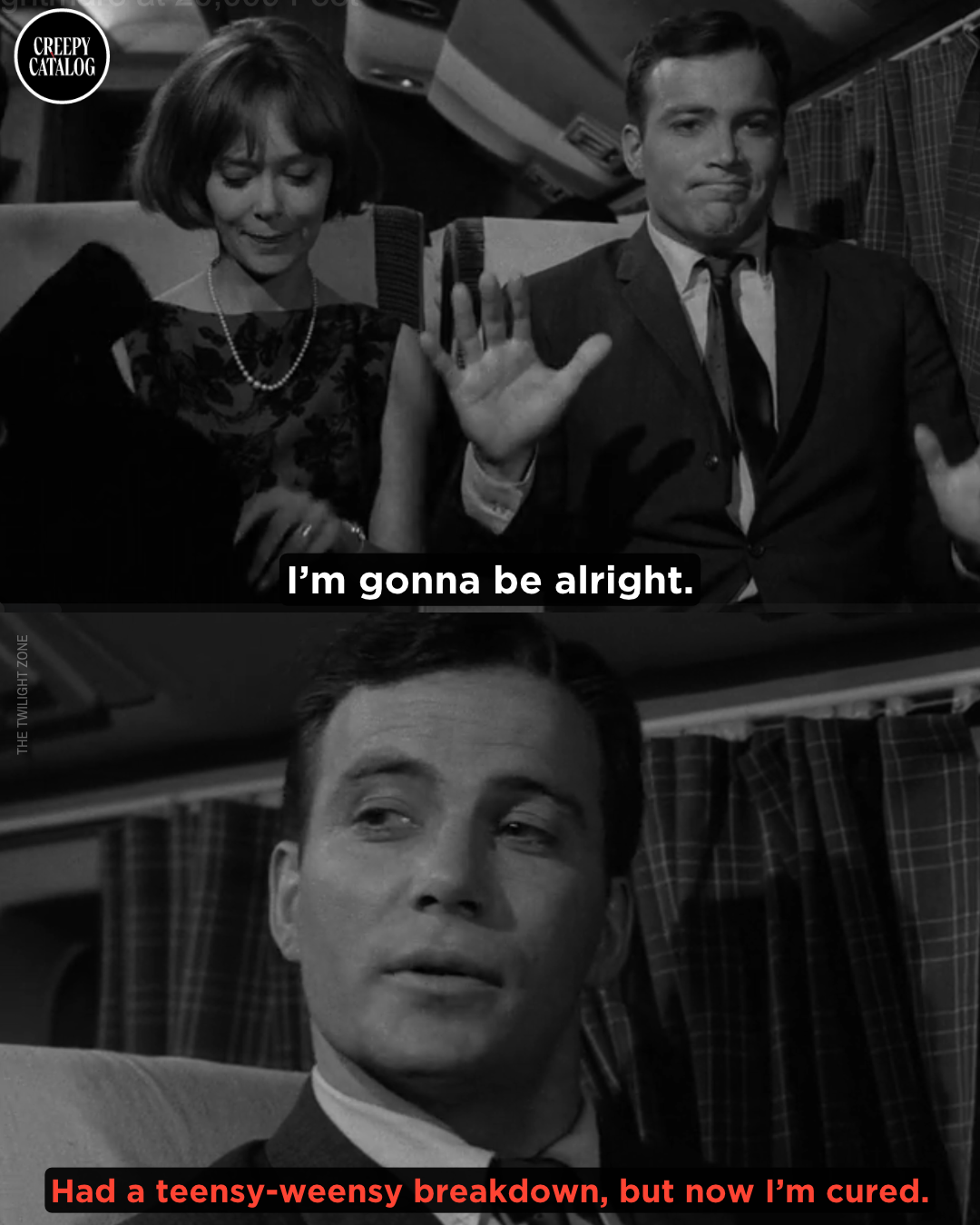
Once the plane is airborne in a storm, Bob looks out the window and sees a bizarre, furry, gremlin-like creature on the wing. The creature appears to be deliberately damaging the engine. Every time Bob tries to alert the stewardess, his wife, or the pilot, the creature ducks out of sight, so no one else sees it. His past mental-health history makes everyone assume he’s having another breakdown. He is given a sedative, which he pretends to take.
Increasingly desperate and convinced the plane will crash, Bob steals a gun from a sleeping police officer passenger, opens the emergency window, and fires at the creature, which falls from the wing. When the plane lands, Bob is taken away in a straitjacket, appearing to have relapsed. In the final moments, the camera reveals that the wing is in fact visibly damaged, confirming that what he saw was real.
Shatner’s performance is built on mounting anxiety and helplessness: he starts trying to project calm recovery, then shifts into frantic, sweaty panic as no one believes him. His intensity carries the episode. The camera stays tightly on his face for much of the runtime, so the audience experiences the terror and isolation with him.
At the time, Shatner was a working stage and television actor (still a few years away from Star Trek). He later said he worried the episode might look ridiculous because of the low-budget creature costume (a stunt performer in a furry suit), but his straight, committed performance is widely credited with making the story effective. The episode became a cultural touchstone for fear of flying and has been referenced and remade multiple times (most notably with John Lithgow in the 1983 Twilight Zone movie).