During an autograph session, an 11-year-old fan came up to Wes Craven and said something close to: “You should do a real goddamn movie again because the movies you’ve been doing have been getting softer and softer.”
Craven later said the comment stuck with him. He realized the films that had mattered most in his career were the ones that crossed boundaries and didn’t pull punches. He called Bob Weinstein and took the job directing Scream.
Craven had been hoping to make something outside the horror genre, but this conversation and the encouragement of his assistant, Julie Plec, who thought the Scream script was pretty special, convinced him to tell the studio to make him a financially appealing offer.
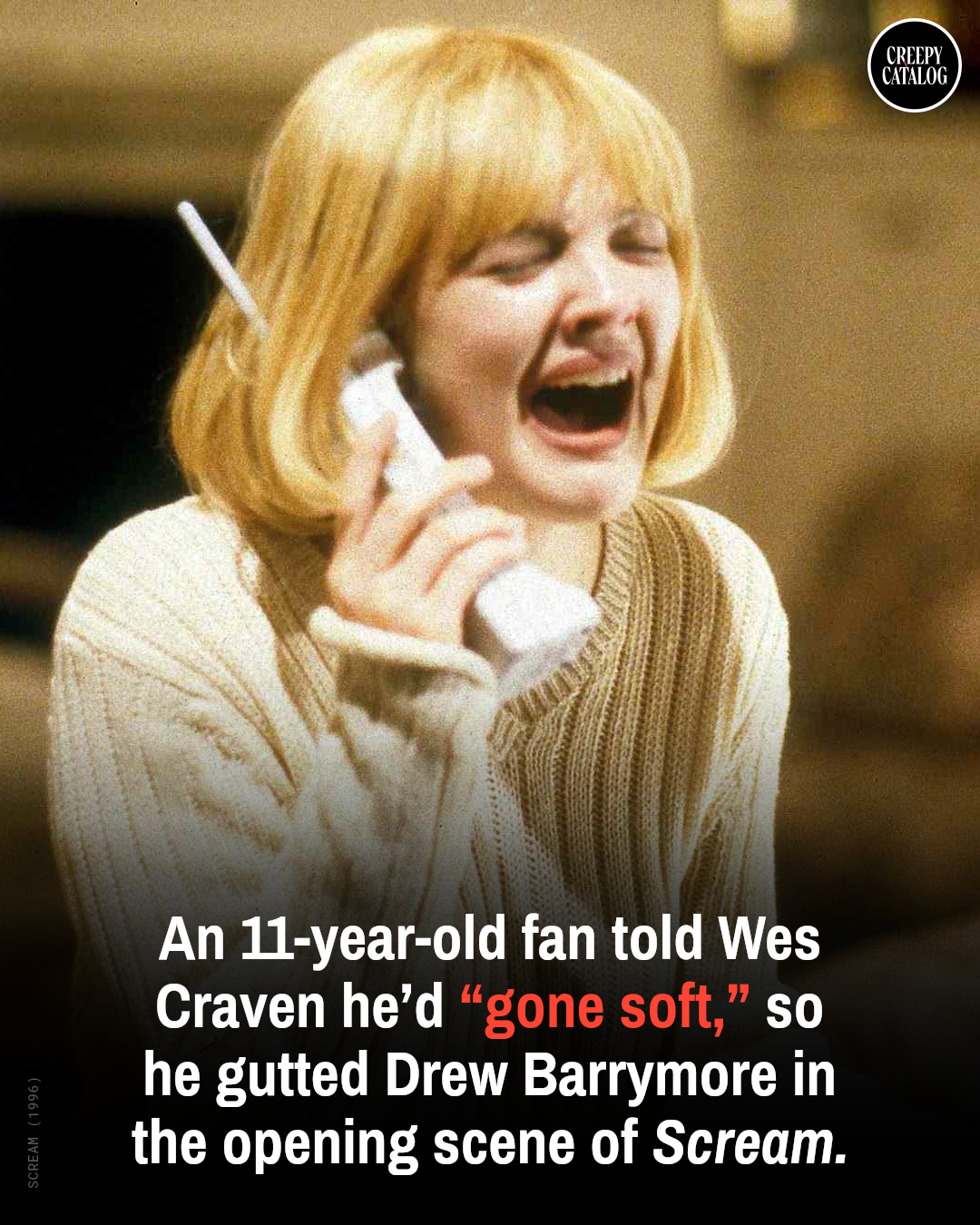
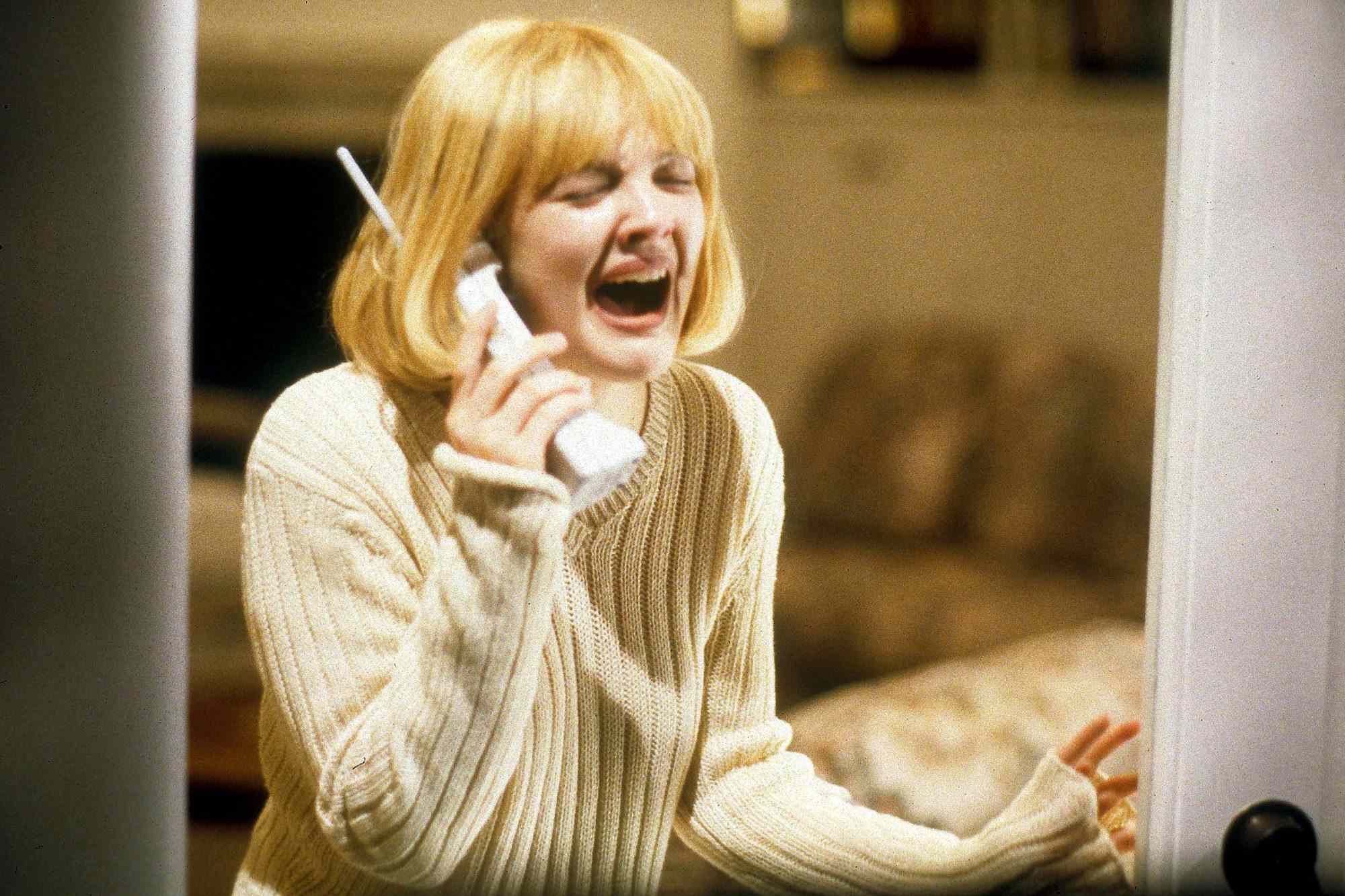
Drew Barrymore’s involvement mattered, too. Initially attached to play Sidney Prescott, she chose the smaller role of Casey Becker to leave room for other projects.
She also liked the possibility of pulling off a surprise like Janet Leigh’s death in Psycho (1960): audiences expecting Barrymore to lead the movie would instead lose her in the opening scene.
Craven said, “The fact that we killed America’s sweetheart at the end of 15 minutes, it was like a body punch to the audience.”
Other directors had largely read Scream as a comedy. Craven’s approach left the filmmakers working to get the violence past the MPAA with an R rather than an NC-17 rating.