Robert Eggers drew on historical accounts to write The Witch and found that the material had handed him a story about female empowerment. “I didn’t intend to write a piece about female empowerment,” he said in 2016. As he explained elsewhere, “you can’t divorce the witch from feminism.”
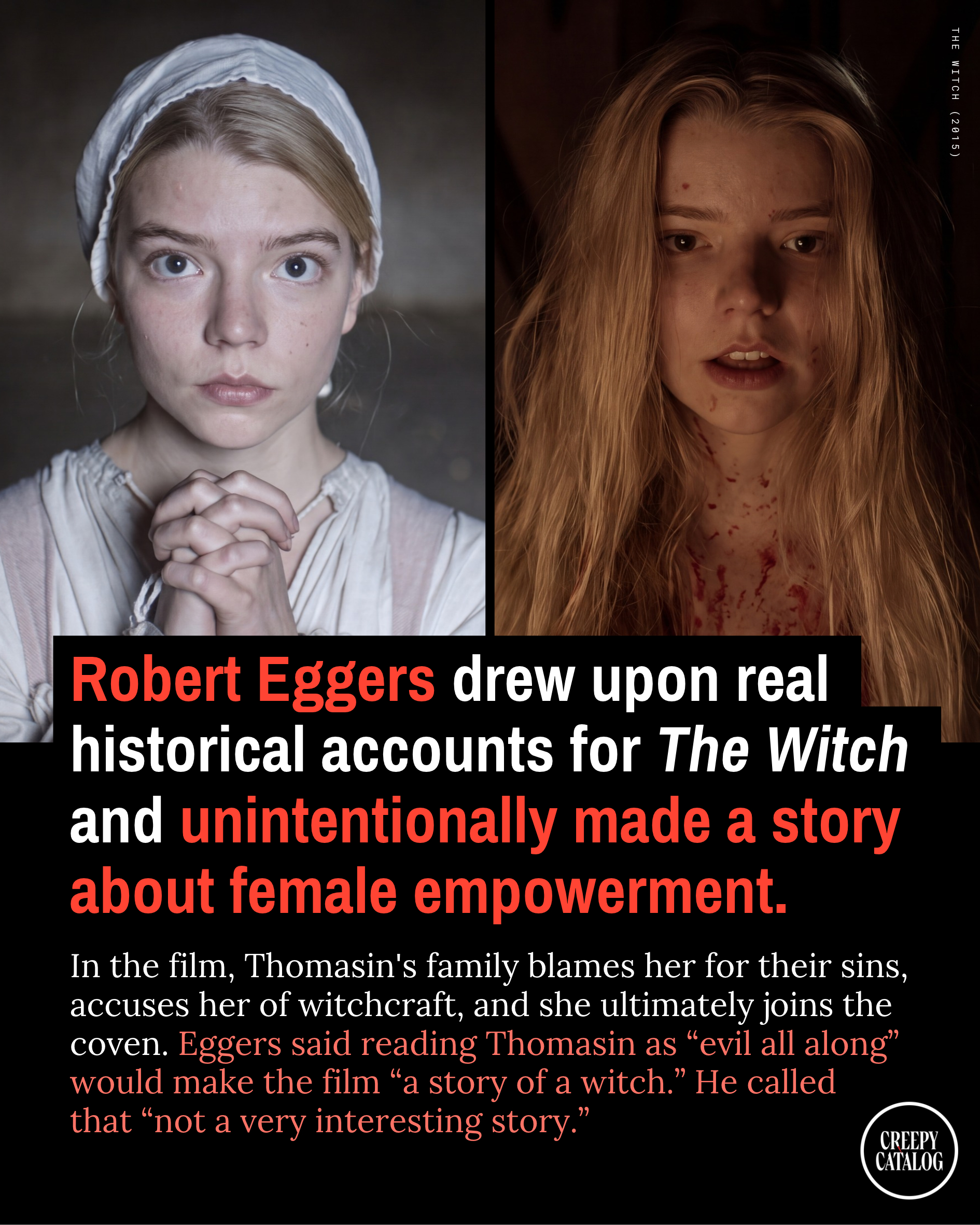
The film follows Thomasin, played by Anya Taylor-Joy, whose Puritan family is banished from its settlement over her father William’s religious beliefs. After her baby brother Samuel disappears while she’s looking after him, suspicion falls on her. Her mother Katherine blames her, and her younger twin siblings accuse her of being a witch.
In the film, Thomasin’s family blames her for their sins, accuses her of witchcraft, and she ultimately joins the coven. Eggers said reading Thomasin as “evil all along” would make the film “a story of a witch.” He called that “not a very interesting story.”
In an October 13, 2026, CineNation clip, Brandon Sparks and Valerie Broussard discuss that scapegoating as a villain origin story: Thomasin’s family treats her as the source of its sinfulness before she ultimately signs the Devil’s book and joins a coven.
Eggers built the film from historical witchcraft accounts, folklore and fairy tales. Its closing note identifies period journals, diaries and court records among its sources, and some dialogue about possession came directly from historical texts. He also emphasized how literal the terror was for accusers: they “literally believe you are a fairy tale witch.”
His lack of an intentional empowerment message didn’t mean he rejected that interpretation. “I’m pleased with that, very pleased with it,” he said. Taylor-Joy described Thomasin’s ending as “happy,” seeing her decision to join the coven as the first choice she makes for herself.