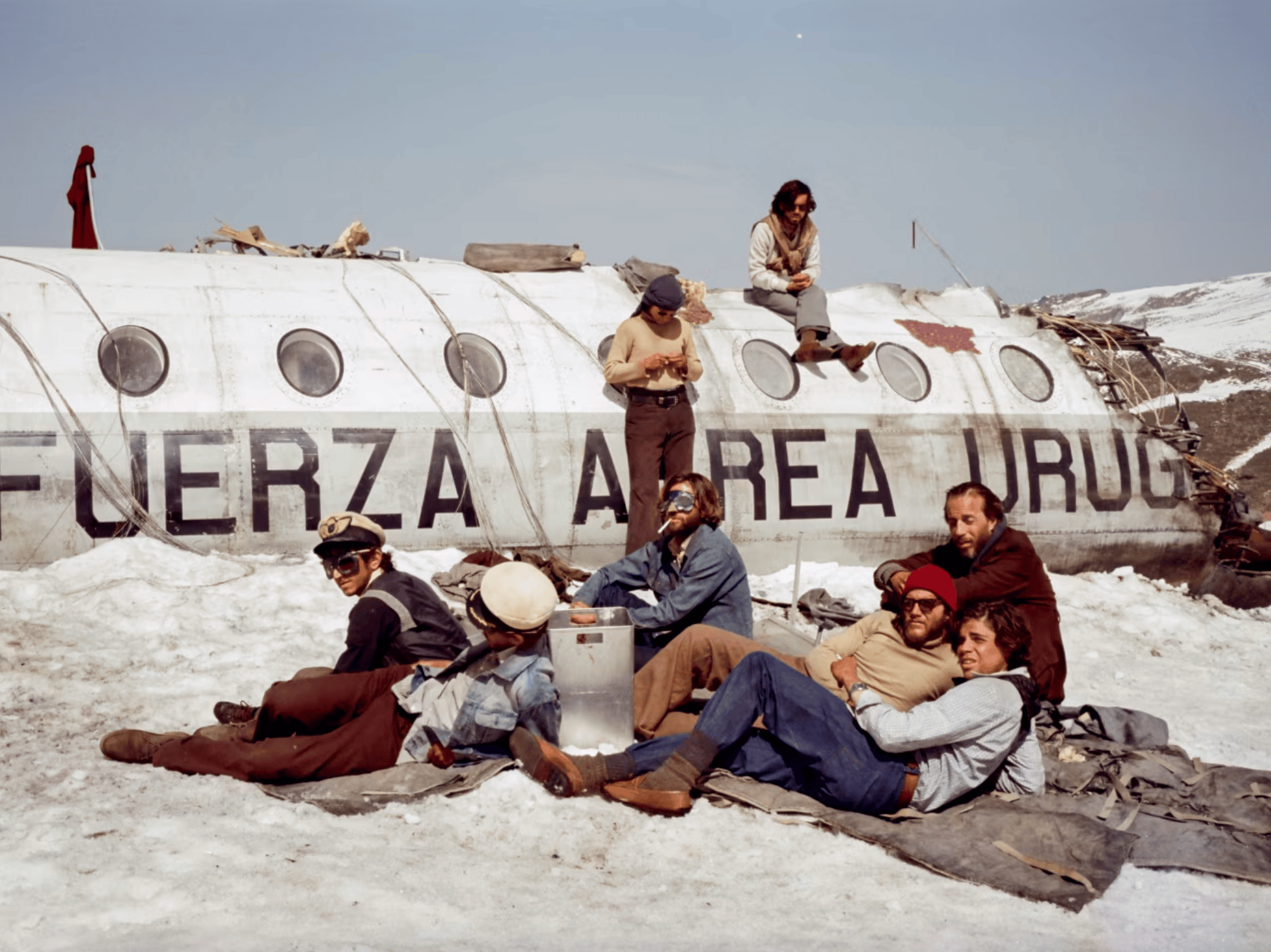
On Friday, October 13, 1972, Uruguayan Air Force Flight 571 crashed in the Andes with 45 people aboard. By the time the last survivors were rescued 72 days later, 16 were still alive.
The chartered Fairchild FH-227D was traveling from Montevideo to Santiago, Chile, carrying players from Uruguay’s Old Christians rugby club, friends, relatives and crew. After misjudging their location, the crew began descending before they’d cleared the mountains. The aircraft hit a ridge at roughly 13,800–14,000 feet near the Argentine-Chilean border, broke apart and slid into a valley.
About 12 people died in the crash or during the first night. Those who remained took shelter inside the wrecked fuselage, where they faced temperatures around −30°C (−22°F). Their food amounted to a few chocolate bars, some jam and scraps.
The official search ended after 8 days. On October 29, an avalanche engulfed their shelter, killing 8 more people.
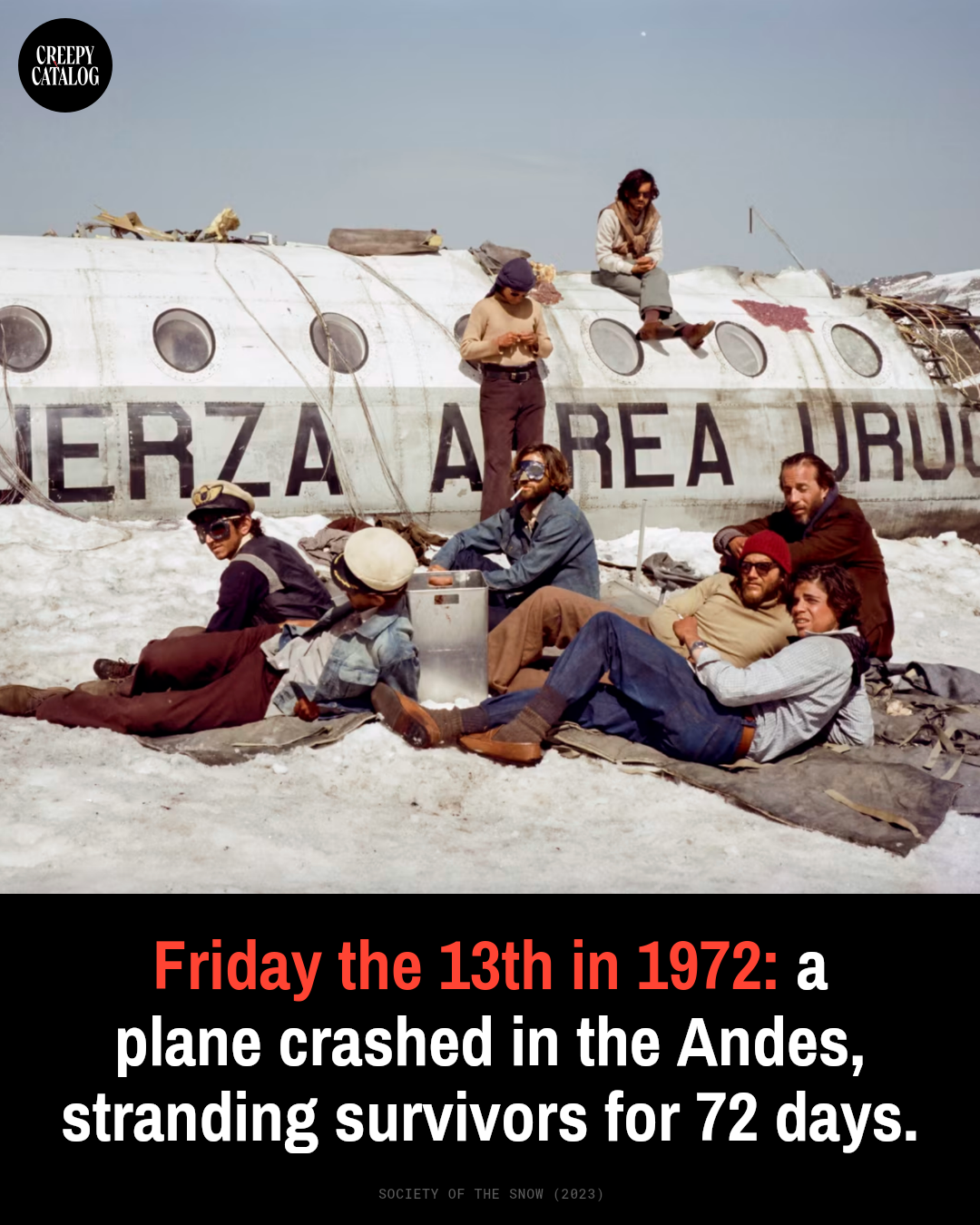
Facing starvation, the survivors agreed to eat from the bodies of people who’d already died, which the snow had preserved. Survivors later described the moral struggle involved, with many speaking of the decision as a shared sacrifice. Injuries and exposure continued to claim lives.
On December 12, Nando Parrado, Roberto Canessa and Antonio “Tintín” Vizintín left the crash site to seek help. Vizintín eventually turned back so the others would have enough food to continue.
After about 10 days of climbing and walking, Parrado and Canessa found Chilean herder Sergio Catalán. Separated from him by a stream, they tossed across a note explaining their situation. Catalán alerted authorities.
Helicopters evacuated the 14 people still at the wreckage on December 22 and 23, 1972. Along with Parrado and Canessa, they brought the final number of survivors to 16.
The ordeal became known as the “Miracle of the Andes” and inspired Piers Paul Read’s book Alive, the 1993 film of the same name and the 2023 film Society of the Snow.