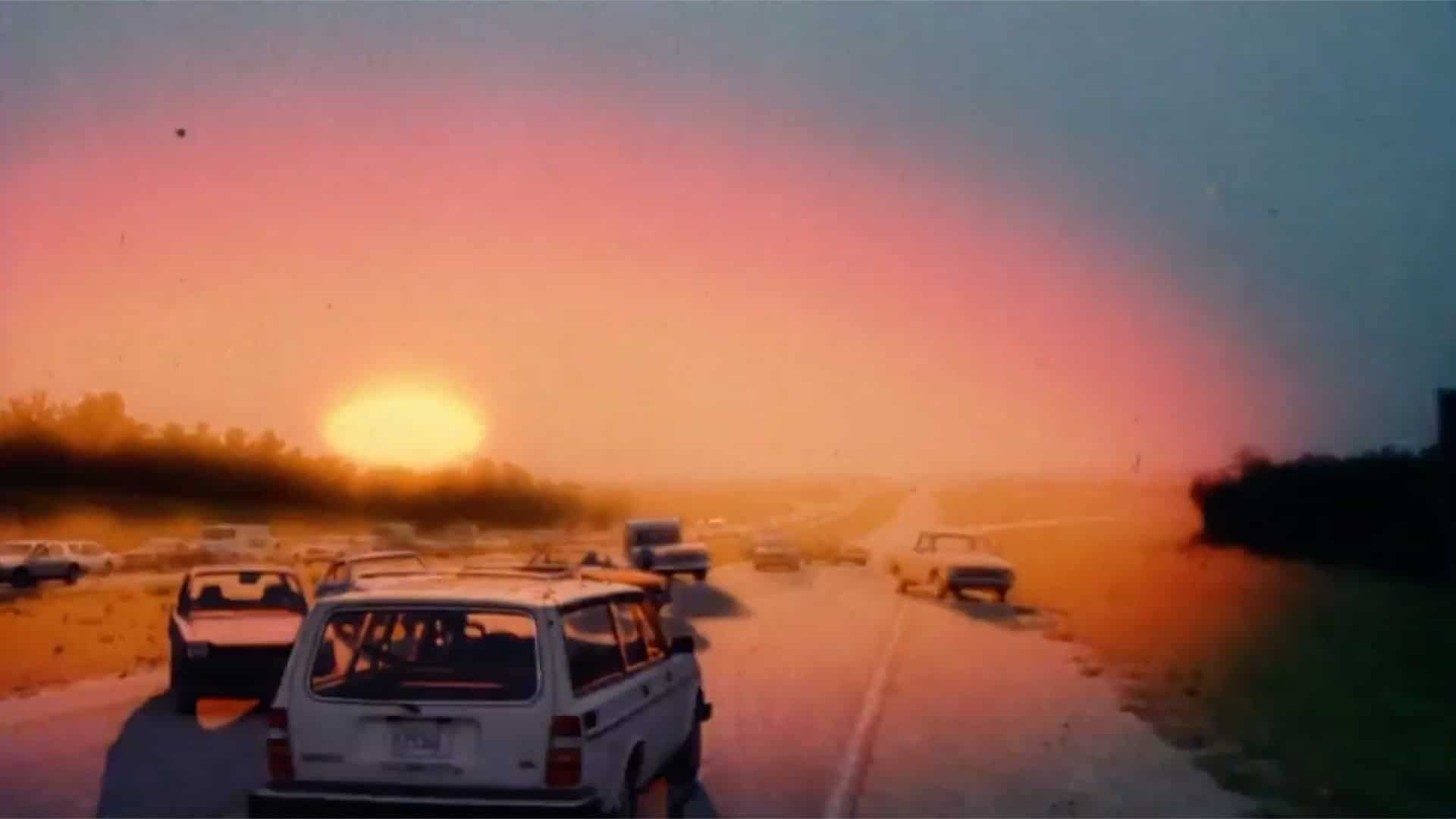
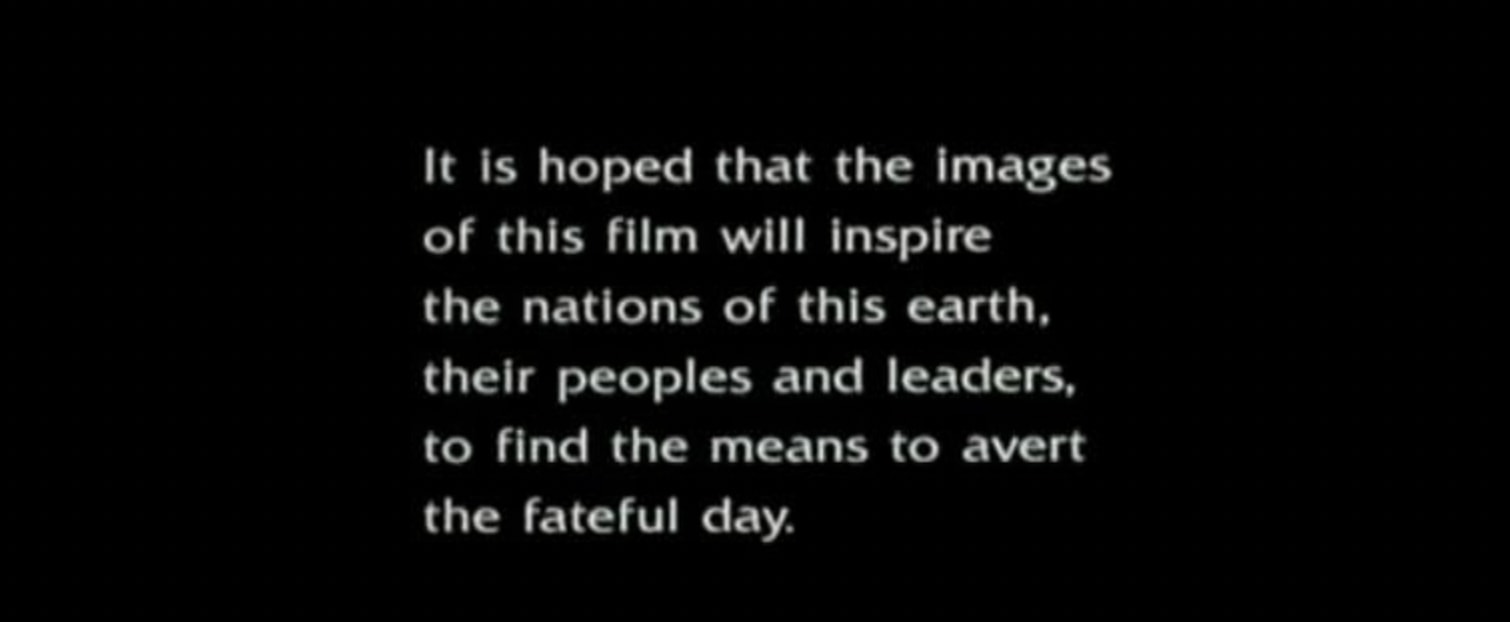
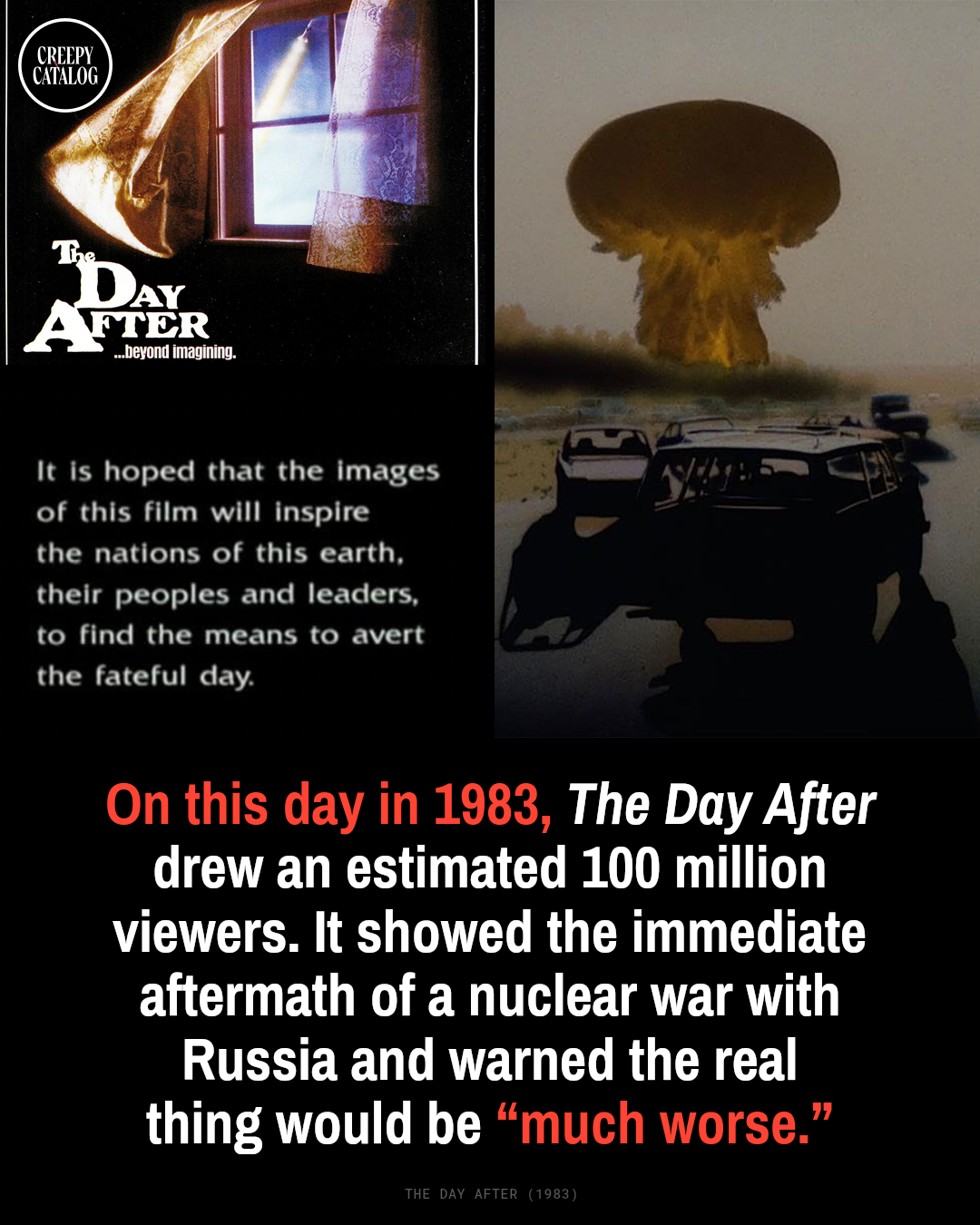
On November 20, 1983, an estimated 100 million people watched ABC’s The Day After, a TV movie about ordinary Americans living through a nuclear war. Its closing disclaimer told viewers that an actual nuclear war would be “much worse.”
Conservative groups and members of the Reagan administration had pressed for changes or a delayed broadcast. President Ronald Reagan wrote in his diary that the film left him “greatly depressed.”
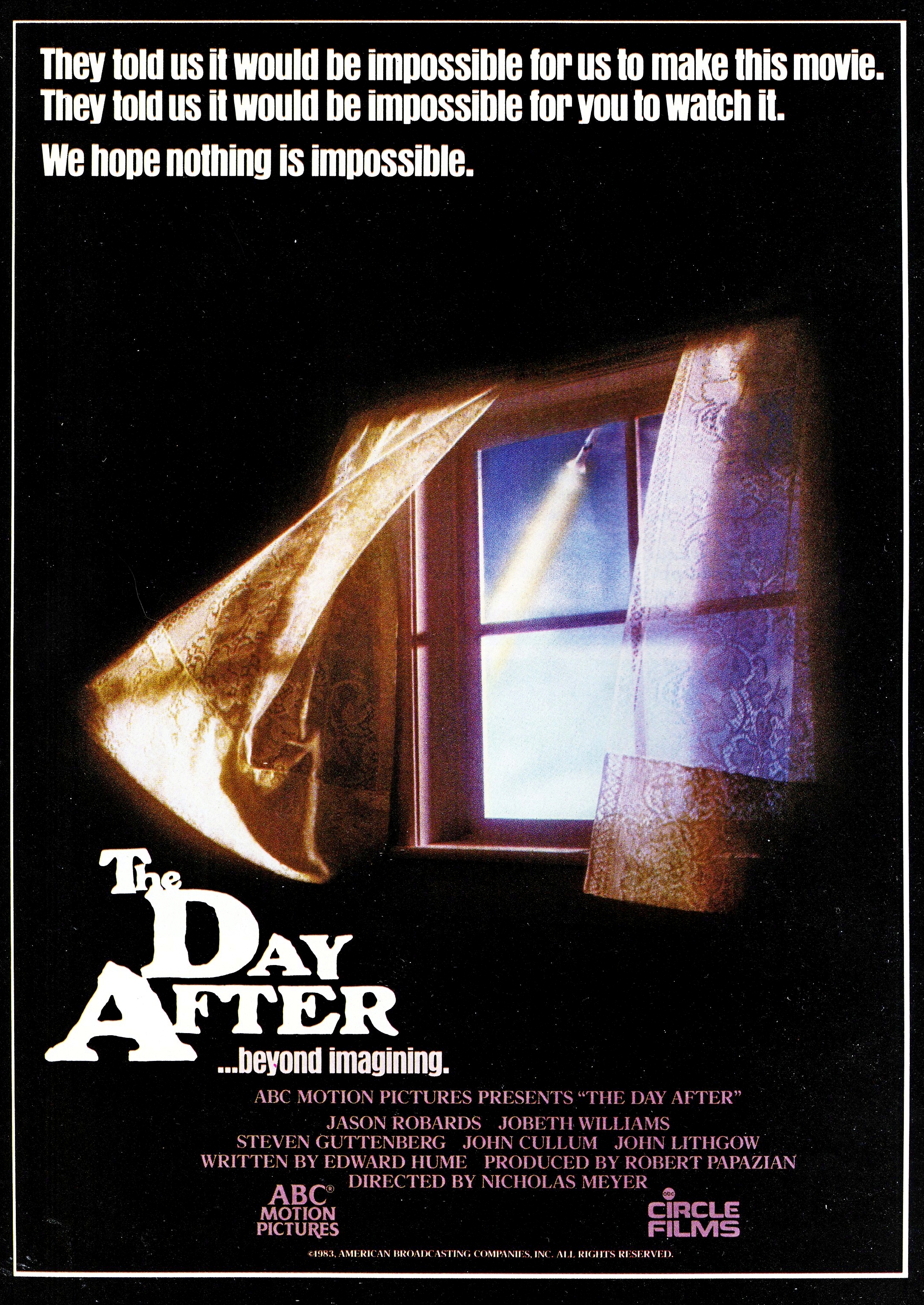
Directed by Nicholas Meyer, the story centers on people around Lawrence, Kansas, and Kansas City, Missouri, as tensions between the U.S. and the Soviet Union escalate. Its cast includes Jason Robards, JoBeth Williams, Steve Guttenberg, John Lithgow and John Cullum. The film leaves who fired first unresolved while following what happens to the people beneath the missiles.
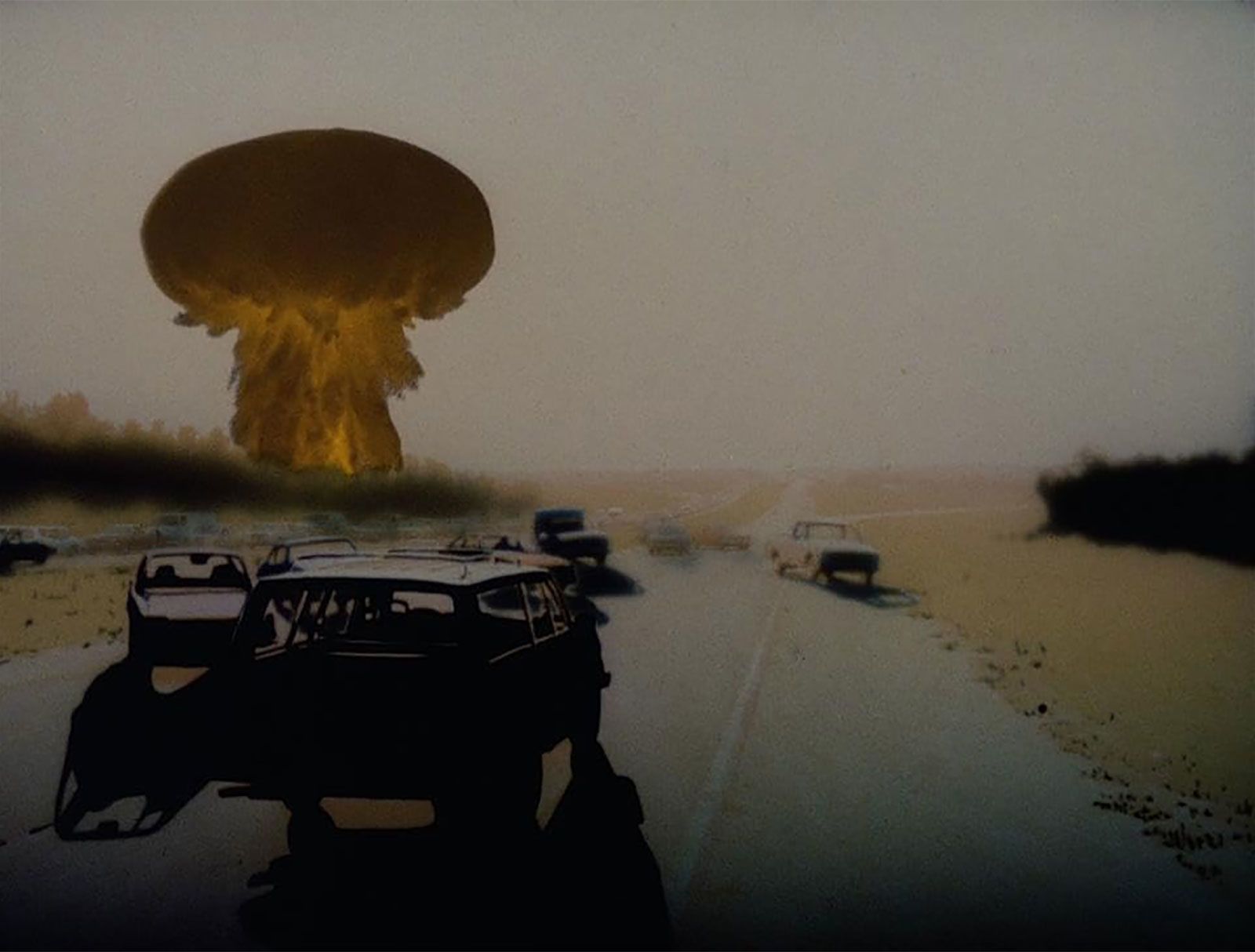
Residents rush to buy supplies before the attacks. An electromagnetic pulse knocks out power and disables vehicles, and nuclear strikes hit nearby military bases.
Survivors face radiation sickness, hunger and disease with much of the infrastructure they depend on destroyed. Looters are executed without a trial while the president delivers radio addresses invoking freedom and democracy.
ABC largely resisted demands for major cuts. The broadcast reached an estimated 62% of the people watching television that night, bringing its depiction of nuclear devastation into an enormous share of American homes.
The movie’s influence on Reagan is often discussed alongside his later pursuit of arms control, though that history involves more than a single film. In his 1984 State of the Union address, he said that “a nuclear war cannot be won and must never be fought.”