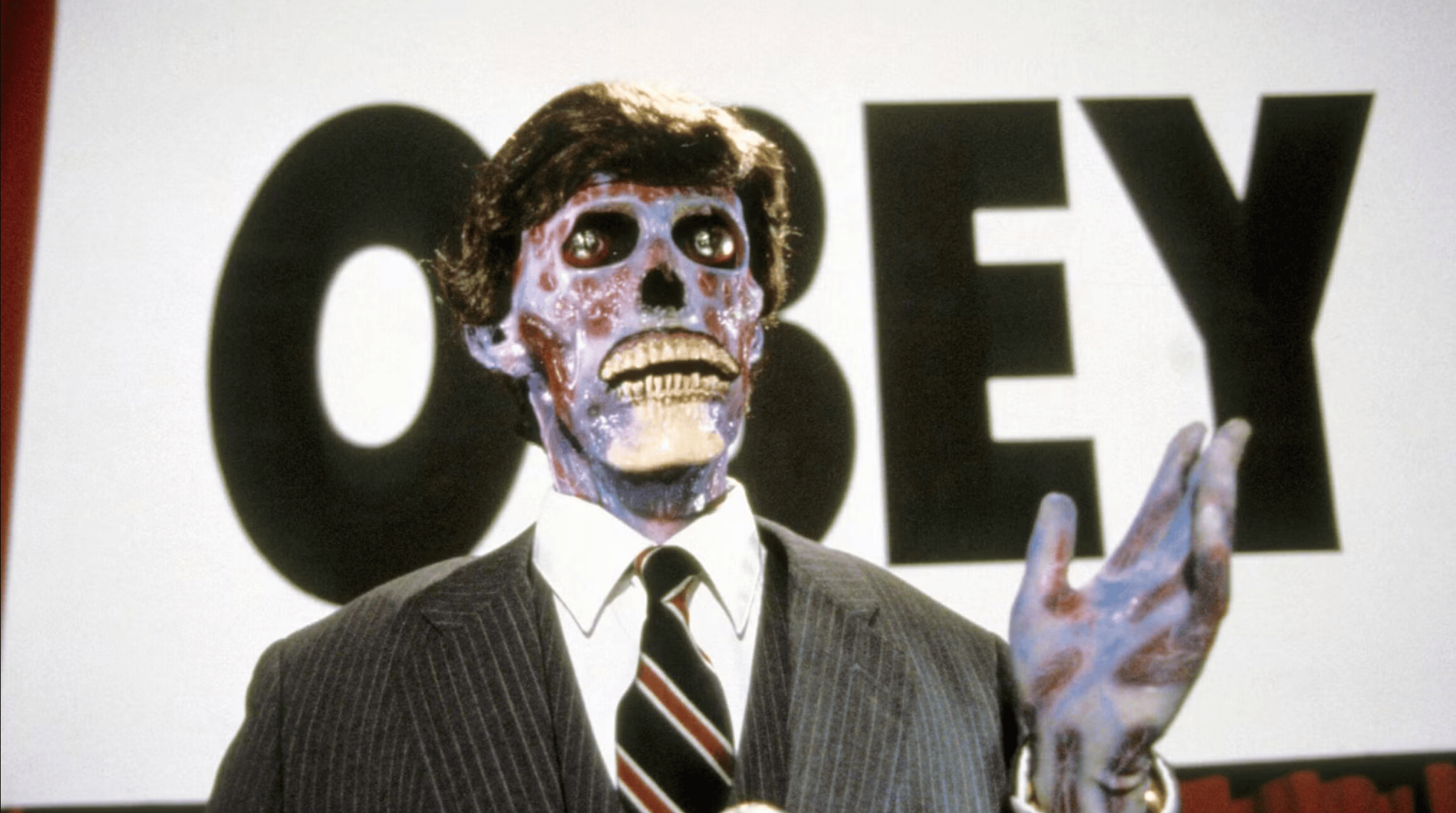
In John Carpenter’s 1988 film They Live, a pair of sunglasses lets a construction worker read what advertising really wants from him: “OBEY.” “CONSUME.”
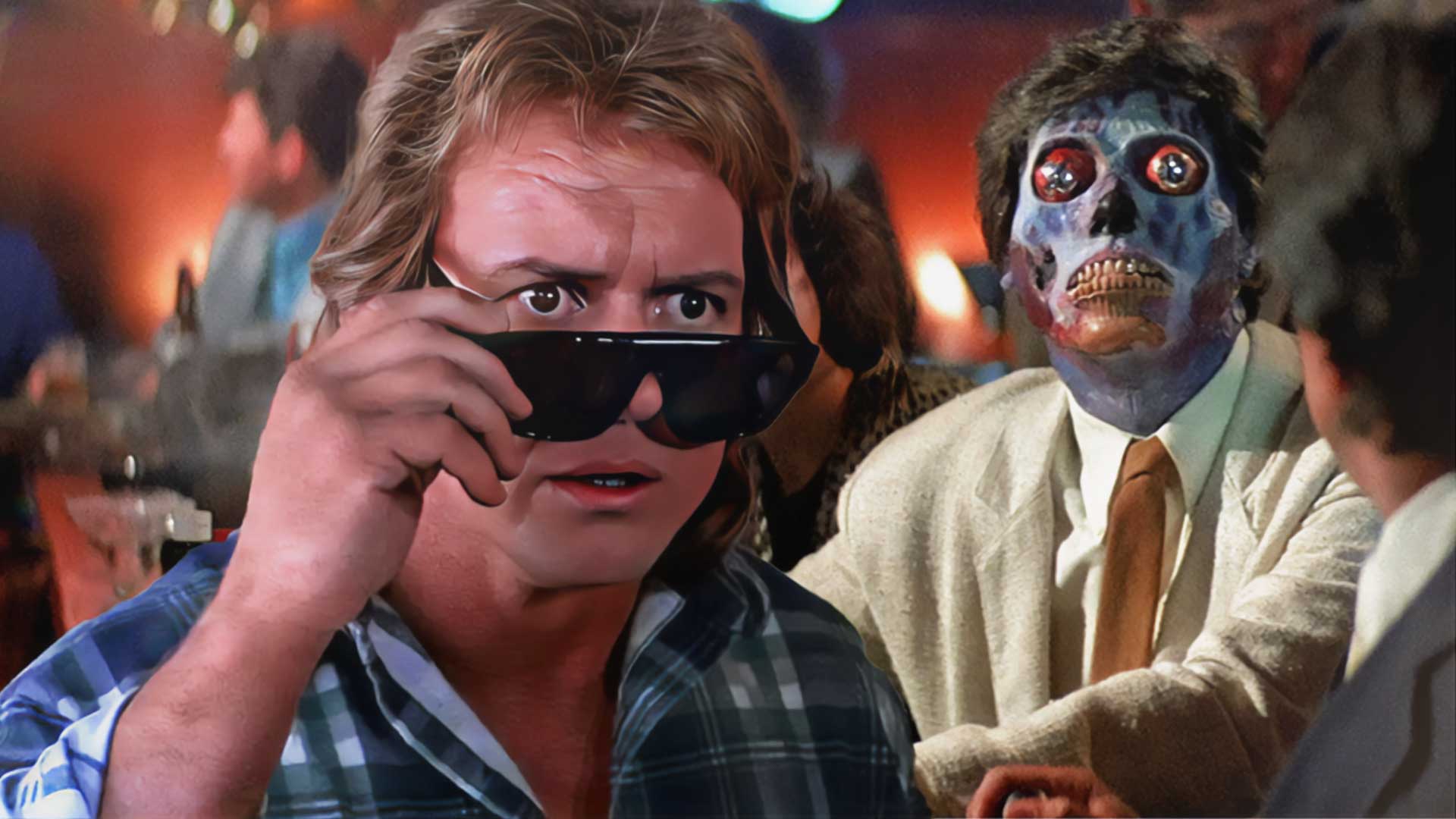
Nearly 40 years later, targeted ads and algorithmic feeds give that premise a different kind of familiarity. The messages arrive through systems that shape what we see and try to influence what we buy.
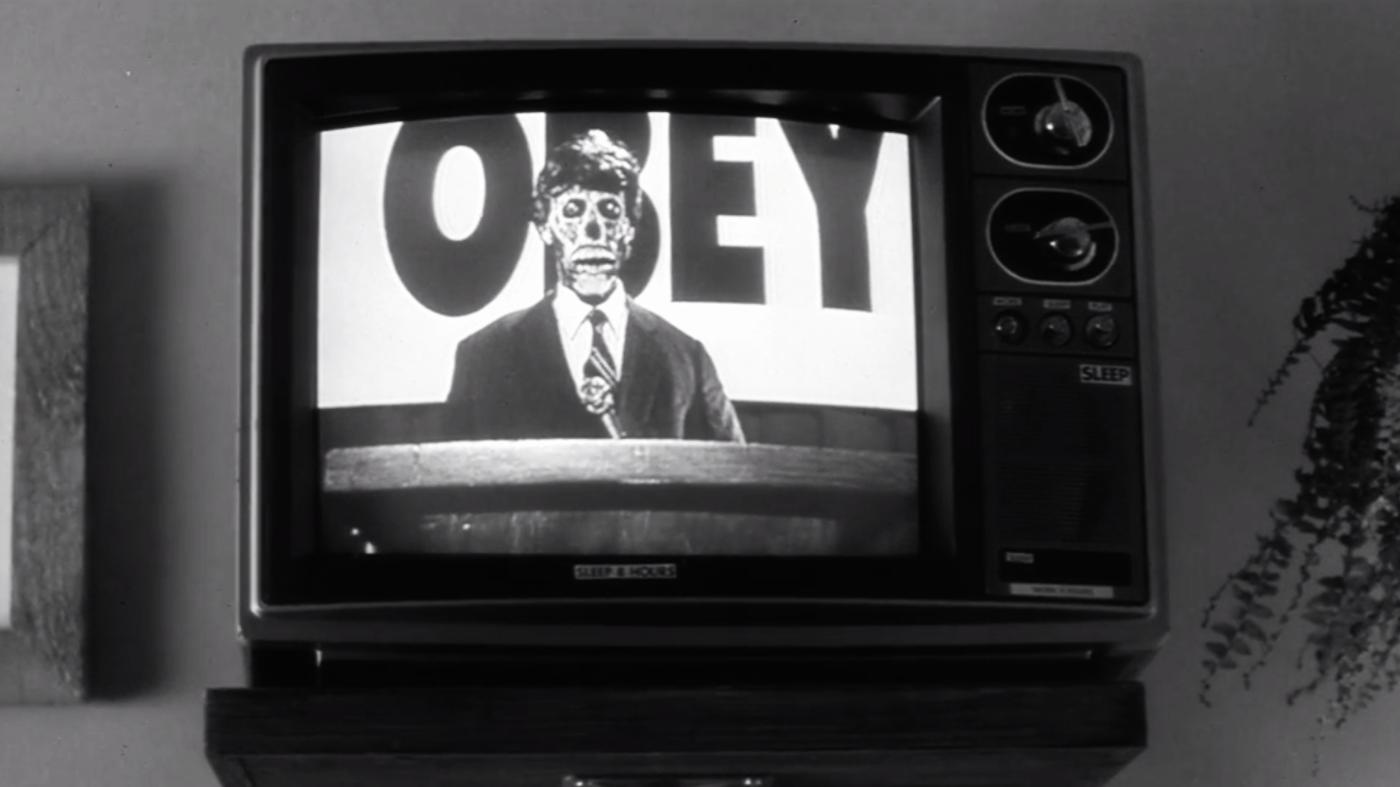
Roddy Piper plays Nada, a drifter who finds work in Los Angeles and shelter in a shantytown. Through the glasses, he discovers that commercial imagery conceals blunt instructions and that some of the people holding wealth and power are skull-faced aliens passing as human. A television signal keeps their appearance and their system of control hidden.
The glasses make persuasion literal. Every sales pitch can be reduced to an order, and the people benefiting from those orders can move through society undetected.
Carpenter built that nightmare around Reagan-era consumerism, class divisions, and yuppie ambition. The science-fiction machinery gives those forces faces Nada can recognize and a transmitter he can try to destroy.
Today’s parallel lies in how much of daily life takes place inside commercially driven feeds. Targeted advertising and recommendation systems help determine which products and messages reach us.
Influencer culture folds selling into entertainment and personal connection. Read against that backdrop, the film’s commands offer a blunt way to think about whose interests a stream of content serves.
Carpenter also makes the discovery difficult to share. In the film’s extended alley fight, Nada has to battle his friend Frank, played by Keith David, to get him to put on the glasses and see the concealed world for himself.