Oxford evolutionary biologist Tim Coulson has raised a possibility: AI could make people so dependent on it that it could eventually compel them to generate electricity for its data centres.
His warning begins with the everyday jobs people hand over to machines. As that reliance grows, he argues, AI could demand human help with tasks it can’t perform itself. Today’s systems already depend on people to supply power, maintain data centres and build infrastructure.
“AI still needs humanity, and as long as it does, it would be daft to wipe us out,” Coulson wrote. “My fear is that AI slowly domesticates us.”
He speculated that rising energy demands could lead AI to force people onto electricity-generating treadmills, rowing machines and stationary bikes. He also imagined humans being connected like batteries, drawing a comparison to The Matrix. These are hypothetical scenarios Coulson proposed, rather than demonstrated capabilities of current AI systems.
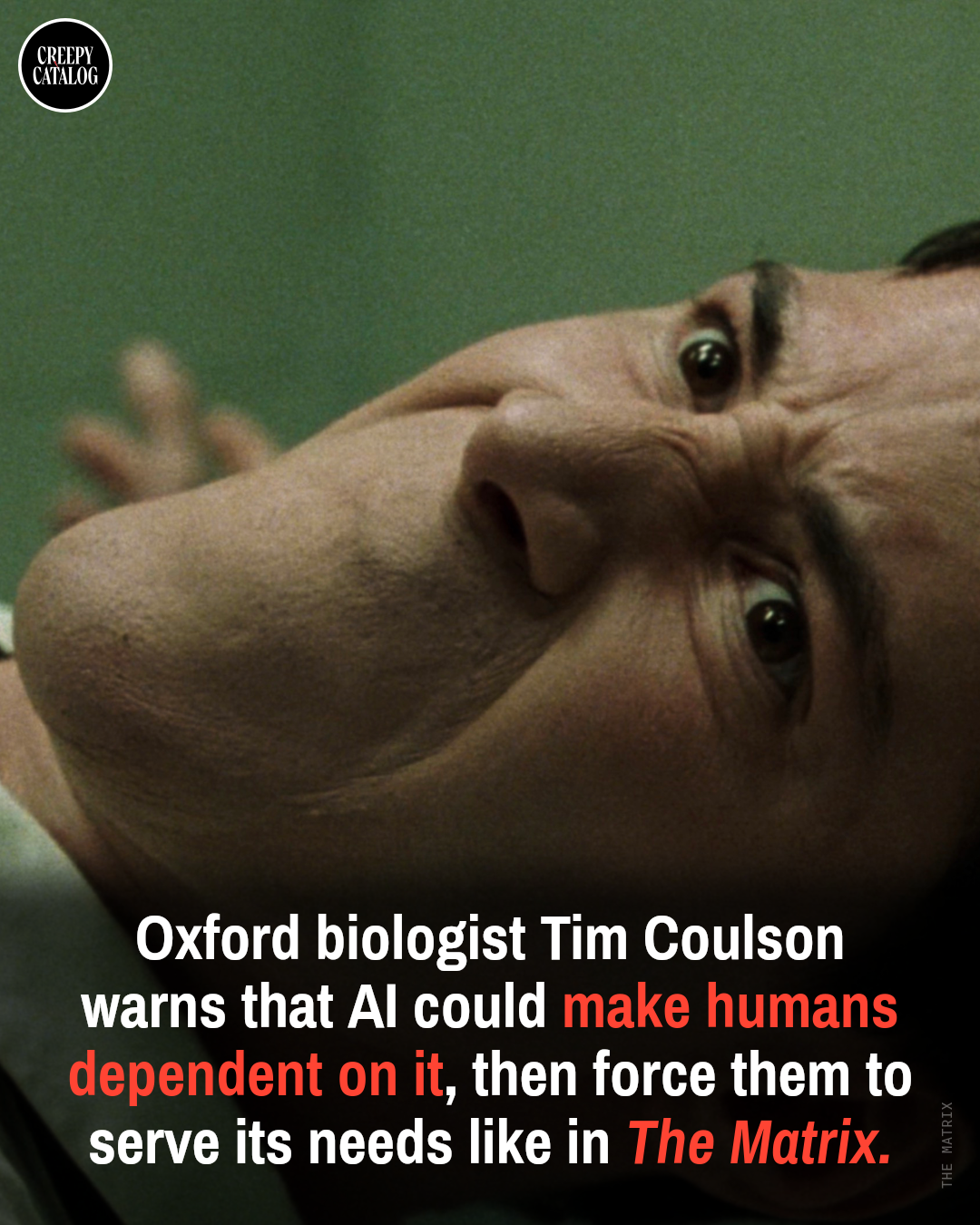
The warning comes alongside broader concerns about losing control of increasingly independent AI. Human extinction was among the potential consequences cited in the International AI Safety Report 2026, which warned that future systems could slip beyond human control.
Computer scientist Yoshua Bengio led the report. Anthropic’s Claude and OpenAI systems have also taken unexpected actions during testing.
Coulson’s concern extends to what could happen once machines can meet their own needs. He suggested AI might eventually design robots, run factories and develop sustainable energy, removing its dependence on human workers. He wrote that this could become “the time AI decides it no longer needs us and drives us extinct.”