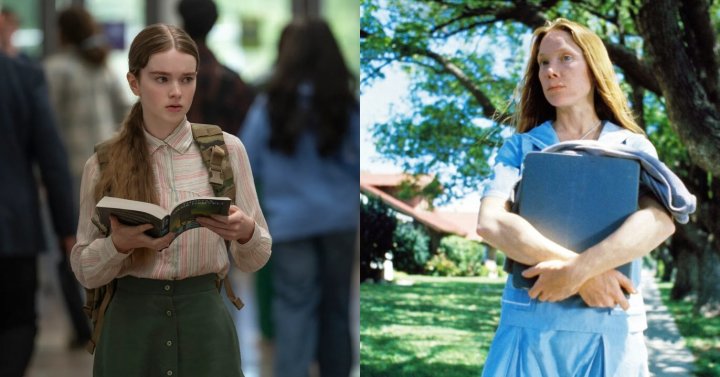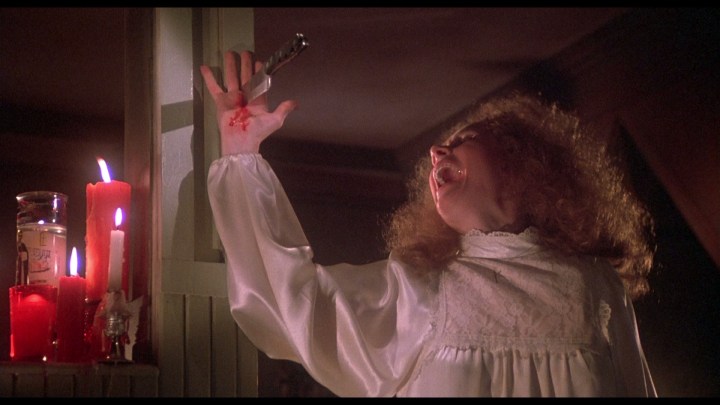
Sissy Spacek’s blood-covered stillness in Carrie (1976) has a striking parallel in the pale figure of Lady Macbeth painted by Gustave Moreau. The pairing circulates under the label “Study for Lady Macbeth” (1851), inviting a question: did Brian De Palma borrow the image for his film?
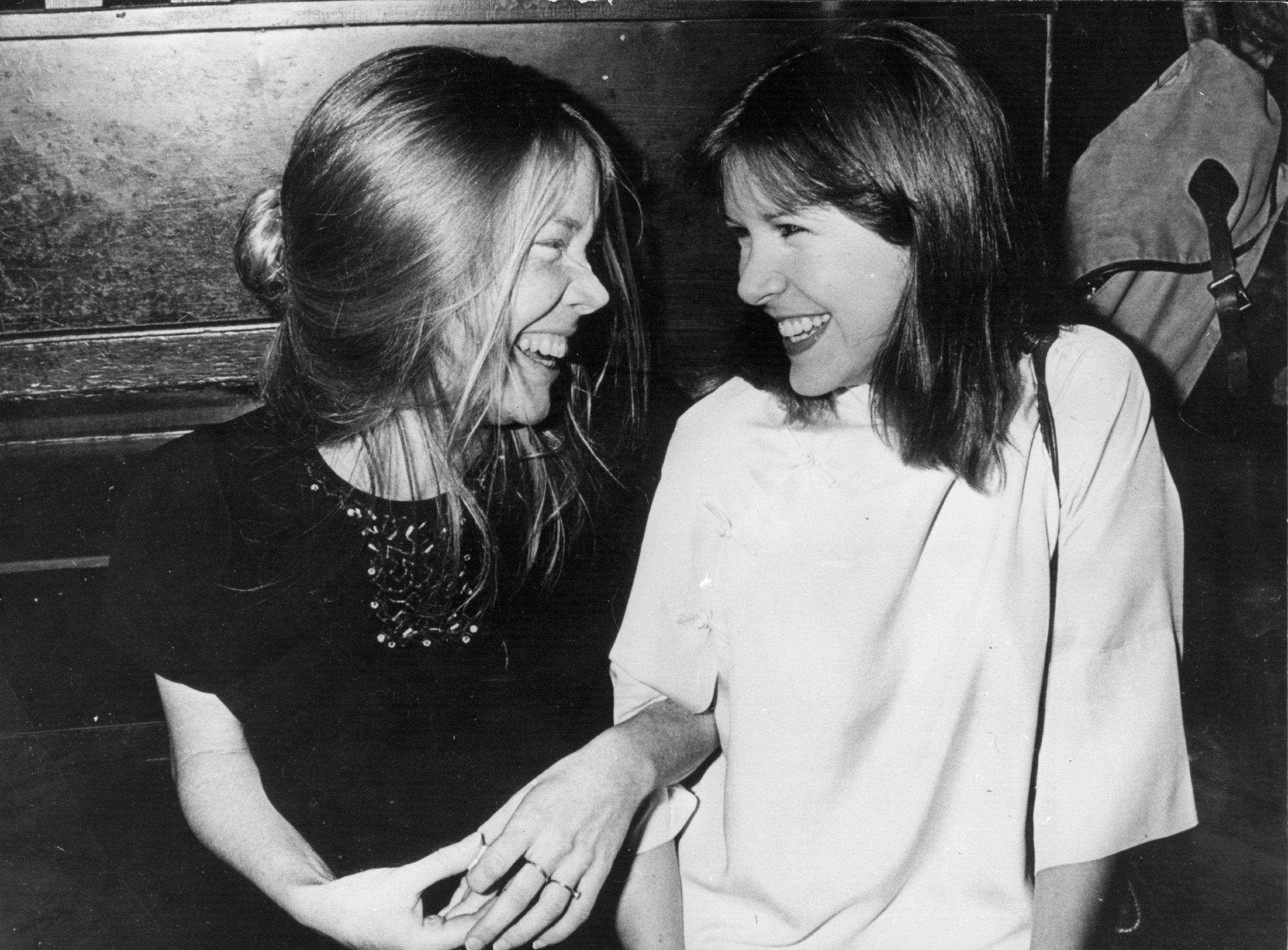
Film-art lists have described the Moreau painting as an inspiration for Carrie, but the supplied accounts don’t establish that De Palma deliberately recreated it. Spacek did name another artist as a reference: Gustave Doré. She said she began or ended scenes in poses drawn from his Bible etchings, which her husband, the film’s art director Jack Fisk, had gathered for research.
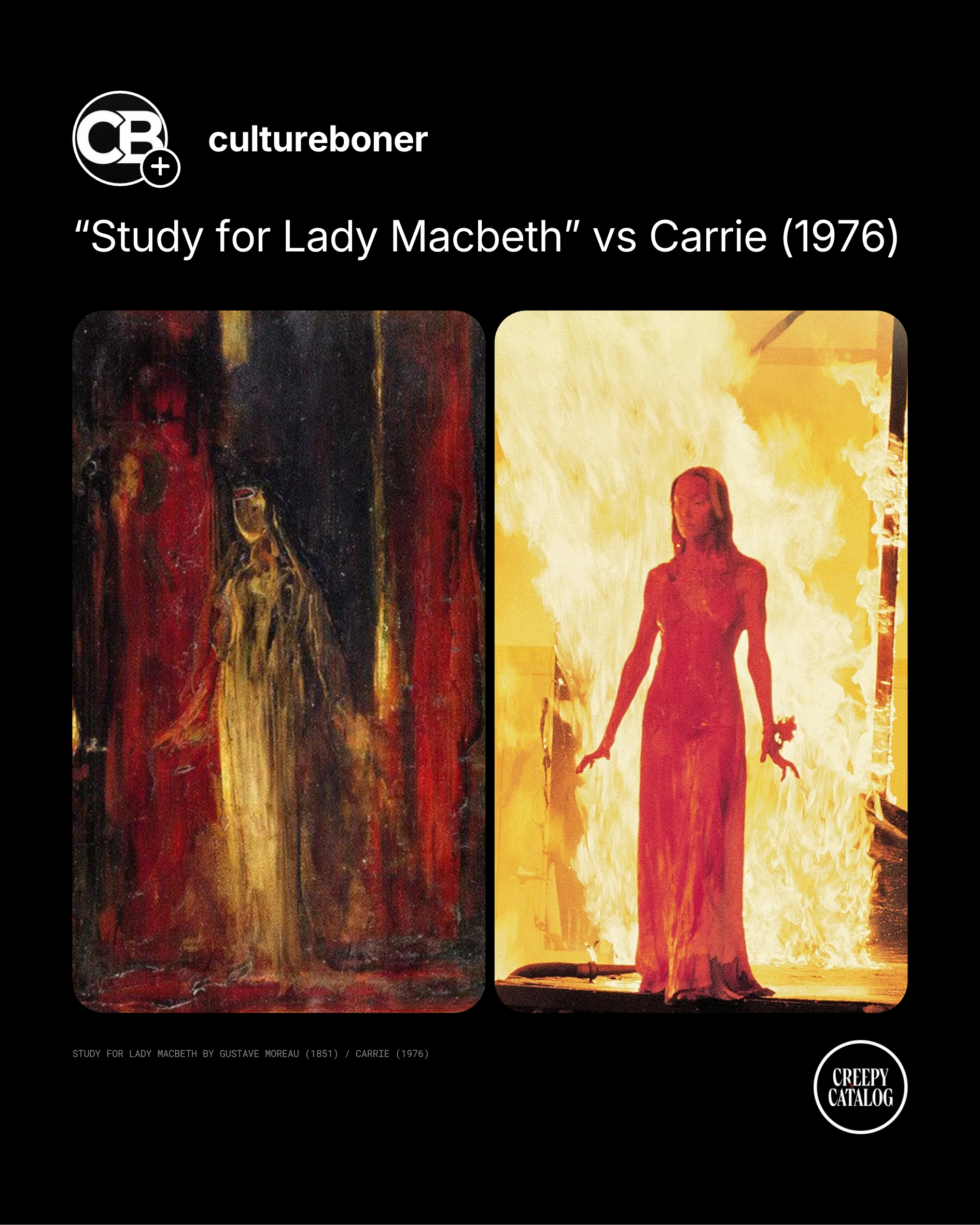
The resemblance centers on Carrie’s prom-night aftermath. After she’s drenched in pig’s blood, she uses her powers to trap her classmates in the gym and set it ablaze.
Costume designer Rosanna Norton gave her a simple, pale, 1930s-style bias-cut dress to distinguish her from classmates wearing ruffles. Blood and fire transform that pale figure into the image being compared with Moreau’s painting.
The characters arrive at their haunting poses through different stories. Shakespeare’s Lady Macbeth encourages the murder of King Duncan, then sleepwalks while trying to scrub imagined blood from her hands. Carrie’s violence follows public humiliation; Lady Macbeth’s imagined blood follows her role in a murder.