“We’ll begin with a reign of terror, a few murders here and there, murders of great men, murders of little men – well, just to show we make no distinction. I might even wreck a train or two… just these fingers around a signalman’s throat, that’s all.” That is Dr. Jack Griffin’s plan in The Invisible Man, the 1933 Universal horror film.
When The Invisible Man opened in U.S. theaters on November 13, 1933, audiences got a new horror star whose face stayed hidden until the final moments. Claude Rains made his American film debut as Griffin, giving the scientist’s unraveling a voice while practical effects supplied his disappearing body.
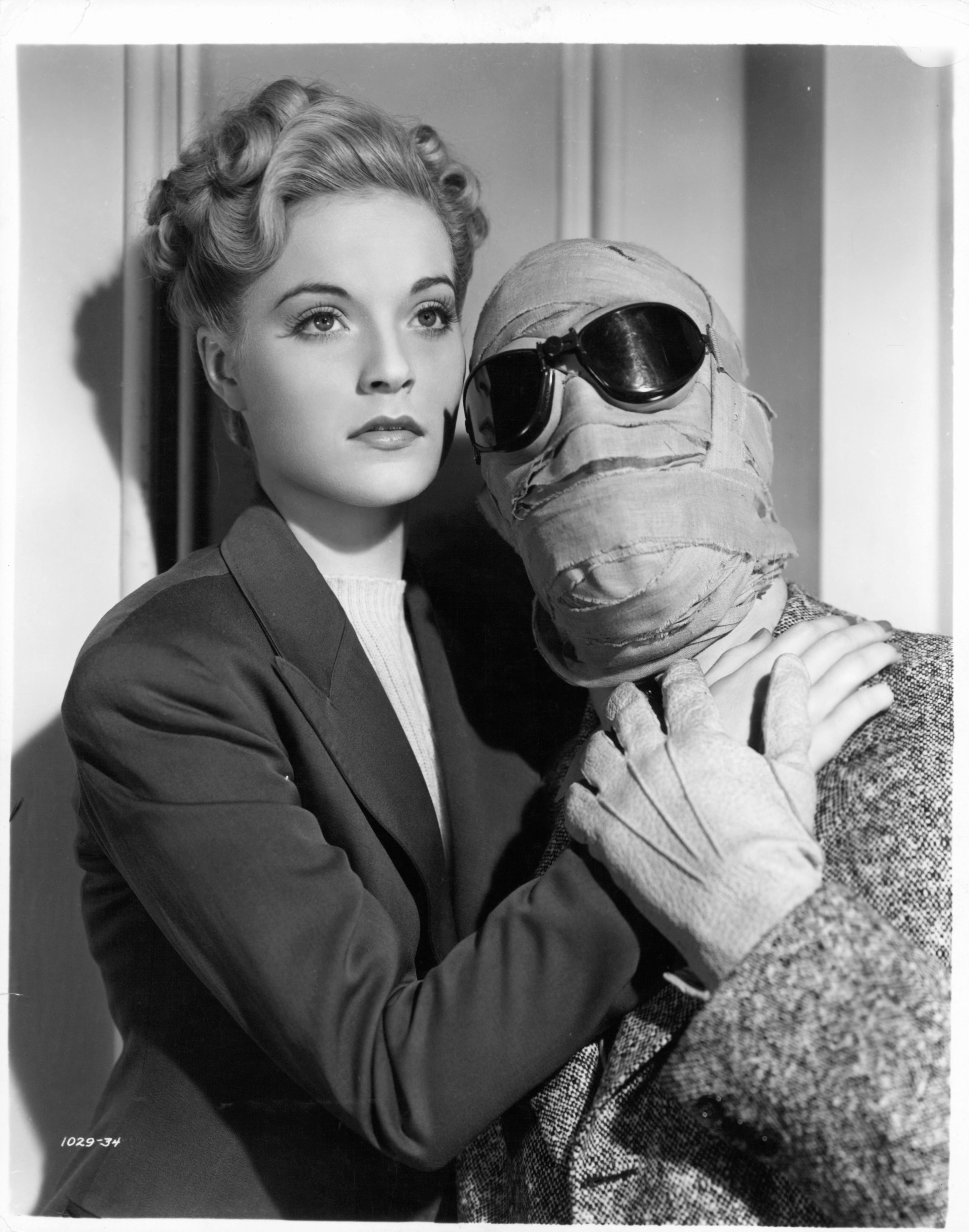
Directed by James Whale, who’d already made Frankenstein and The Old Dark House, the film loosely adapted H.G. Wells’ 1897 novel. Griffin arrives at an English village inn concealed beneath bandages, dark glasses and a false nose.
His invisibility formula has also damaged his mind, and his search for a way to reverse it turns into murder and plans for world domination.
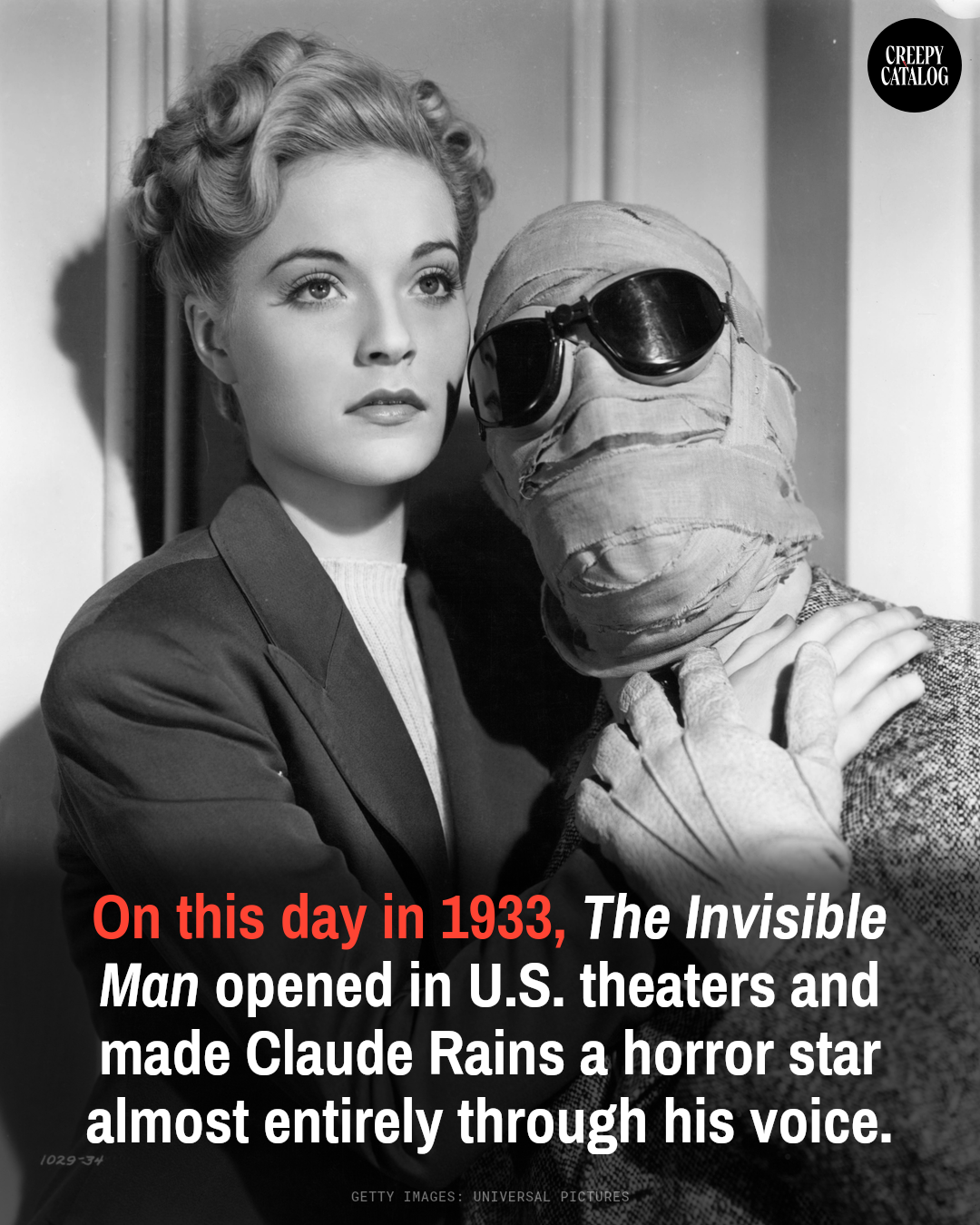
Boris Karloff was considered for the role, but salary disputes took him out of contention. Whale championed Rains after hearing a screen test.
For most of the roughly 70-minute film, Rains had to convey Griffin’s arrogance, delight and growing madness without the audience seeing his face.
Special-effects artist John P. Fulton helped create the illusion with black velvet clothing filmed against black backgrounds, matte work, wires and carefully coordinated prop movements. Practical setups produced footprints in snow and objects that appeared to move by themselves.
Gloria Stuart played Griffin’s fiancée, Flora Cranley, alongside William Harrigan as Dr. Arthur Kemp, Henry Travers as Dr. Cranley and Una O’Connor as the innkeeper’s wife.
Produced by Carl Laemmle Jr. from R.C. Sherriff’s screenplay, the film became a commercial success and led to several sequels. Rains’ face finally becomes clearly visible as Griffin dies and his invisibility wears off.