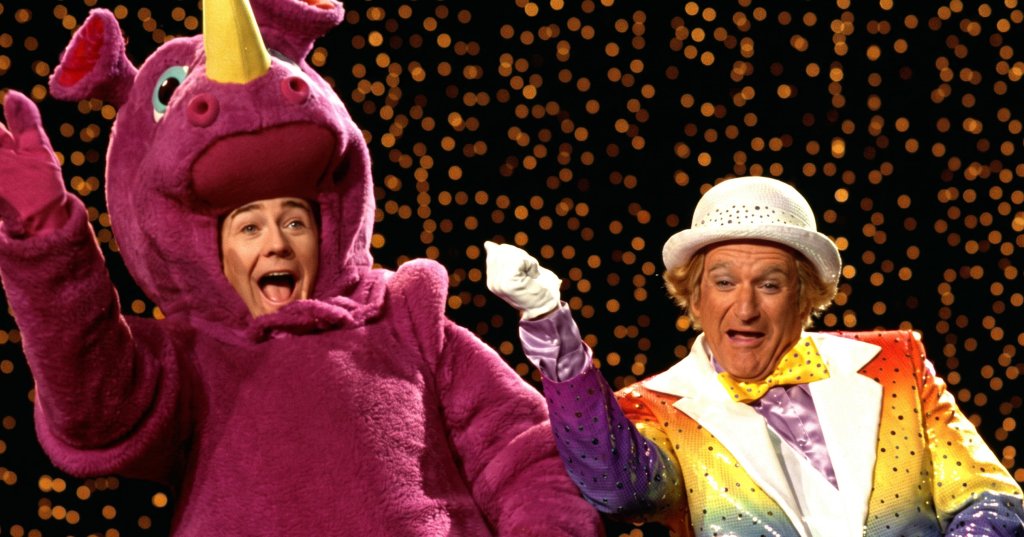
Roger Ebert called it so bad that only talented people could have made it. Norton calls it one of the proudest things he’s done.
Death to Smoochy opened on March 29, 2002, opposite Panic Room over Easter weekend. It grossed just $8.36 million domestically against a budget of roughly $50 million, earned a C from CinemaScore and received half a star from Roger Ebert, who later named it the worst film of the year.
Its overseas total was about $18,000. Not $18 million. Eighteen thousand.
Channel 4 scrapped the UK theatrical release after the posters had already gone up. British newspapers started calling the movie “Death to FilmFour” after Channel 4 lost millions and shut down its production arm.
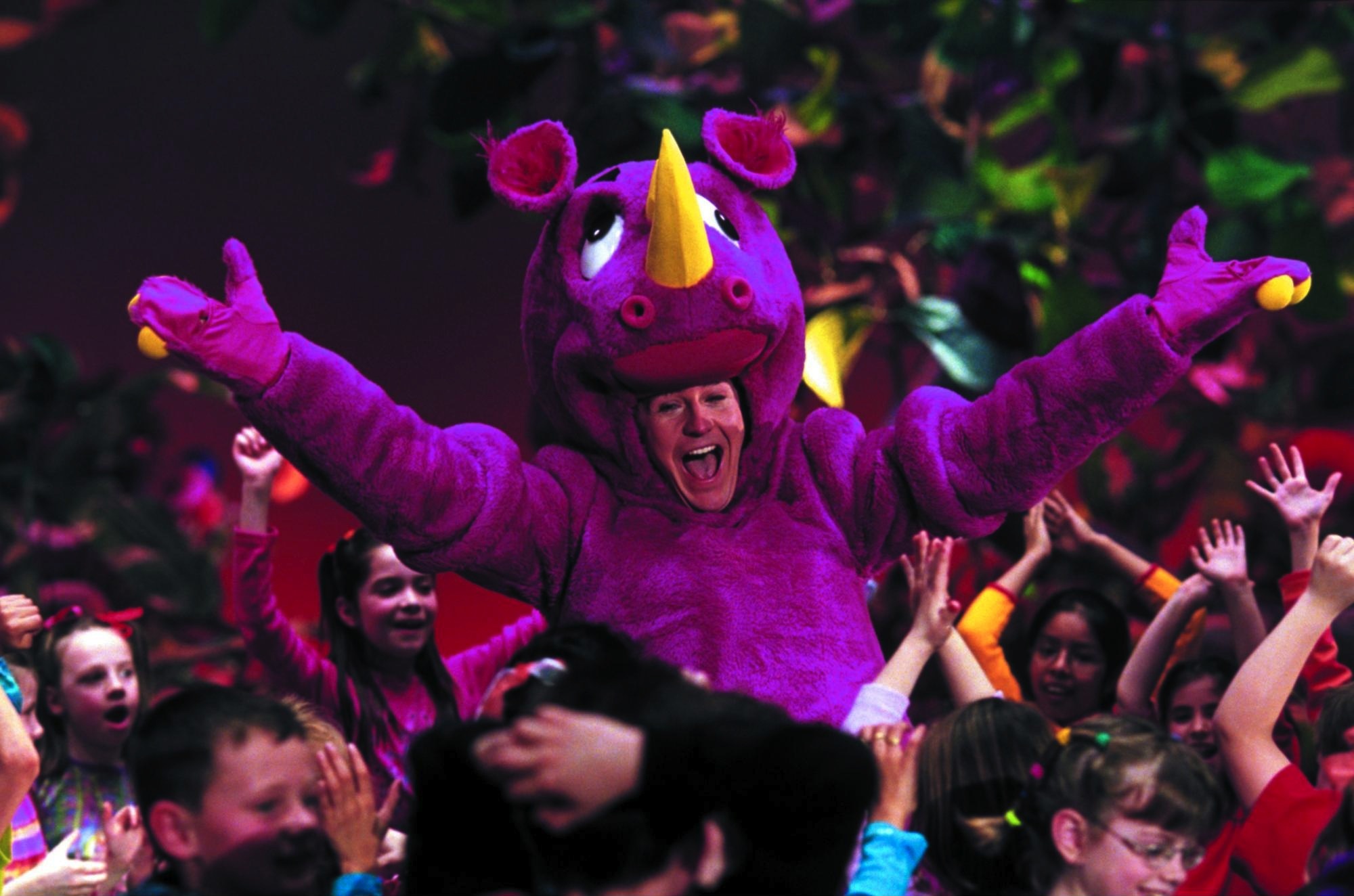
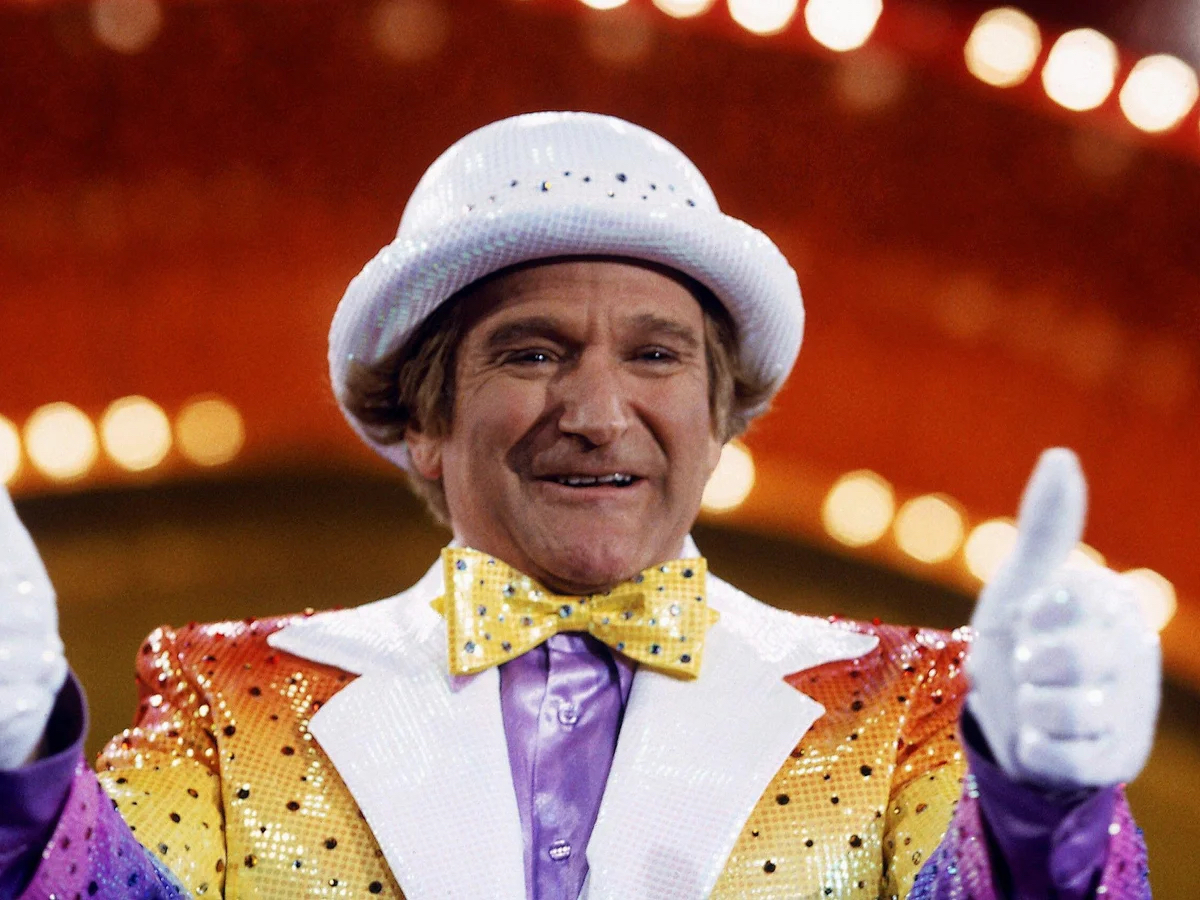
The movie itself is Danny DeVito’s R-rated black comedy about children’s television as a corrupt racket. Edward Norton plays Sheldon Mopes, a granola folk singer recruited to become Smoochy, a relentlessly wholesome pink rhino. Robin Williams plays Rainbow Randolph, the disgraced, bribe-taking former host who wants him dead.
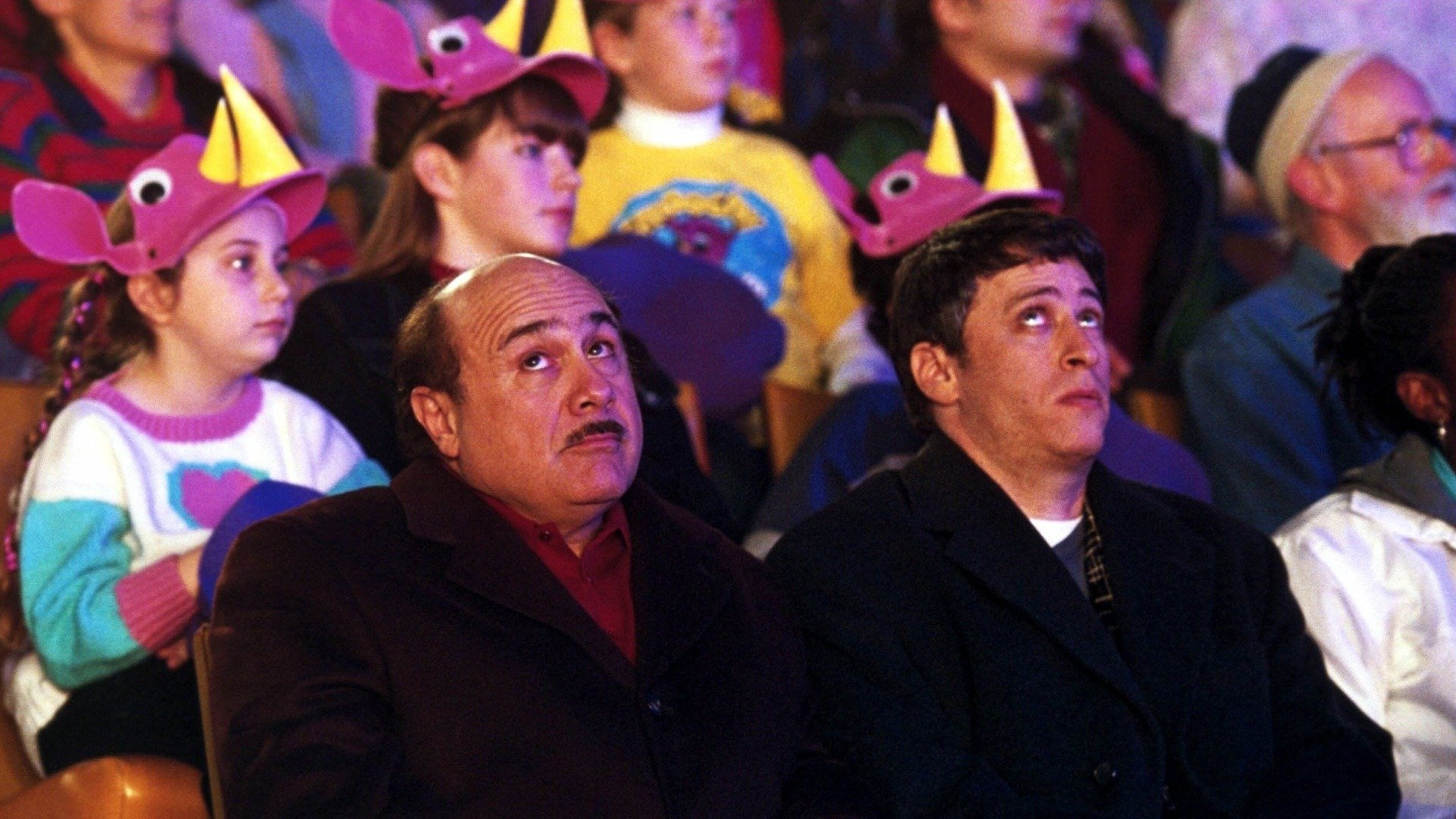
Screenwriter Adam Resnick wrote Sheldon with Norton in mind and got the script into his hands two days after finishing it. DeVito was filming in Montreal while Norton was there making The Score, but initially pointed him toward the Williams role instead. Norton read the script at 2 a.m. and said tears ran down his temples from laughing.
Hank Azaria was originally cast as the KidNet executive but dropped out to make America’s Sweethearts, which is how Jon Stewart got the part. Hosting the Oscars four years later, Stewart introduced himself as “the fourth male lead in Death to Smoochy,” then added: “Rent it.”
Norton has never let the movie go. Smoochy was orange in the script, but Norton brought Peter Beard photographs of rhinos into the creature shop and pushed for magenta ears that would feel warm and inviting rather than like a joke-store costume. He also gave Sheldon a birthday: November 11, 1969, the day Sesame Street first aired.
Resnick wrote the lyrics to the songs, while Norton received a music credit. Sheldon’s signature number, “My Stepdad’s Not Mean (He’s Just Adjusting),” ends with Smoochy asking the children which magic numbers they should call if Stan hits Mom. They shout back: “9-1-1.”
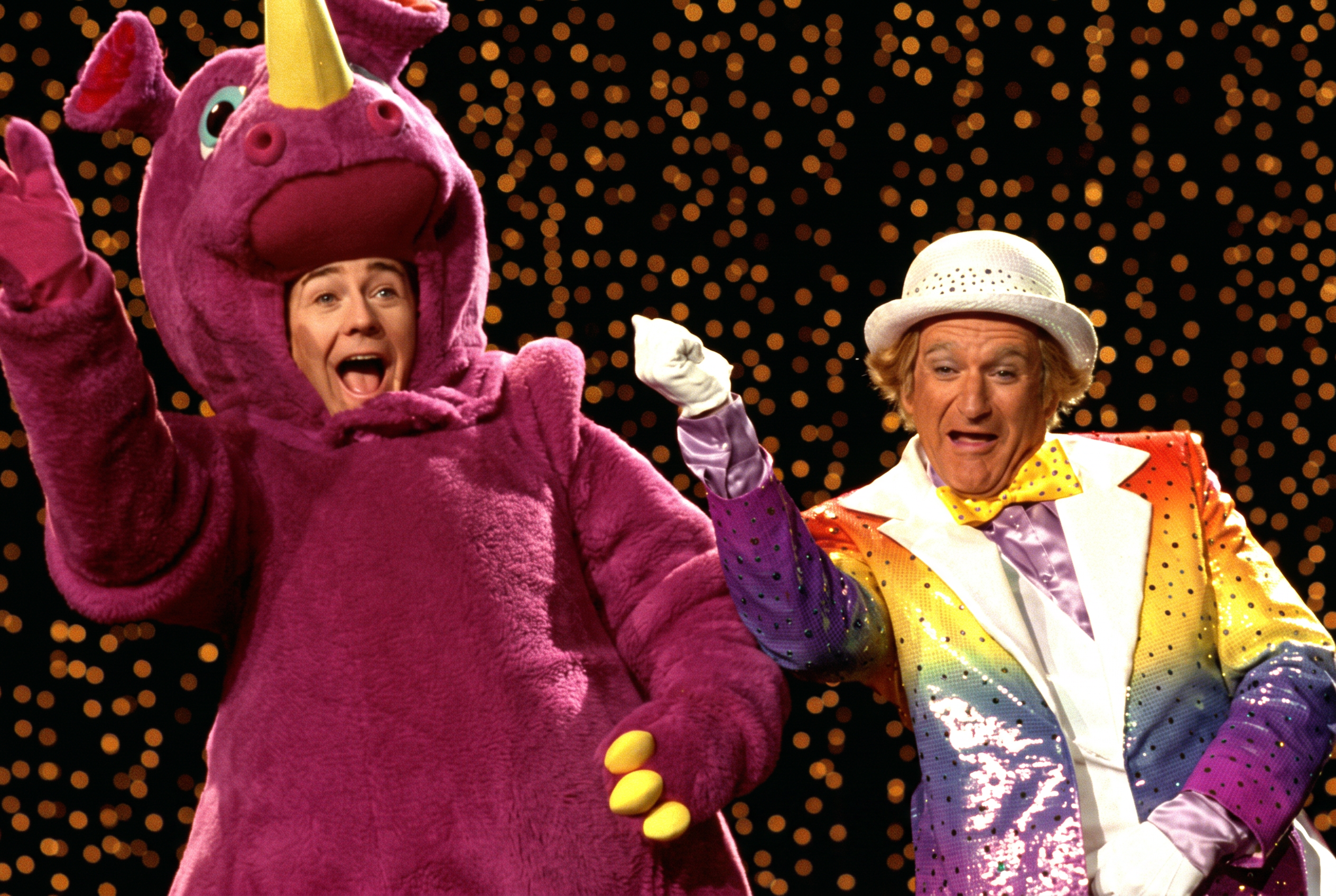
That sequence contains the entire movie in about 90 seconds: sincere public-service messaging turned into an R-rated joke about child abuse, then packaged as a children’s singalong. Rainbow Randolph’s theme, “Friends Come in All Sizes,” sounds like a completely genuine preschool anthem, except it is being performed by a man who accepts bribes.
In a 2014 Fresh Air interview, Norton called “the occasional $40 check” he receives in residuals for the film’s lyrics and music one of his proudest career achievements.
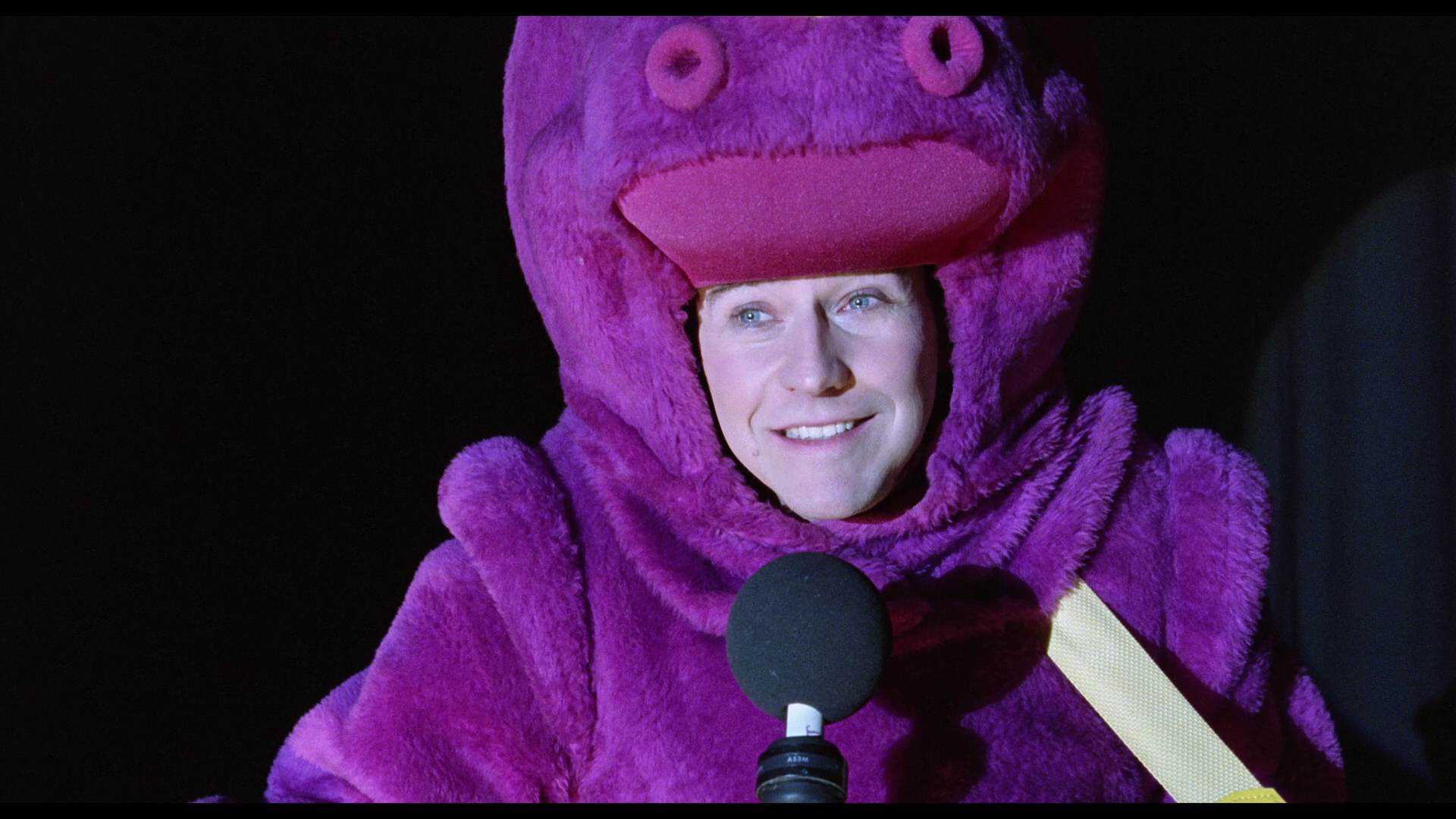
DeVito and Williams remained loyal to it too. In 2022, DeVito said it was the film of his that he rewatched most often and argued that “the studio didn’t get Death to Smoochy.” Williams described it during the original press tour as what would happen “if Brian De Palma directed Barney.”
Williams made the movie during the same dark stretch that produced One Hour Photo and Insomnia. Smoochy is the cartoon face of that period: loud, grotesque and manic, but built around the same suspicion that something frightening is hiding beneath the performance.
By 2025, while promoting A Complete Unknown, Norton was still comparing Sheldon to Pete Seeger and telling interviewers that “everybody needs to see Death to Smoochy.”
Its satire has also aged strangely well. In 2002, the idea of children’s entertainment as a branded extraction business played like a deranged attack on Barney. Now, Smoochy refusing to sell Smoochy Cola or treat children as “wallets with pigtails” sounds much closer to the way people talk about YouTube kids’ content and influencer merchandising.
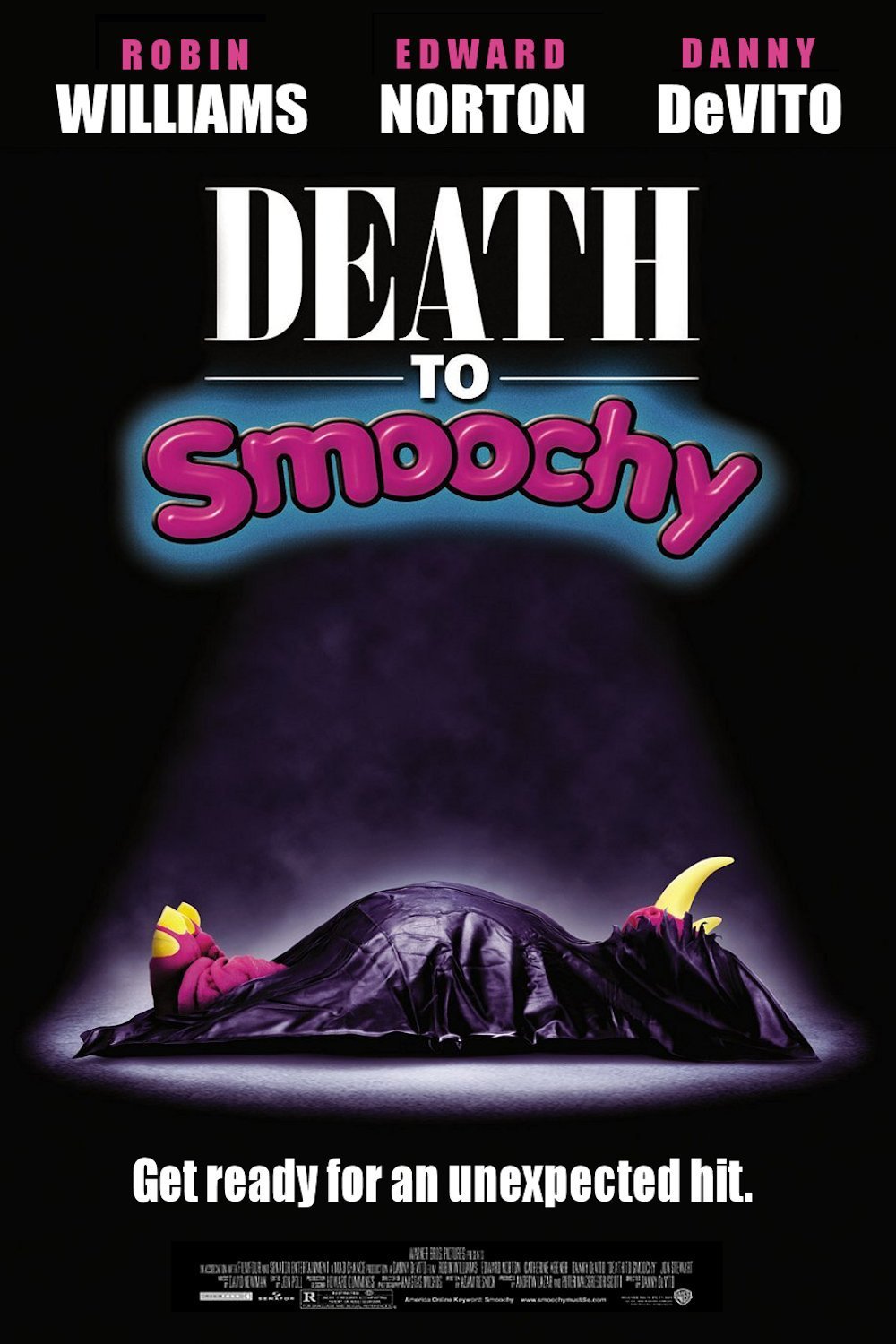
In 2024, Shout Factory released a 2K restoration sourced from the interpositive, complete with commentary from DeVito and cinematographer Anastas Michos and a collection of new interviews.
Movies do not get that treatment because everyone suddenly agrees the critics were wrong. They get it because enough people kept renting them.