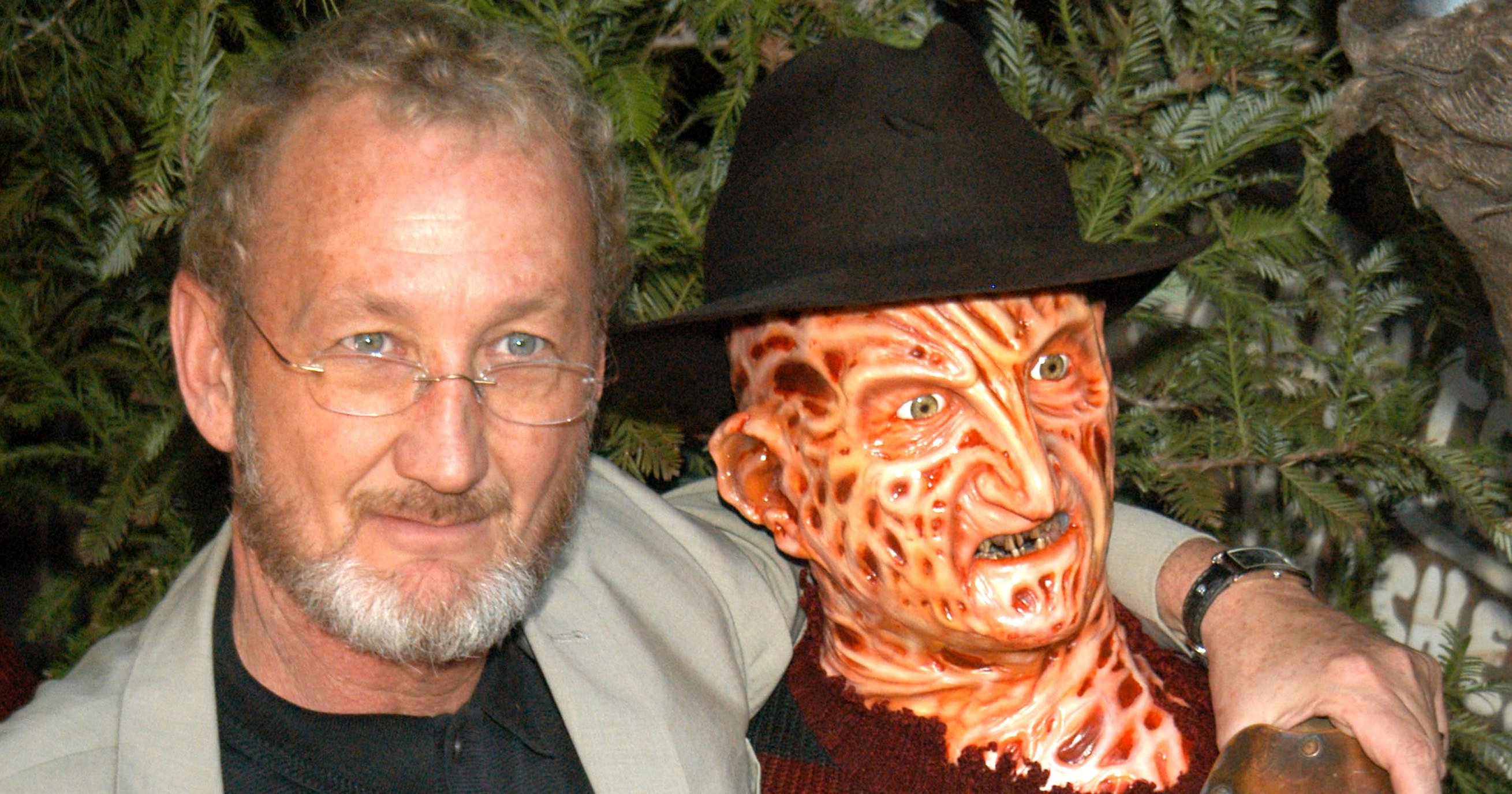
There’s a huge argument going around right now: should horror fans stop celebrating Freddy Krueger because he was a child murderer? Is it time to put the Freddy shirts, the mugs, and the Halloween costumes in the bin?
Most people say the debate is ridiculous. And I agree with that conclusion. But I think they are getting to the right conclusion for the wrong reasons.
The usual defense is “he’s fictional, relax, it’s just a horror movie.” That’s true, but it’s also the laziest answer, and it sells the character short. Because I’d argue Freddy was never just a monster in a striped sweater.
Here’s my take: Freddy Krueger isn’t a reincarnated child predator. He’s what’s left behind after a child is hurt.
Think about how the story actually works. The kids of Elm Street didn’t do anything to deserve what happens to them. They inherit something. They’re haunted by something that happened in their neighborhood, something the adults buried, whispered about, and refused to talk about. The parents in those films are the real horror: they handled a monstrous thing with silence and secrets, and the children paid for it.
That’s exactly how trauma behaves in real life.
When a child is abused, the abuse doesn’t end when the abuse ends. It follows them. It shows up at 3 a.m. It shows up in relationships, in panic attacks, in the way a certain smell or a certain voice makes the body freeze before the mind can catch up. People spend decades being chased by something nobody else can see.
And that’s the genius of the premise. Freddy lives in dreams.
Dreams are supposed to be the one place you’re truly off duty. It’s where your guard comes down, where your body is supposed to rest. Anyone who’s lived through trauma will tell you the cruelest part is that even sleep isn’t safe. The nightmares come anyway. You can lock the doors, move out, grow up, and still wake up gasping, because the thing that hurt you has moved in somewhere you can’t lock.
That is Freddy’s whole deal. You can’t escape him by running. You can’t escape him by sleeping. The only thing that ever weakens him is facing him.
Now look at how the survivors win in these films. They don’t win by hiding. They win by turning around, refusing to be afraid, and taking his power away. Nancy’s big realization in the original is that Freddy only has power over her as long as she gives it to him. If that isn’t a trauma recovery metaphor, I don’t know what is.
So when I see someone in a Freddy shirt, I don’t see a person celebrating a predator. I see a person celebrating the thing that stared into the worst fear a child can have and gave it a face, a voice, and, crucially, a way to be beaten. They love the movie that showed them how to face their fears, not what the villain did.
Horror has always done this. It takes the things we’re too afraid or too ashamed to say out loud and gives them a shape we can look at. That’s not glorifying the harm. That’s one of the few safe places people have ever had to process it.
Is there a conversation to be had about how we talk about abuse, and about the survivors who might find certain imagery painful? Absolutely, and that conversation deserves respect. Someone who doesn’t want to see Freddy anywhere near them isn’t “overreacting,” and nobody should mock them for it. Trauma is personal, and people get to decide what they’re ready to look at.
But “cancel Freddy” misreads what he is. He isn’t a role model, and he isn’t a hero. He’s the nightmare that survivors already know by heart, and the franchise’s quiet message is that you can take the nightmare apart.
I don’t think the answer is to make the monster disappear. I think it’s to understand what he’s actually standing in for.
Which, honestly, might be the scariest and most important thing about him.