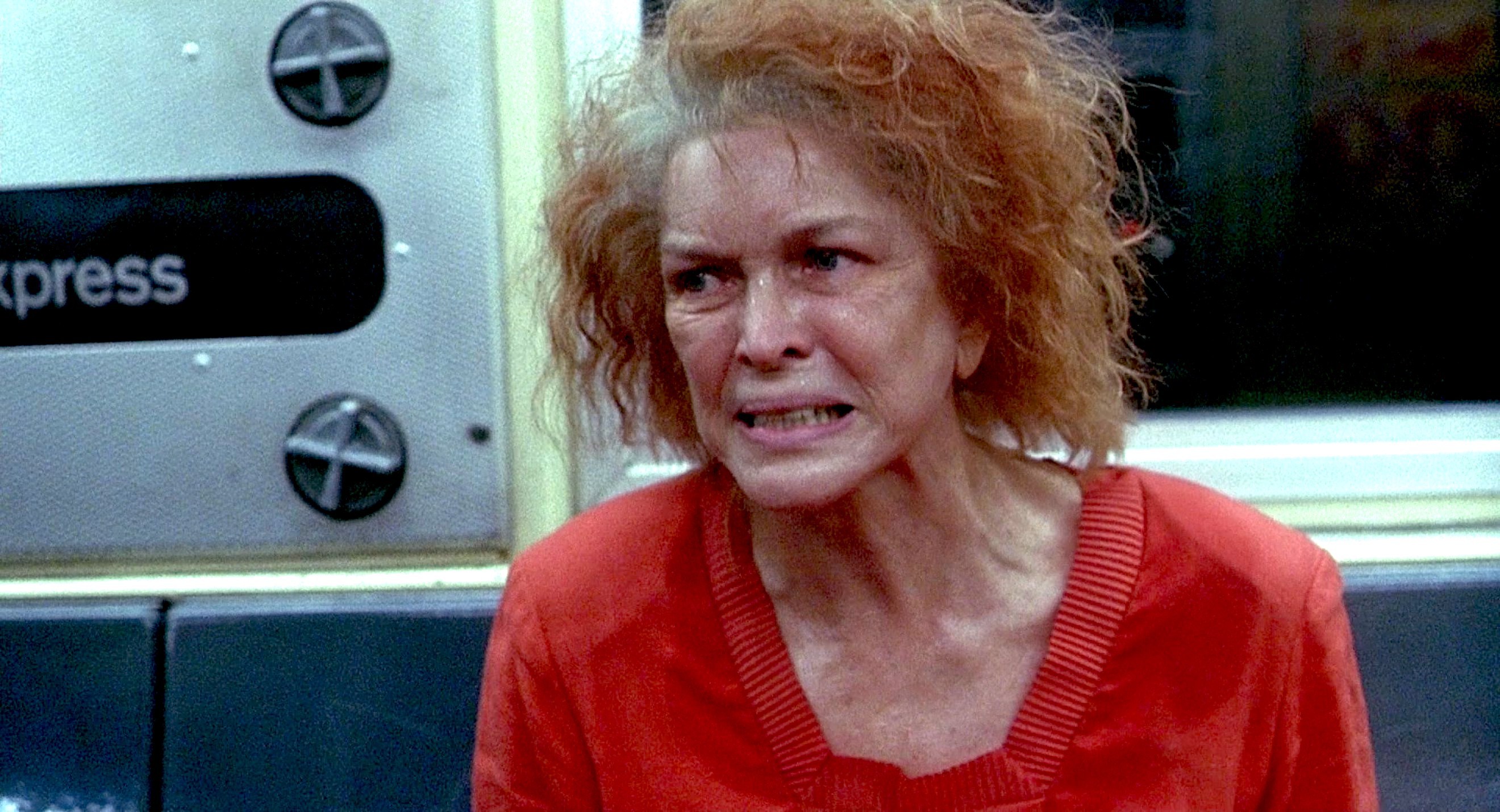
In Darren Aronofsky’s Requiem for a Dream (2000), the editing keeps cutting moments into smaller pieces, while Clint Mansell’s score adds to the pressure. Split screens and extreme close-ups keep the characters’ cravings and distress in immediate view.
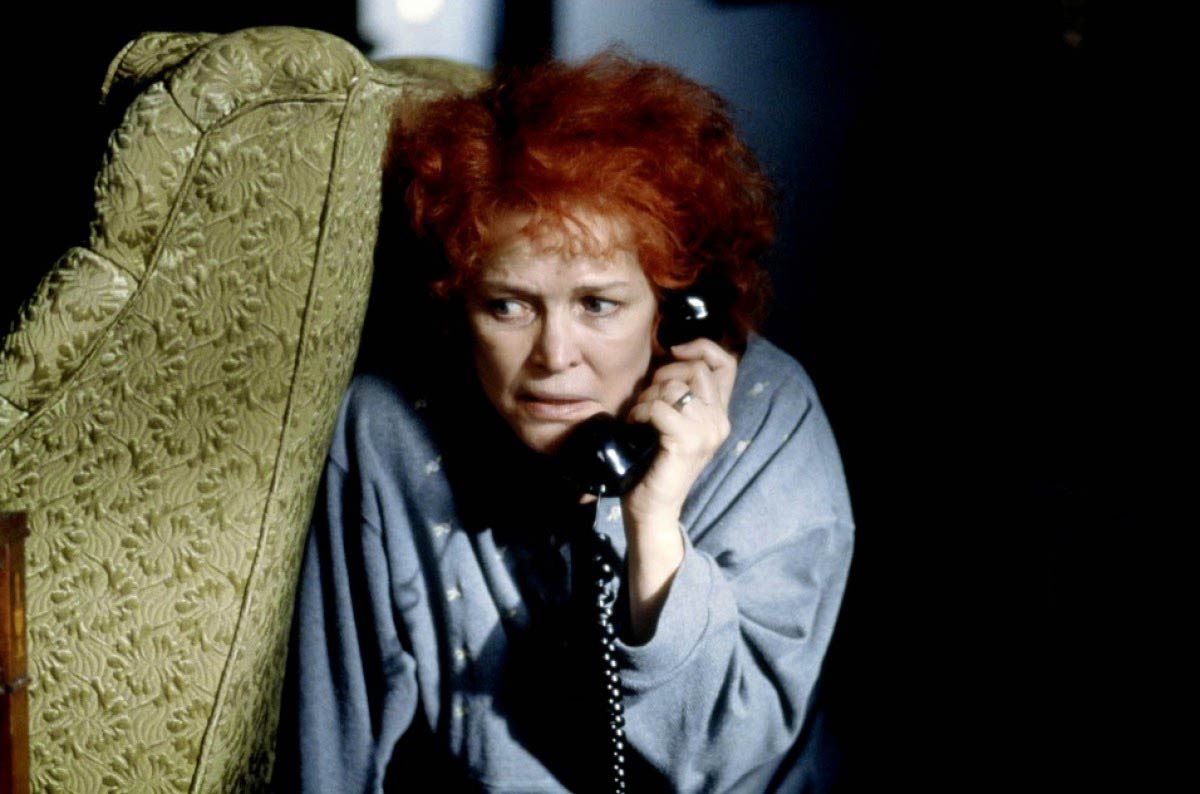
Watching their lives unravel becomes a sustained exercise in tension. It’s one of those movies most people love, but only want to see once.
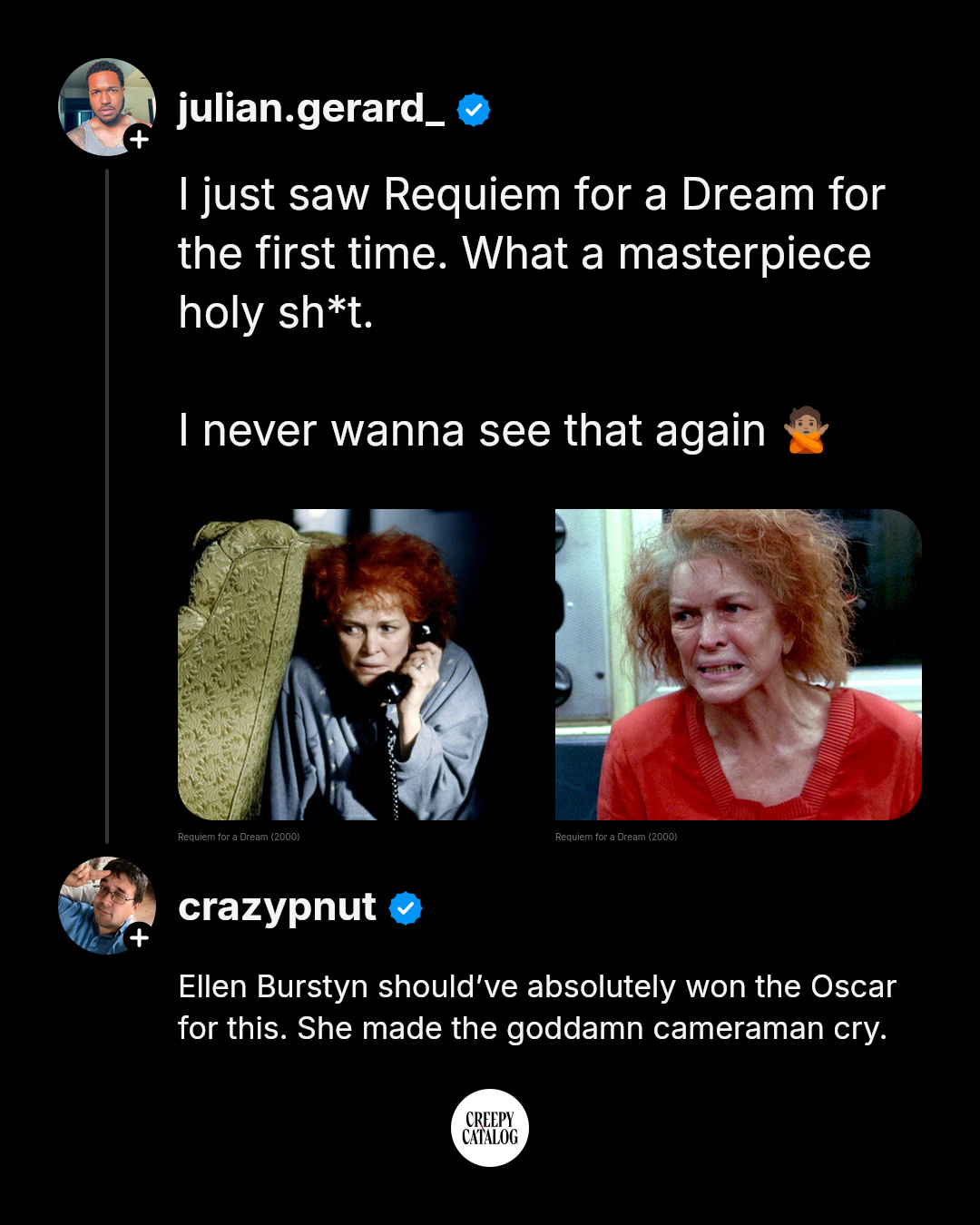
Adapted from Hubert Selby Jr.’s novel, the film follows 4 connected people in Brooklyn: a mother played by Ellen Burstyn, her son played by Jared Leto, his girlfriend played by Jennifer Connelly, and his best friend played by Marlon Wayans. Each wants some form of comfort, escape, or success. As addiction takes hold, those hopes become bound up with mounting physical and psychological harm.
The performances give that deterioration a human weight, especially Burstyn’s Oscar-nominated turn. Aronofsky keeps the characters’ vulnerability visible as their control slips away, and the story offers little relief or prospect of redemption.
The film’s sound and editing make that tightening pressure part of the experience of watching it.