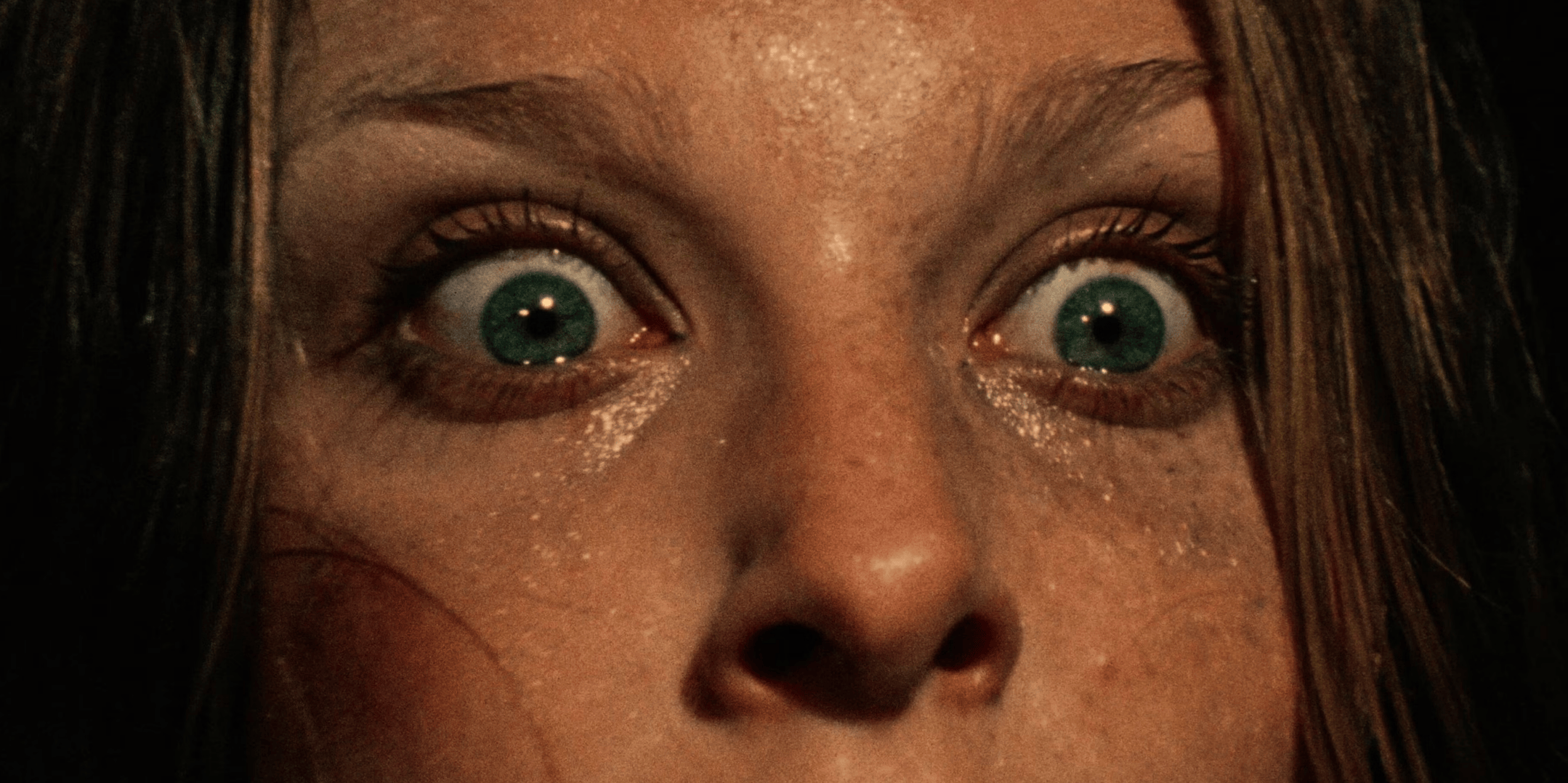
The Texas Chain Saw Massacre (1974), directed by Tobe Hooper, has a reputation as one of the most brutal horror films ever made, yet it contains surprisingly little on-screen blood or gore.
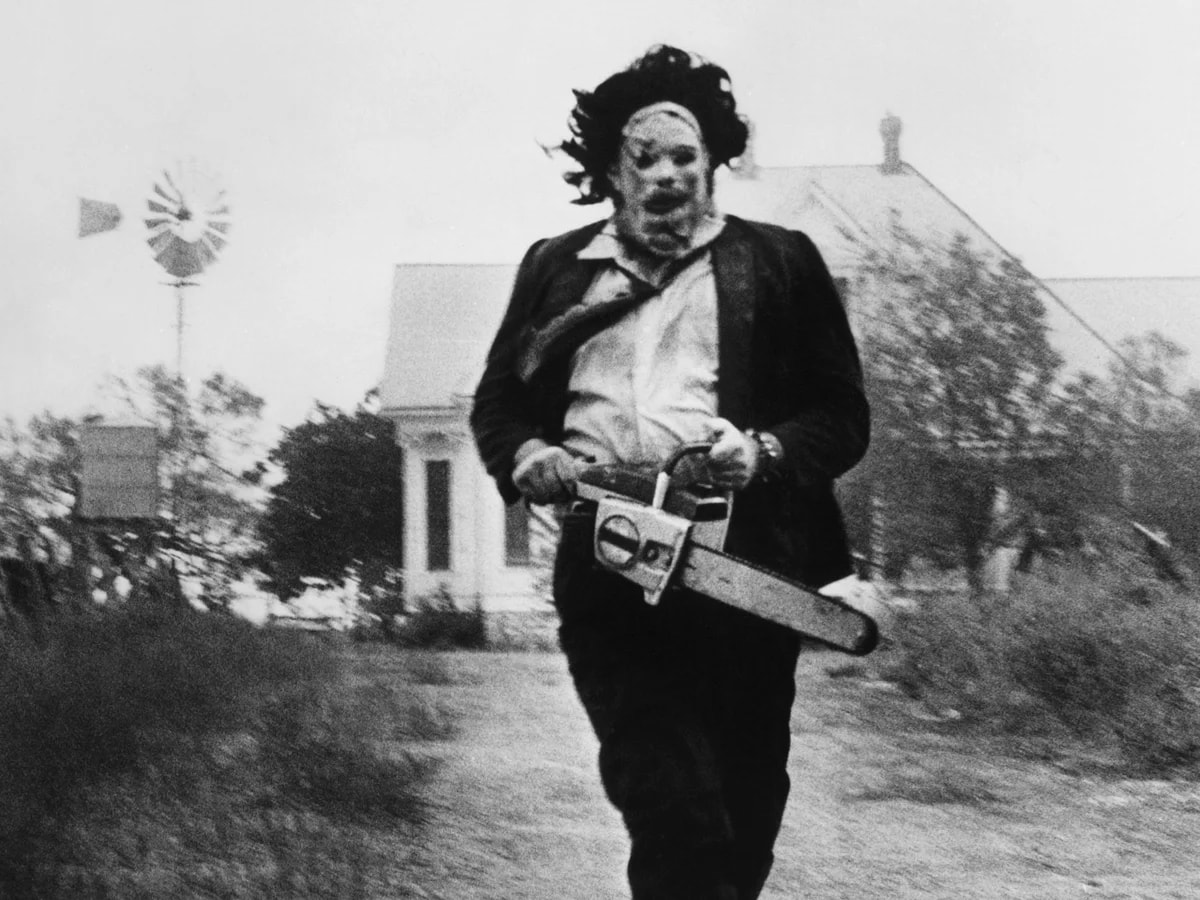
Most of the violence is suggested rather than shown: the camera cuts away from the impact of a sledgehammer, never fully depicts a meat hook piercing flesh, and keeps the chainsaw kills largely obscured by framing, shadow, and rapid editing. Leatherface’s murders happen with an almost matter-of-fact efficiency, more like the routine of a slaughterhouse than the elaborate set pieces of later slashers.
Hooper later noted that he had hoped the restraint would earn the film a PG rating. Instead, the MPAA initially gave it an X (later reduced to R), and it was banned in several countries precisely because of how disturbing it felt.
That gap between what is actually shown and what the audience experiences is central to the film’s power. The killings land hard because they feel unceremonious and real, quick, without buildup or stylization, while the surrounding atmosphere does the heavier lifting.
The grainy 16mm photography, the oppressive Texas heat, the grimy production design, and the constant industrial roar of the chainsaw create a sense of physical discomfort that never lets up. Sound design is especially crucial: the screams, the mechanical whine of the saw, and the experimental score (created with Wayne Bell using non-traditional sources) fill in what the visuals withhold.
When Pam is hung on the hook or Franklin meets the saw, the audience’s imagination supplies the missing details, often more vividly than any practical effect could.
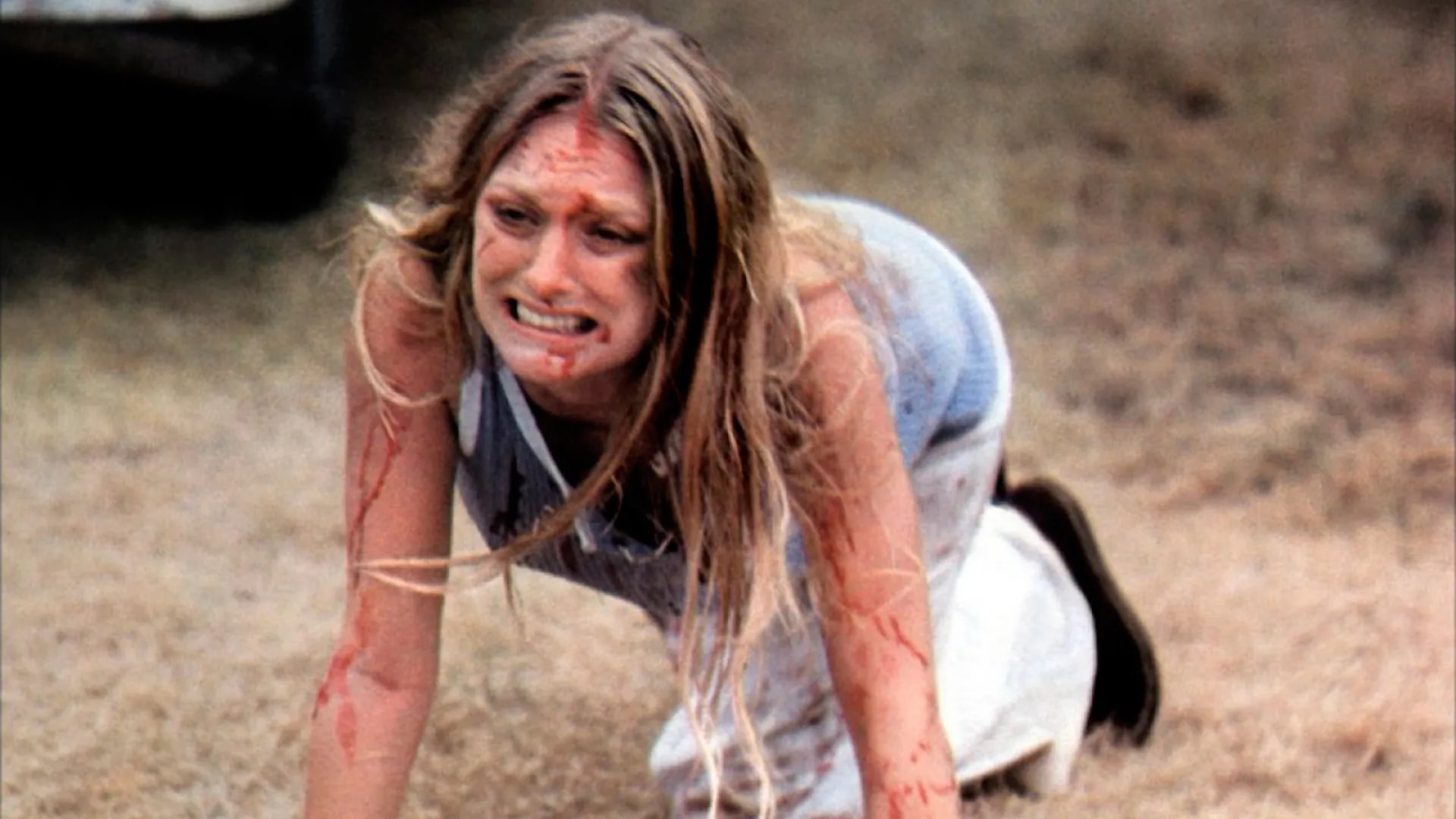
The result is a lasting feeling of disgust and unease that many viewers don’t immediately attribute to a lack of gore. The film’s documentary-like realism, combined with the exhausted, raw performances (especially Marilyn Burns as Sally Hardesty), makes the ordeal feel closer to witnessed trauma than staged spectacle.
Because the violence is implied rather than dwelled upon, it never offers the release or desensitization that explicit gore can sometimes provide. Decades later, this approach is still cited as a masterclass in suggestion: the movie remains viscerally upsetting because it makes you feel as if you had seen everything.