The theory that The Shining is about Native American genocide starts with what the Overlook Hotel was built on.
Early in Stanley Kubrick’s The Shining, hotel manager Stuart Ullman tells the Torrances that the Overlook stands on a Native American burial ground. He also says its builders had to repel Native American attacks during construction. Neither detail appears in Stephen King’s novel, making the hotel’s origins central to a theory that the film’s horror is rooted in Native American genocide.
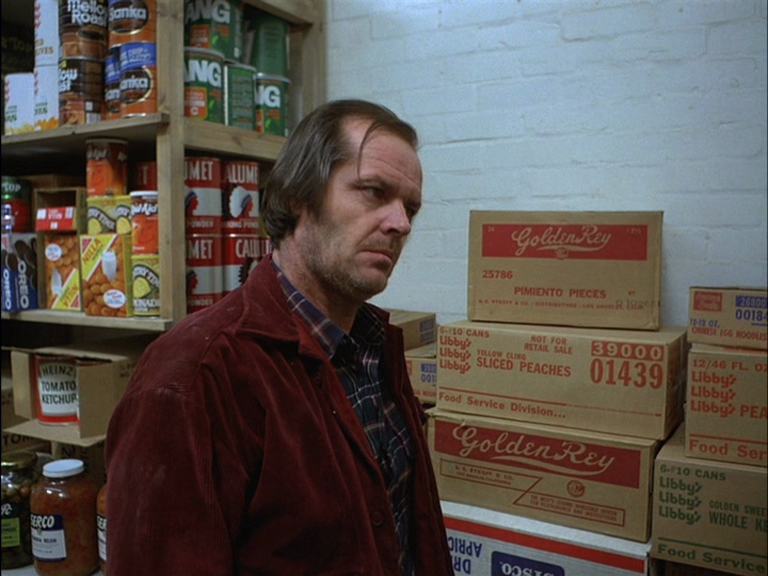
Journalist Bill Blakemore developed this interpretation in a 1987 Washington Post essay. The 2012 documentary Room 237 later brought it to a wider audience. In this reading, the Overlook represents America: its comforts rest on violence, and that history keeps forcing its way back into view.
The argument connects Ullman’s account to the Native American rugs, artwork, wall hangings and patterns throughout the hotel. Seen through this lens, the décor turns Native culture into decoration inside a building whose construction involved violence against Native people.
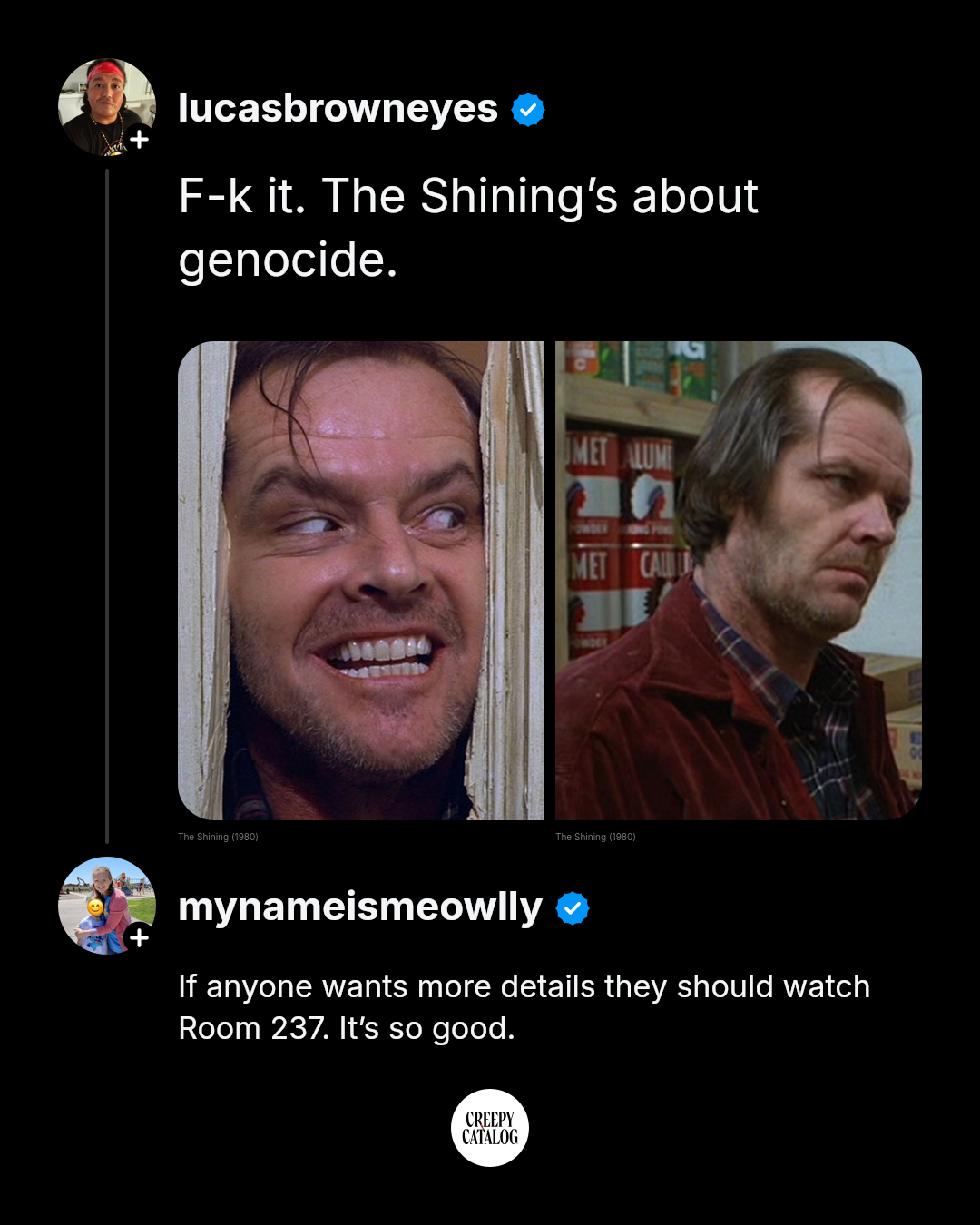
Even the pantry becomes part of the theory. Calumet baking powder cans, bearing a Native American chief’s image, recur in important scenes. Because “calumet” means “peace pipe,” proponents interpret the cans as references to broken treaties and failed peace between settlers and Native peoples.
Danny’s visions of blood flooding from the elevators supply the theory’s most disturbing image. That sequence, another addition to King’s story, is interpreted as the return of bloodshed buried beneath the country’s history. The hotel can conceal the violence only until it spills into its halls.
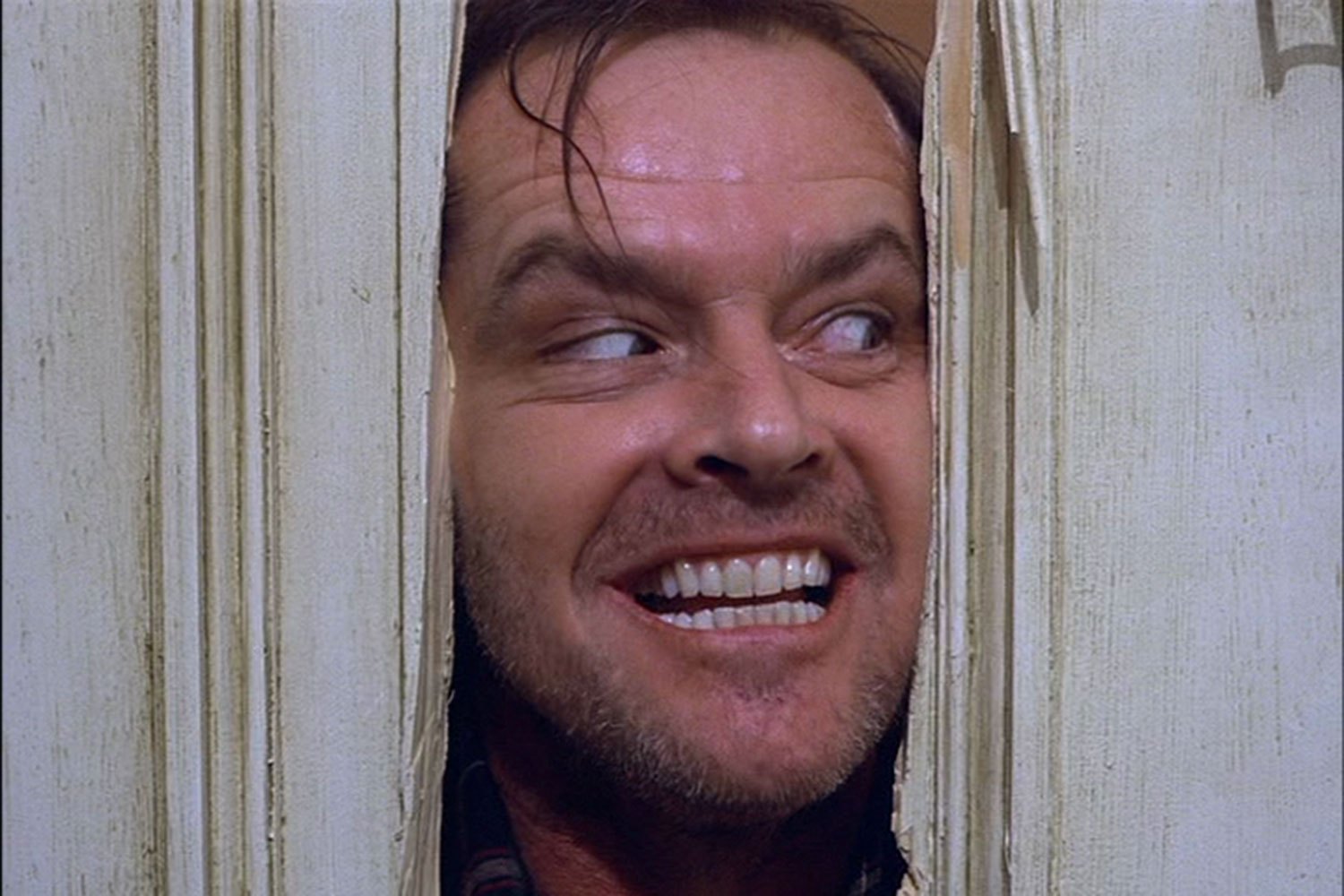
Other clues build on that reading: Jack invokes the “white man’s burden,” and the name Overlook becomes a play on the history America overlooks. Danny’s escape from the hedge maze by retracing his steps also fits the interpretation, connecting survival to a return along the path already taken.
These connections support an interpretation. Native American burial grounds were also an established horror trope, and the hotel’s décor can be understood as appropriate to its setting. Kubrick’s longtime assistant Leon Vitali dismissed many of the interpretations associated with Room 237 as “pure gibberish.”