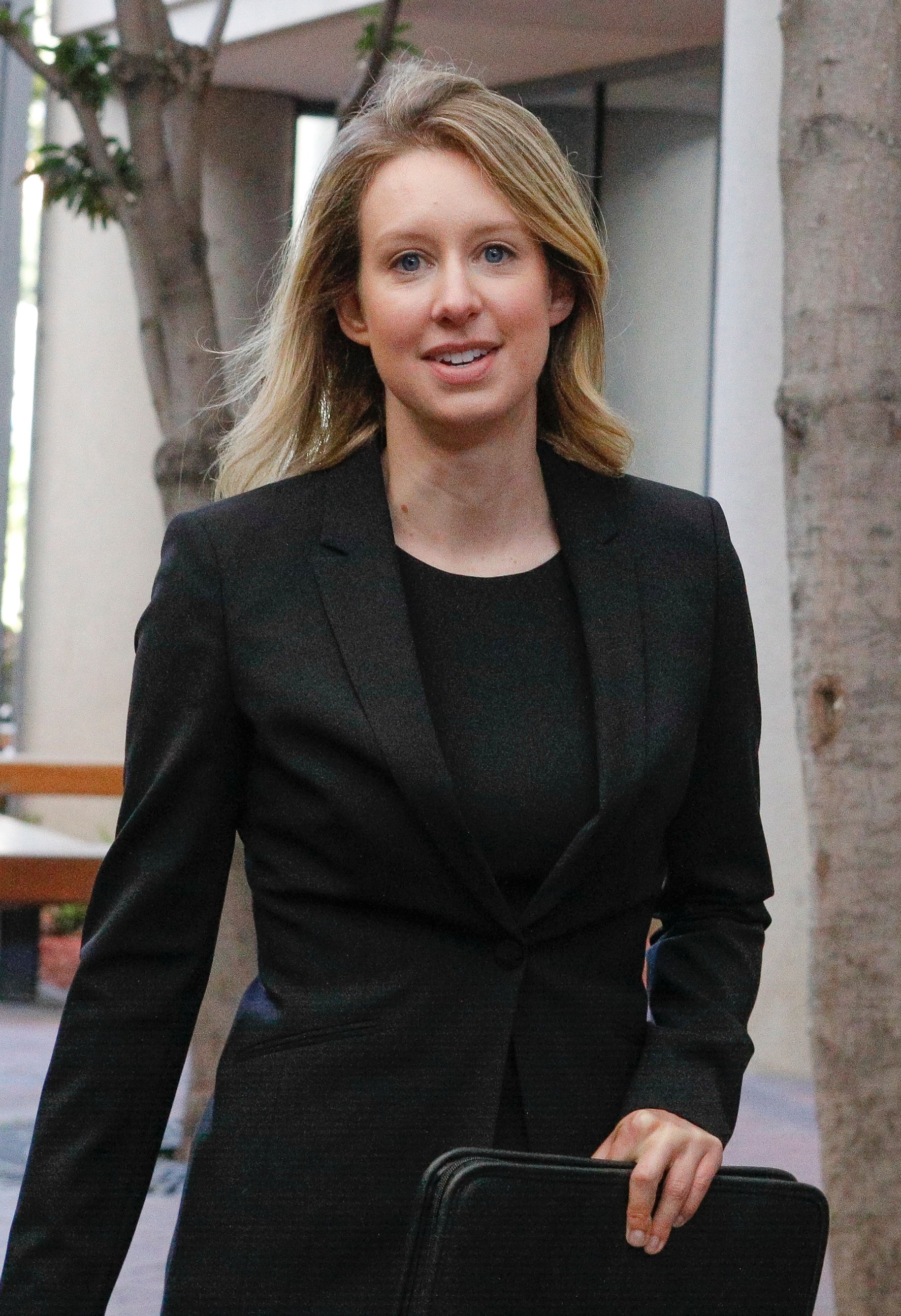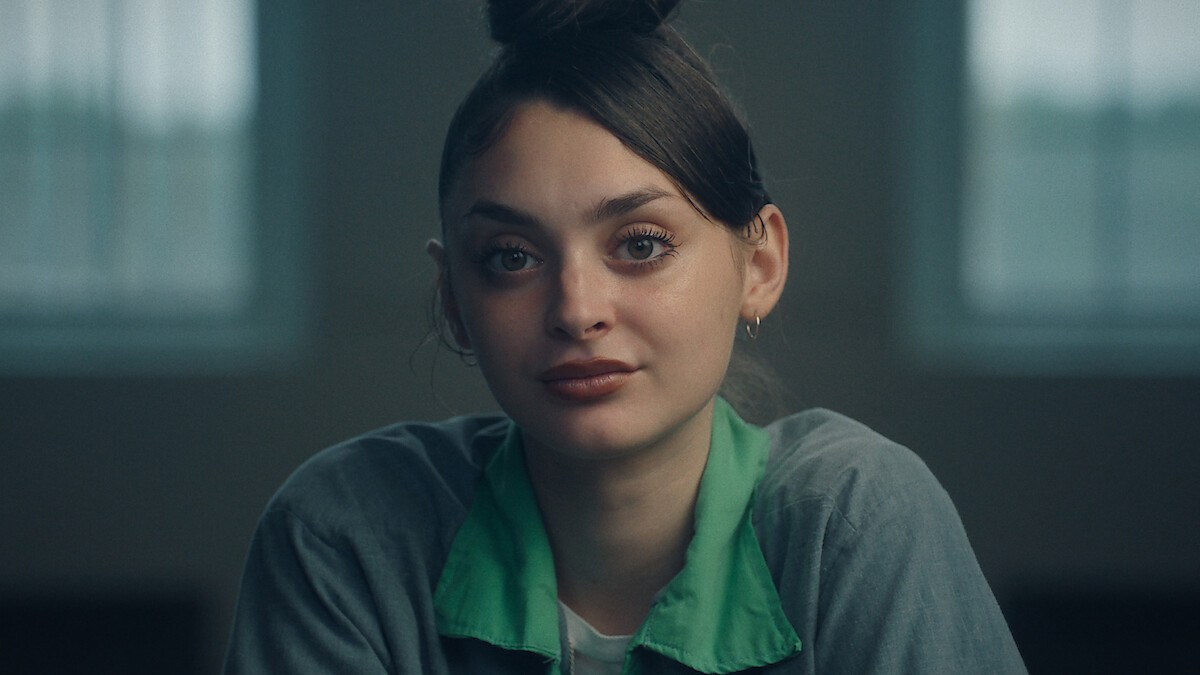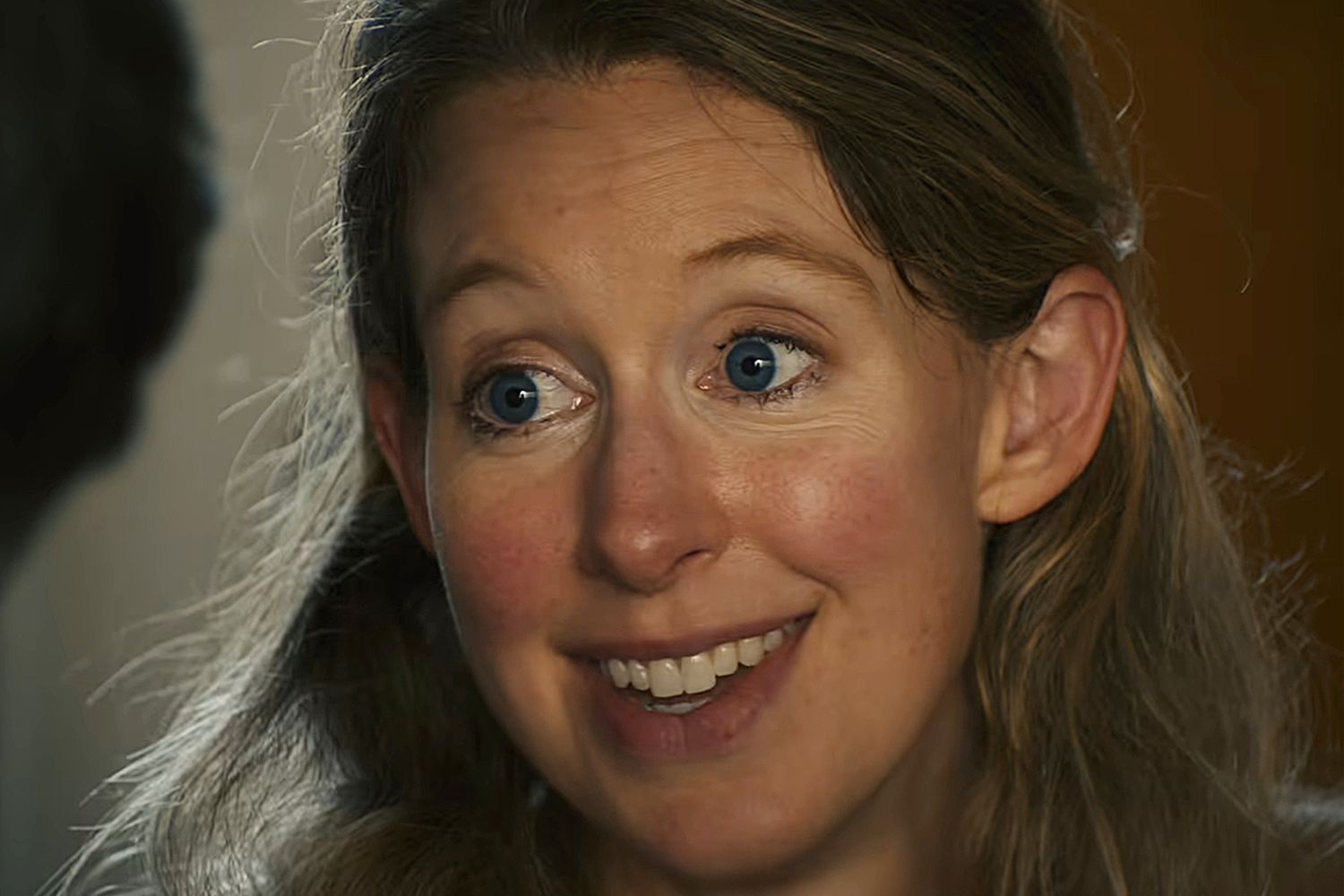
A 2014 profile of Theranos founder Elizabeth Holmes noted that she “rarely blinks.” Years before You Can See Everything used prolonged close-ups of her face, people who’d met her were describing the same fixed gaze.
Journalist John Carreyrou wrote that “the way she trained her big blue eyes on you without blinking made you feel like the center of the world.” He called it “almost hypnotic.”
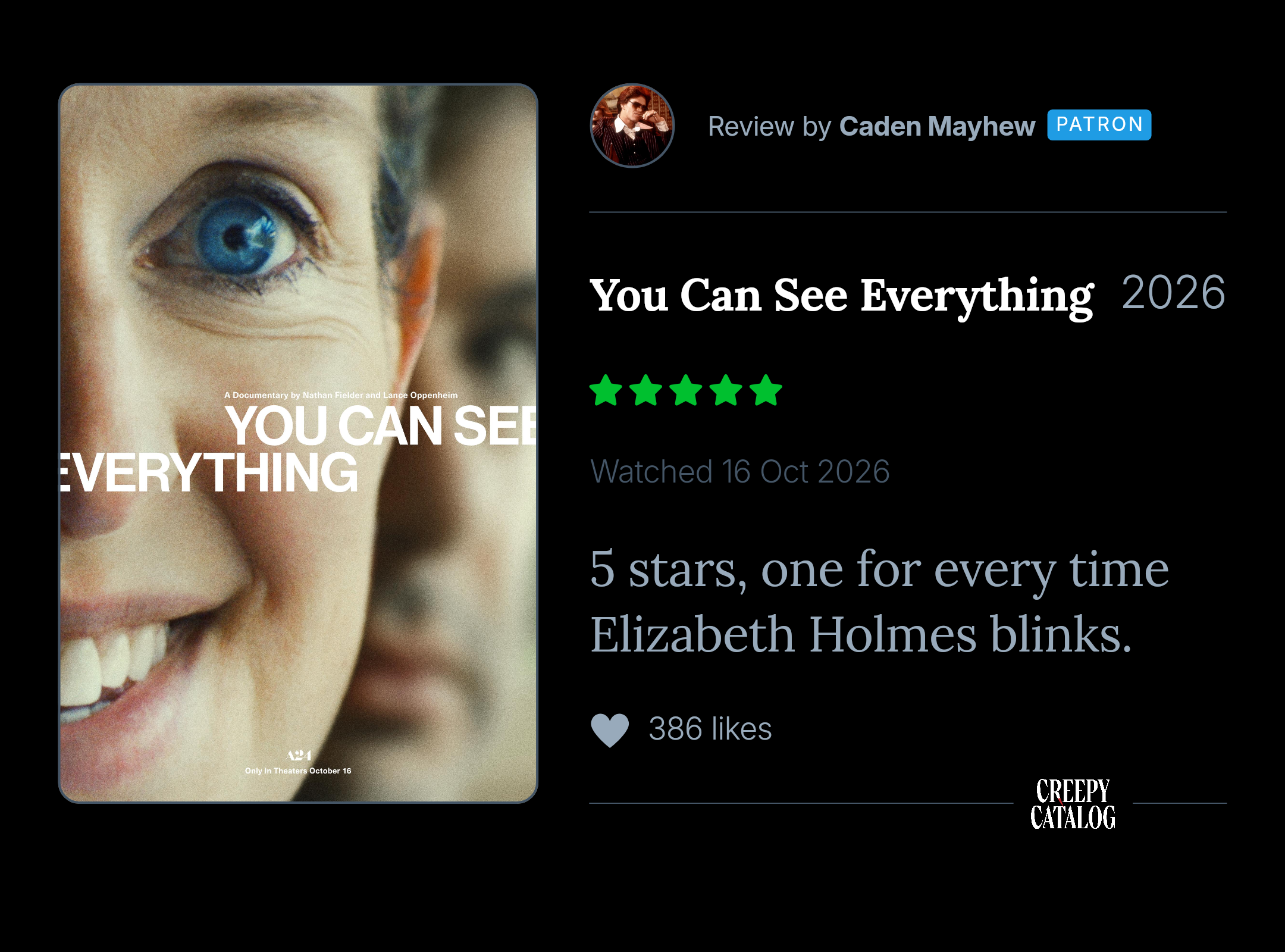
A Theranos receptionist’s description was shorter: “She didn’t blink.” During jury selection for her trial, Holmes was also observed holding unbroken eye contact with potential jurors.
Holmes does blink. Those accounts describe the impression she made on observers. They don’t establish a medical explanation or tell us what she was thinking, and her gaze alone can’t support a psychological diagnosis.
The documentary’s long takes also bring sustained attention to mannerisms that were already part of her public image: the low voice, the black turtlenecks associated with Steve Jobs, and facial expressions that could remain tightly controlled even during serious conversations. It’s easier to focus on her mannerisms when they’re projected onto the big screen.