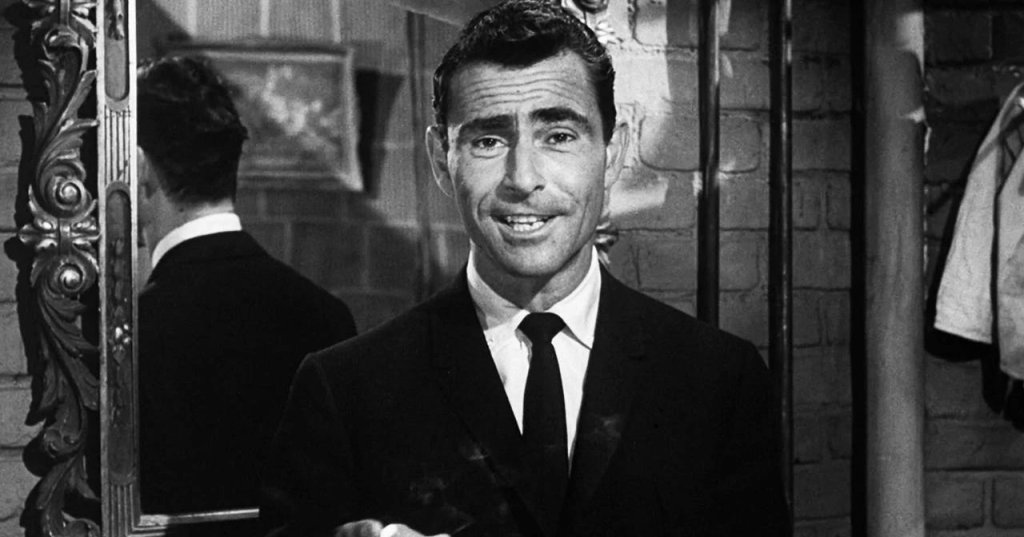
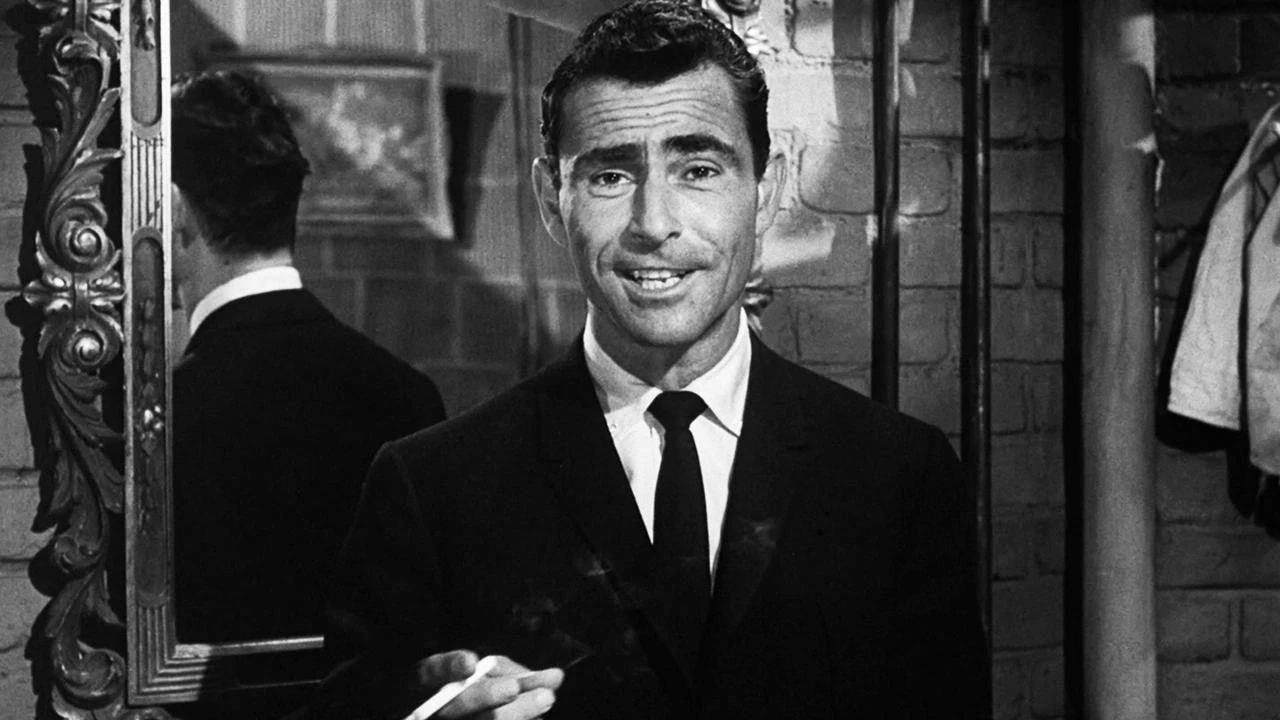
Rod Serling introduced The Twilight Zone on CBS in October 1959, with a 25-minute mystery: a man finds himself in a town where everything seems to be running, but he can’t find another person.
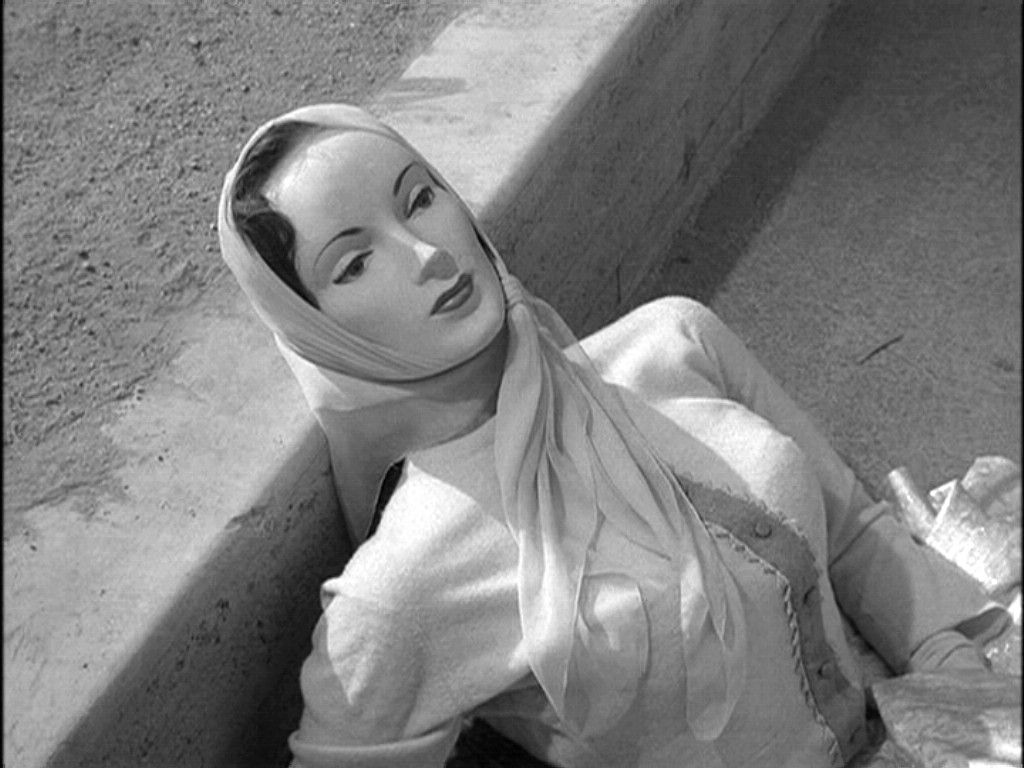
The episode, “Where Is Everybody?”, stars Earl Holliman as Mike Ferris, who can’t remember how he got there. A ringing telephone, cooking food and an operating movie theater suggest people have only just disappeared. His search gradually uncovers a more complicated explanation.
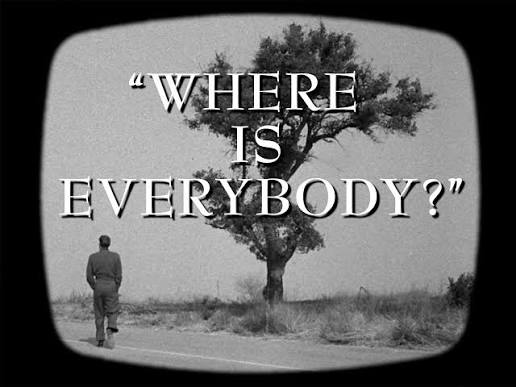
Critic Harvey Karman praised Holliman’s performance and described the premiere as “strong on style and solidly suspenseful.” He also predicted that “when word gets around, Twilight should give the competition a run for their ratings.”
For Serling, the show’s imagined worlds offered a way to address subjects that networks and advertisers had resisted. His earlier writing about racial injustice, including stories shaped by the 1955 murder of Emmett Till, had encountered censorship. Science fiction and allegory gave him another way to examine prejudice, violence, fear and moral choices.
The original series ran from 1959 to 1964, ending amid ratings trouble. Serling’s ambitions for his writing extended beyond entertainment: “The writer’s role is to be a menacer of the public’s conscience. He must have a position, a point of view. He must see the arts as a vehicle of social criticism and he must focus the issues of his time.”