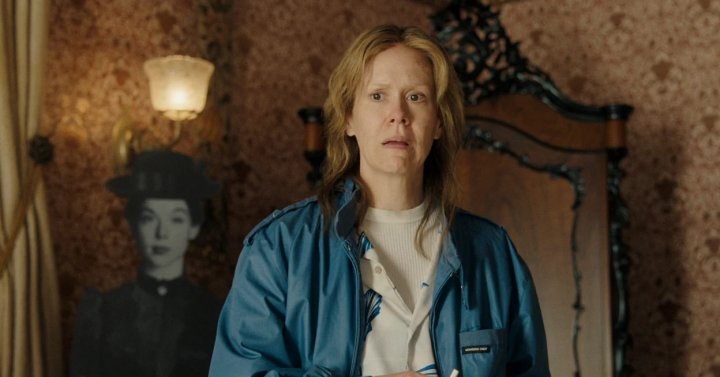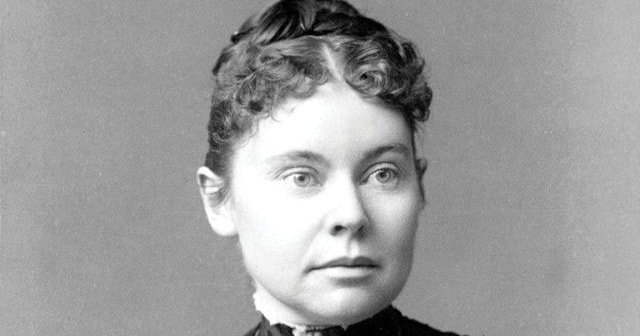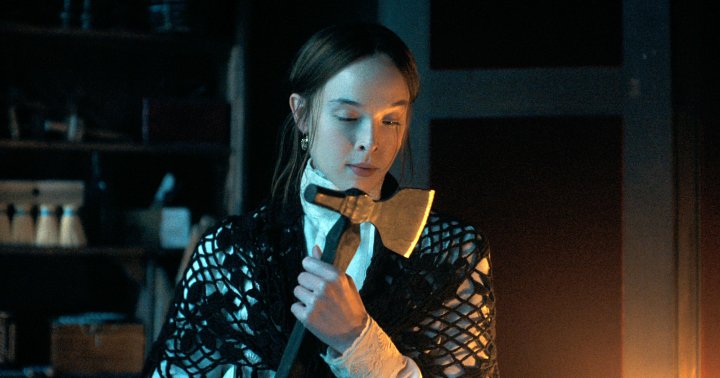
Monster: The Lizzie Borden Story ends by offering a dramatized answer to who killed Andrew and Abby Borden. The historical record leaves that question unresolved.

Lizzie Borden left court a free woman in June 1893, but suspicion followed her for the remaining 34 years of her life. No one else was convicted of killing her father, Andrew Borden, and stepmother, Abby Borden, whose bodies were found inside their Fall River, Massachusetts, home on Aug. 4, 1892.
Andrew had suffered 10 to 11 blows to the head, while Abby had 19 wounds. Lizzie, then 32, was one of only 2 people known to be inside the house with the victims that day. The other was the family’s maid, Bridget “Maggie” Sullivan. A jury of 12 men acquitted Lizzie of both murders the following year, and the case remains unsolved.

Lizzie inherited a substantial share of her father’s estate. About 2 months after the verdict, she bought a 7-bedroom Victorian house in Fall River’s wealthy Hill neighborhood and named it Maplecroft. Her sister Emma moved in with her, and Lizzie later began using the name Lizbeth.
The move didn’t bring social acceptance. Neighbors followed and stared at Lizzie, children pelted Maplecroft with gravel and rotten eggs, and pranksters rang her doorbell at night. Members of her church also shunned her. She bought expensive clothes, went to the theater and entertained guests, but Fall River’s upper class kept its distance.

Her interest in theater took her to Boston and New York, where she met actress Nance O’Neil around 1904. Their friendship widened Lizzie’s social circle, and she hosted elaborate gatherings for O’Neil and other performers at Maplecroft. Lizzie also helped O’Neil financially when the actress was in debt. Their friendship ended around 1905.
Lizzie’s relationship with Emma collapsed during the same period. Emma left Maplecroft in 1905, and the sisters never spoke again. Newspapers linked their split to Lizzie’s parties and her friendship with O’Neil, though that explanation was never confirmed.

Even after their estrangement, Emma defended Lizzie. Speaking publicly in 1913, she acknowledged that her sister’s conduct during the case may have seemed “queer,” but said, “as for her being guilty, I say ‘no’ and decidedly ‘no.’ ”
Lizzie remained at Maplecroft until she died there on June 1, 1927, at age 66. Reports about her funeral conflict: some accounts describe a small gathering of friends, while The New York Times reported that only 1 person attended the service at Maplecroft and that only the undertaker’s assistants were present for her burial.

She was laid to rest at Oak Grove Cemetery in Fall River with Andrew and Abby. Her grave bears the name “Lizbeth Andrews.” Emma died 9 days later and was buried in the same family plot.
The house where Andrew and Abby were killed now operates as the Historic Lizzie Borden House, a bed-and-breakfast museum. Maplecroft is a private residence, while the Fall River Historical Society preserves trial evidence, crime-scene images, Lizzie’s letters and the only known photograph of her taken inside Maplecroft.