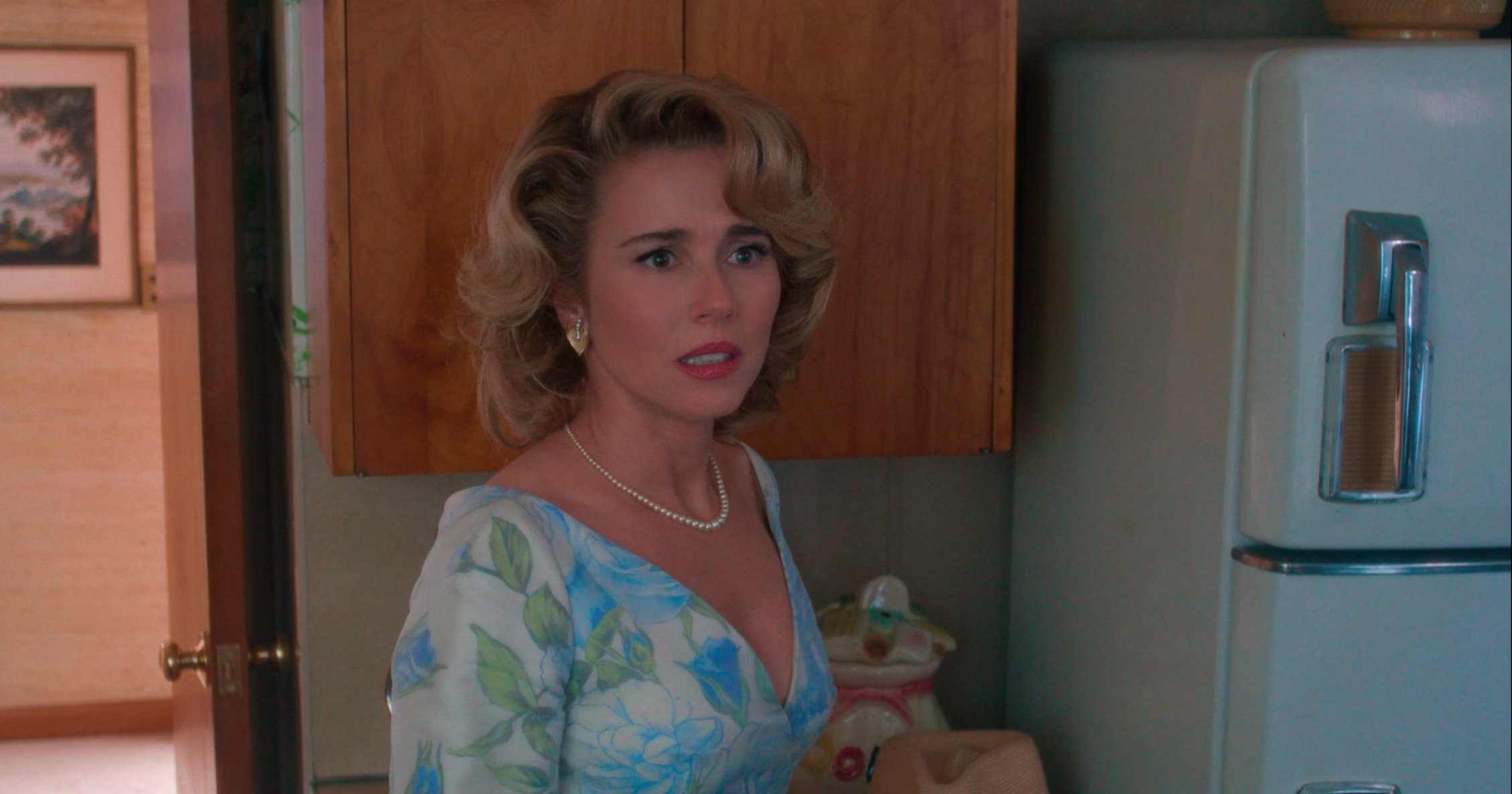
Set in the 1970s, Crystal Lake shows how much easier it was for an husband to trap his wife and children in a world of abuse before the advances made by feminists.
In a scene in episode 7, Pamela catches her husband, Elias Wittering, lying to her and calls him out on it. In any reciprocal relationship, this would have to be worked out. The relationship could not continue with one person lying to the other. But Pamela and Elias don’t have a reciprocal relationship, they have a patriarchal one. Because patriarchy traps Pamela in the marriage, Elias doesn’t actually have to care that he got caught in a lie. He can do anything he wants and Pamela will be stuck trying on a hamster wheel trying to make it work.
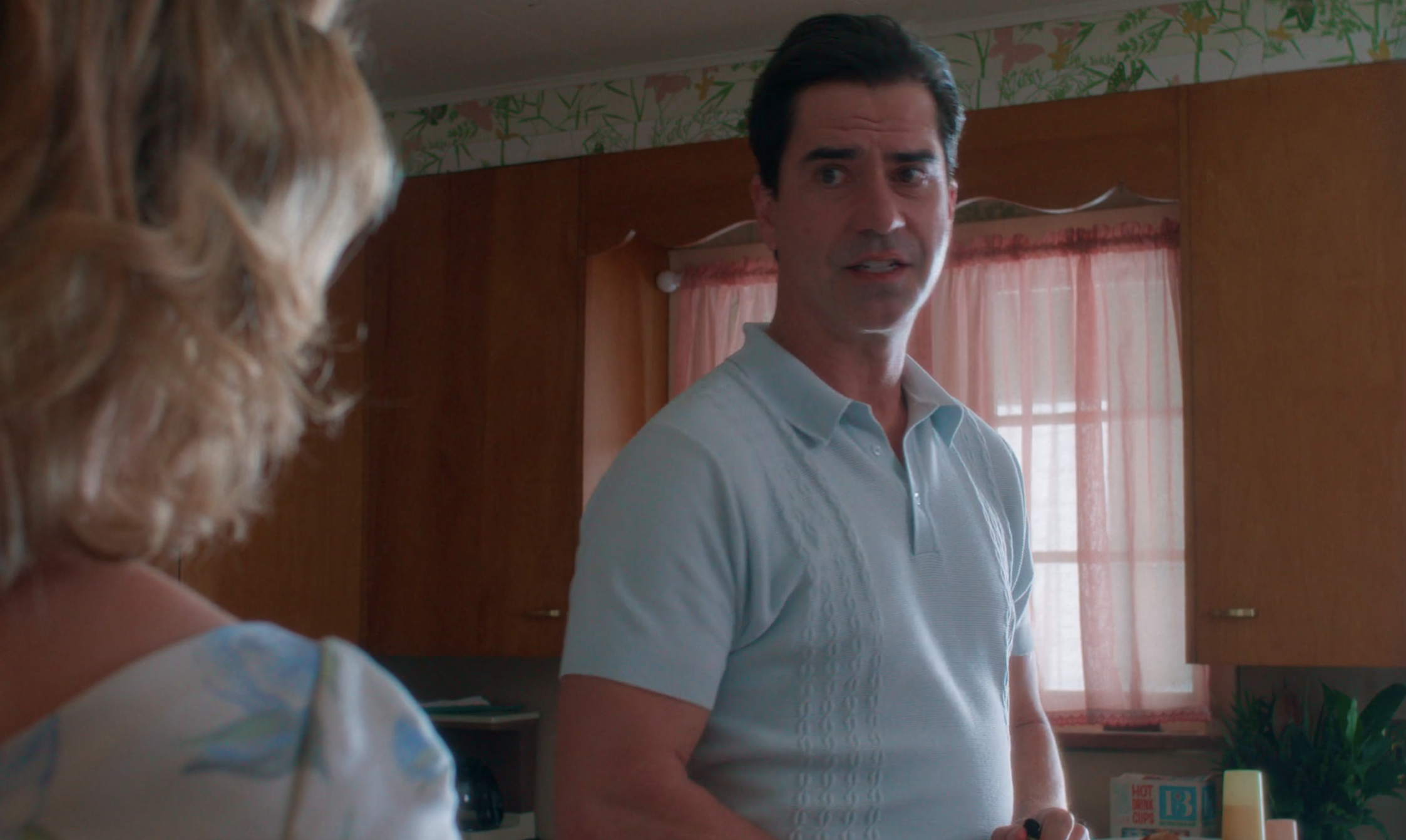
Elias’ response to Pamela shows the mechanism by which she is trapped. He responds, “Do you need me to go get your pills?”
The implication is both “you are not a trustworthy equal worthy of an explanation” as well as a threat. Elias has already told Pamela that if she tries to leave him, he will use her medication as evidence that she is an unfit mother, and at the time, people would have believed him. Perhaps Pamela herself could have escaped from Elias, but she would have been forced to abandon her child alone with the man she believes is abusing him. If you believe your child will be abused either way, isn’t it better to be present to soften the abuse than to leave him alone with his abuser?

Let’s not forget that Elias is the reason Pamela is on medication to begin with. He abandoned her alone with a special needs child for days on end. When Pamela’s lack of sleep caught up with her and she drifted off while Jason was in the bath, she is the only one blamed. The parent who stayed and did the work is blamed for what goes wrong with the child, while the parent who abandoned him goes blameless.
Watching it now, the scene feels like a snapshot of how much harder it used to be for a woman in her position to get free and protect her children. The tools he uses—easy access to institutionalization, automatic weight given to the higher-status spouse, almost no expectation that he share the daily burden—have been challenged since then. In the moment, though, Pamela has nowhere to go. She knows what he’s doing, and she also knows that speaking up will only be used against her. The pills aren’t medicine anymore. They’re the cage.